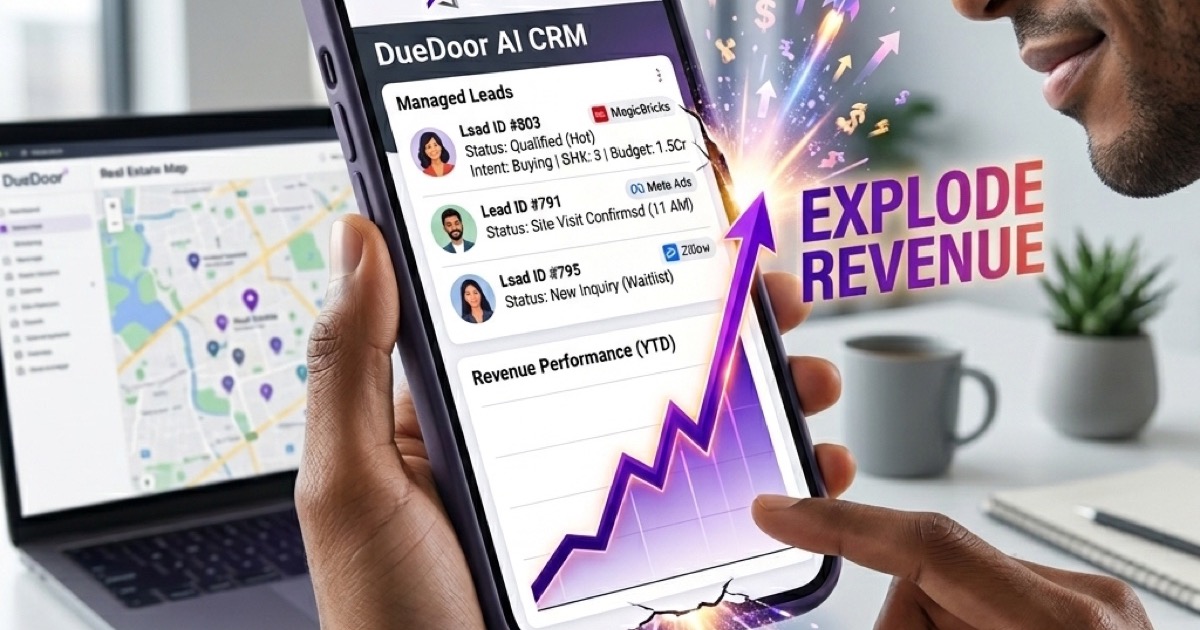
WhatsApp delivers higher open rates (up to 98%) and faster responses, making it ideal for warm follow-ups and conversions, while email scales better for cold outreach, compliance-heavy industries, and nurturing long consideration cycles. Most high-growth Indian SMBs use both together.
Every sales team running lead generation in India faces the same fork in the road: send a WhatsApp message or fire off an email? The answer shapes your open rates, reply times, compliance exposure, and ultimately your pipeline velocity. Both channels have loyal advocates, and both have real blind spots.
This guide cuts through the noise with data, practical frameworks, and real-world examples built for Indian SMBs, real estate teams, edtech founders, and B2B service firms who need leads today, not theory. By the end, you will know exactly when to use WhatsApp, when email is the smarter play, and how to stack them for maximum conversion.
Why Channel Choice Matters for Lead Gen
Lead generation is not just about volume. It is about reaching the right person at the right moment with a message they actually read. Channel choice determines all three. A cold email sent to a CXO at 8 a.m. on Monday competes with 147 other unread messages. A WhatsApp message lands on a screen the same person checks 23 times a day. But flip that scenario to a regulated BFSI firm and suddenly WhatsApp feels intrusive while a well-crafted email feels professional and auditable.
The economics matter too. WhatsApp Business API has per-conversation pricing (Meta charges per 24-hour session), while email costs scale with list size and sending volume. Getting this wrong by even one order of magnitude can wipe out your customer acquisition margin on a tight budget.
Where WhatsApp Wins
WhatsApp dominates on immediacy and intimacy. With over 500 million active users in India alone, it is the default communication layer for most of the country, cutting across income segments, cities, and age groups in a way no other platform matches.
- Open rates near 98%: Almost every WhatsApp message gets seen, often within minutes. Compare that to the 20-25% average open rate for marketing emails in India.
- Two-way conversation: WhatsApp is inherently conversational. A lead can reply with a question, share a screenshot, or ask for a callback, all without leaving the app. This dramatically shortens qualification time.
- Rich media support: Product catalogues, demo videos, PDF brochures, and voice notes all travel natively over WhatsApp, making it a full sales collateral channel.
- Trust signals: A verified green-tick business account (available through Meta-approved providers like DueDoor) signals legitimacy to Indian consumers who are increasingly wary of SMS phishing.
- Speed to first response: WhatsApp campaigns routinely see first replies within 15-30 minutes. Email campaigns often wait 24-48 hours for meaningful engagement.
For sectors like real estate, edtech, local services, and MSME finance, where deals close on personal trust and speed, WhatsApp is frequently the primary revenue channel.
Where Email Wins
Email has been declared dead approximately once per year since 2010, and it keeps outperforming the obituaries. The reason is structural: email is asynchronous, searchable, and universally accepted in professional contexts.
- Cold outreach at scale: Reaching net-new prospects you have never spoken to is far easier over email. WhatsApp requires an opt-in or an existing contact; cold WhatsApp blasts violate Meta policy and risk account bans. For a deep dive on best practices, see best practices for cold email outreach.
- Long-form nurture: A 400-word email that explains your product roadmap, case study, or pricing logic has room to breathe. WhatsApp messages above 300 characters see lower read rates.
- Automation depth: Email marketing platforms support complex drip sequences, behavioural triggers, A/B testing, and CRM integration. Automated email marketing tools for startups let small teams run 10-step nurture sequences with minimal manual work.
- Professional credibility: In B2B contexts, particularly enterprise SaaS, consulting, and legal services, email carries authority. A proposal arriving via WhatsApp can feel casual or even suspicious.
- Deliverability audit trail: Email provides open tracking, click tracking, and bounce analytics that feed directly into lead scoring models.
For businesses targeting CFOs, procurement heads, or enterprise IT buyers, email remains the channel that earns a seat at the table.
Head-to-Head: Key Metrics Compared
The table below summarises the most decision-relevant metrics for Indian SMB lead generation teams in 2026.
| Metric | ||
|---|---|---|
| Average open rate | 90-98% | 20-25% |
| Average reply rate | 35-45% | 8-12% |
| Cold outreach allowed | No (opt-in only) | Yes (with compliance) |
| Cost per message (India) | ~INR 0.50-1.20 per conversation | ~INR 0.02-0.10 per email |
| Rich media support | Native (video, PDF, audio) | Limited (attachments, inline images) |
| Compliance complexity | Medium (Meta policy + TRAI) | High (TRAI DLT, IT Act, GDPR for exports) |
| Best for | Warm leads, re-engagement, conversions | Cold prospecting, nurture, enterprise deals |
Compliance, Cost, and Deliverability
Compliance is the least glamorous but most consequential dimension of this decision. India's TRAI Distributed Ledger Technology (DLT) framework requires all commercial SMS and email senders to register templates and headers before sending, with fines and channel blocks for violations. WhatsApp has its own parallel framework: Meta's Business Messaging Policy prohibits unsolicited messages, and repeated violations can permanently ban your business number.
"We sent 40,000 WhatsApp blasts to scraped numbers in January and had our number banned by February. Rebuilding the opt-in list from scratch cost us three months of pipeline." - Founder, Bengaluru-based edtech startup (shared at a SaaS founders meetup, 2026)
For email, India-specific compliance includes registering with TRAI's DLT portal, honouring unsubscribe requests within 10 business days, and maintaining sender reputation on major ISPs like Google and Microsoft. The article on email marketing compliance in India covers the DLT registration steps in detail.
On cost, email is cheaper per message but requires list-building infrastructure, domain warm-up, and deliverability tooling. WhatsApp costs more per conversation but delivers dramatically better engagement per rupee spent on well-opted-in lists. The calculation flips depending on your list quality. A cold, unvalidated email list of 100,000 contacts may actually cost more to monetise than a tight WhatsApp opt-in list of 8,000 warm leads.
Real Use Cases for Indian SMBs
Context makes this debate concrete. Here is how different business types in India should weight the two channels:
- Real estate developers: WhatsApp for site visit confirmations, project brochures, and price-list sharing. Email for NRI buyers who expect formal communication and document trails.
- Edtech and coaching institutes: WhatsApp for demo class reminders, result announcements, and parent updates. Email for scholarship letters, admission confirmations, and long nurture sequences for fence-sitters.
- B2B SaaS and IT services: Email for initial cold outreach to CTOs and procurement heads. WhatsApp for warm follow-ups after a trial sign-up or a demo booking.
- MSME finance and insurance brokers: Email for KYC document requests and policy documents (auditable). WhatsApp for quick premium reminders and renewal nudges.
- D2C and e-commerce brands: WhatsApp for abandoned cart recovery and order updates. Email for weekly newsletters, product launches, and seasonal campaigns.
Platforms like DueDoor are built specifically for this dual-channel reality, managing WhatsApp Business API automation alongside email sequences inside a single CRM, so teams do not have to juggle two separate tools and two separate contact databases.
How to Combine WhatsApp and Email
The most effective growth teams do not choose between WhatsApp and email. They sequence them deliberately, using each channel's strengths at the right stage of the funnel.
A proven sequence for Indian SMB lead gen looks like this:
- Day 0 - Cold email: Reach net-new prospects with a personalised value proposition. Follow the guidance in best email marketing practices for Indian audiences to optimise subject lines and sender names for local context.
- Day 2 - Email follow-up: If no open, send a shorter, curiosity-driven subject line variant. If opened but no click, send a case study or social proof email.
- Day 4 - WhatsApp opt-in trigger: For any prospect who clicked a link or filled a form, trigger a WhatsApp message asking if they would like to see a quick demo. This is where consent is established cleanly.
- Day 5 onwards - WhatsApp nurture: Conduct the actual sales conversation, share a product video, handle objections, and book the meeting over WhatsApp where response times are fastest.
- Post-sale - Email: Onboarding emails, invoices, usage reports, and renewal reminders are better delivered via email for record-keeping.
DueDoor's pipeline automation layer handles this sequencing automatically, moving leads from email-cold to WhatsApp-warm based on engagement triggers, without requiring a developer to wire up Zapier flows or maintain fragile webhook chains.
Understanding how email fits alongside other digital channels is also covered in depth in the comparison of email marketing vs social media marketing, which is useful context for teams deciding where to concentrate their content investment.
Choosing the Right Stack for Your Business
The right tool combination depends on three variables: your prospect's profile, your sales cycle length, and your team's bandwidth.
If your average deal closes in under 72 hours and your prospect is an Indian consumer or small business owner, lean heavily into WhatsApp with email as a backup channel for documents and formal communication. If your deal cycle is 30 days or more and involves multiple stakeholders at a mid-market or enterprise account, email is your primary channel and WhatsApp is your acceleration layer for warm contacts.
For teams that want both channels under one roof with shared contact records, AI-powered send-time optimisation, and built-in DLT compliance, DueDoor provides a unified growth CRM purpose-built for Indian SMBs. The platform handles WhatsApp Business API message routing, email drip automation, and lead pipeline management without requiring separate subscriptions for three different tools. Detailed guidance on building email sequences within an Indian regulatory and cultural context is available in the article on best practices for email marketing in India.
The bottom line: WhatsApp wins on engagement and speed; email wins on reach, compliance, and scale. Choose both, sequence them smartly, and let automation do the heavy lifting.
Ready to run WhatsApp and email lead generation from a single dashboard? Start your free DueDoor trial and set up your first multi-channel lead sequence in under 20 minutes. No developer required.
Frequently Asked Questions
Is WhatsApp or email better for generating leads in India?
WhatsApp has higher open and reply rates and works better for warm leads and fast conversions, while email is better for cold prospecting and longer B2B sales cycles. Most successful Indian SMBs use both in sequence, starting with email for cold outreach and shifting to WhatsApp once a prospect shows interest.
Can I send cold messages on WhatsApp for lead generation?
No. Meta's WhatsApp Business Policy prohibits sending unsolicited messages to numbers that have not opted in. Violating this can result in a permanent business number ban. Use email for cold outreach and use WhatsApp only with opted-in contacts.
What is the average open rate for WhatsApp vs email in India?
WhatsApp messages in India typically achieve open rates of 90-98%, while marketing emails average 20-25% open rates. Reply rates follow a similar pattern, with WhatsApp seeing 35-45% versus 8-12% for email, making WhatsApp far more effective for engagement with warm contacts.
How much does WhatsApp Business API cost compared to email in India?
WhatsApp Business API costs approximately INR 0.50-1.20 per 24-hour conversation session in India, while email costs INR 0.02-0.10 per send depending on the platform. Email is cheaper at scale, but WhatsApp's dramatically higher engagement rate means the cost per qualified reply is often lower on WhatsApp for warm lists.
Do I need to comply with TRAI rules for WhatsApp marketing in India?
Yes. In addition to Meta's own Business Messaging Policy, WhatsApp marketing in India falls under TRAI's commercial communication framework and the IT Act. You must have explicit opt-in consent, honour opt-out requests, and avoid sending promotional messages during restricted hours.
Every lead gets an instant, qualified reply — even at 3 AM
DueDoor's AI reads the inbound WhatsApp, understands pricing/demo/support intent, replies with the right answer, and books the meeting — all in under 4 seconds. No human lifts a finger until the call itself.
- AI understands Hindi, Tamil, Telugu, Marathi, English
- Qualifies budget, team size, timeline automatically
- Books into your actual Google/Outlook calendar
- Escalates to a human only when the AI isn't 95%+ sure
WhatsApp AI
Auto-reply, drip sequences, AI qualification — 24/7.
Leads & Pipeline
Smart lead scoring with auto-routing to your team.
Email Marketing
Personalized AI emails that actually get opened.
Meta Ads AI
One-click campaigns optimized by AI daily.
SEO Engine
Content + ranking on autopilot. Like this page.
LinkedIn (PhewDo)
Outreach + replies handled end-to-end.
References & further reading
- Email marketing — Wikipedia
- HubSpot Email Marketing Guide
- Mailchimp Resources
- Digital marketing — Wikipedia
- Marketing — Wikipedia