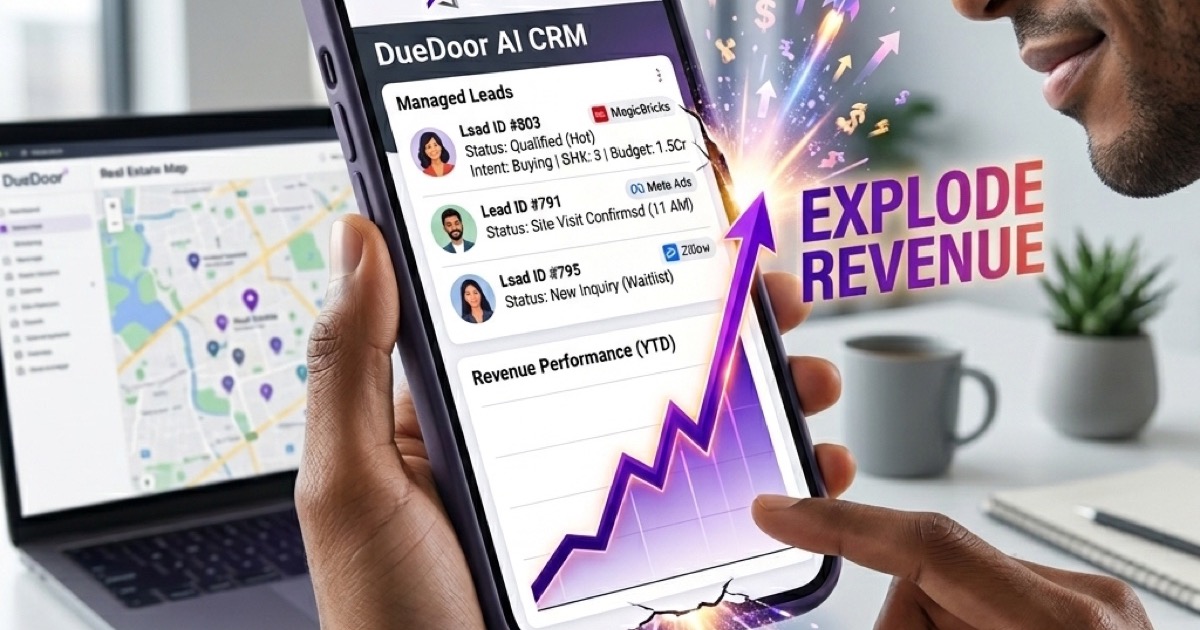
Email marketing is important for SMBs because it delivers one of the highest ROIs of any digital channel, averaging 36-42x return per rupee spent, while giving small businesses direct, owned access to their audience without paying for ad space.
For a small business counting every rupee, the question is never "should we do marketing?" but "which marketing actually pays back?" The answer, year after year, is email. Despite the constant noise about reels, influencer posts, and paid ads, email remains the single channel where you control the conversation, the timing, and the cost - no auction, no feed algorithm, no platform whims standing between you and your customer.
Yet a surprising number of Indian SMBs treat email as an afterthought, blasting occasional newsletters to dusty lists with no strategy behind them. This guide explains exactly why that is a costly mistake, what email can realistically do for a small or mid-sized business in 2026, and how to set up a simple system that compounds over time.
Email Is Still the Highest-ROI Channel
Every year, analysts rerun the numbers and arrive at roughly the same conclusion: email marketing generates between 36 and 42 rupees for every rupee invested, a ratio that no paid-social or search-ad campaign reliably matches at a small business budget level. The reasons are structural. You are not bidding against competitors for attention. You are writing directly into a space the recipient has voluntarily opened. There is no per-impression fee, no minimum spend, and no quality score penalising small accounts.
Compare that reality to Instagram, where organic reach for a business page routinely falls below 5%, or to Google Ads, where CPC in competitive Indian B2B verticals now exceeds ₹150-200 per click. Email has marginal costs close to zero per additional send once the list exists. That structural advantage only grows as your list grows.
You Own Your List, No Algorithm Tax
Social media followers are rented. The platform decides, at any moment, how many of them see your post - and it can change the rules overnight. Email subscribers are yours. You collected their consent, you store their address, and you can reach them whenever you need to, on whatever platform or tool you choose.
"Our entire pipeline dried up the week Instagram cut organic reach. The businesses that survived that shift were the ones already sitting on 5,000 opted-in email contacts they could message for free." - B2B SaaS founder, Bengaluru
This ownership matters most during platform transitions and policy changes, which happen more often than most founders expect. An email list is also a transferable business asset. When you sell, merge, or raise funding, a verified, engaged subscriber base has concrete value on a balance sheet. Likes and followers do not.
Why SMBs Benefit More Than Large Enterprises
Large enterprises already have brand recall baked in. A customer ordering from Amazon or booking on MakeMyTrip does not need a nurture sequence to remember who they are buying from. SMBs face the opposite problem: customers forget you exist between purchases. Email is the cheapest reliable cure for that forgetting.
Here is a direct comparison of what email does differently for an SMB versus a big brand:
| Factor | Large Enterprise | SMB |
|---|---|---|
| Brand recall without prompting | High - years of advertising | Low - customer forgets between visits |
| Budget for paid retargeting | Large dedicated budget | Limited, must be selective |
| Email list value | One of many channels | Often the primary retention tool |
| Personalisation ease | Requires CRM team and data engineering | Possible with simple automation in days |
| Time to first revenue from email | Weeks of approvals | Can send a campaign today |
SMBs are also faster. A large company might need three weeks and four approvals to send a promotional email. A small business owner or a two-person marketing team can write, test, and send a campaign in an afternoon - and respond to reply feedback the same day. That agility is a genuine competitive advantage.
Types of Emails That Drive SMB Revenue
Not all email is equal. Many SMBs waste their list on irregular newsletters that deliver low value and train subscribers to ignore them. The emails that consistently drive revenue fall into a few clear categories:
- Welcome sequences: A 3-5 email series sent when someone first joins your list. This is when engagement is highest. Use it to introduce your brand, solve a real problem, and make a soft offer.
- Nurture drips: Spaced emails that educate leads who are not yet ready to buy. Particularly effective in B2B and high-consideration purchases (software, services, real estate).
- Re-engagement campaigns: Target subscribers who have not opened in 90+ days with a compelling hook. Either re-activate them or clean them off your list - both outcomes improve your metrics.
- Transactional emails: Order confirmations, payment receipts, booking reminders. These see 8x higher open rates than promotional emails and are prime real estate for upsells.
- Broadcast announcements: Product launches, festival offers (Diwali, Holi, Onam), limited-time promotions. Effective when infrequent and genuinely valuable.
If you are doing cold outreach to prospects who have not opted in, the rules are slightly different. Follow carefully considered best practices for cold email outreach to protect your sender reputation and stay compliant.
How Automation Turns One Email Into a Pipeline
The biggest shift in email marketing over the last three years is not design or copywriting - it is trigger-based automation. Instead of manually deciding when to email someone, you set up rules: if a lead visits your pricing page twice, send them a case study. If a customer buys once but does not return in 60 days, send a re-engagement offer with a discount. If a trial user never activates a key feature, send a how-to guide on day three.
This kind of behaviour-based email requires an audience list connected to your CRM or product data. DueDoor's AI Growth CRM lets Indian SMBs build exactly this - connecting lead behaviour, pipeline stage, and email triggers in one place, so a solo founder can run sequences that feel personalised without manually tracking 500 contacts in a spreadsheet.
For startups and early-stage businesses weighing their options, a detailed comparison of automated email marketing tools for startups is worth reading before committing to a platform. The right tool at the right stage saves months of migration pain later.
The compounding effect
Automation compounds in a way that manual campaigns do not. Every subscriber who joins your list today enters a sequence that was built once and runs forever. A 500-subscriber list generating 12% conversion on a welcome sequence produces 60 customers - without any incremental work after the initial setup. Scale that to 5,000 subscribers and the math becomes a meaningful revenue line.
Email Marketing for Indian SMBs: A Local Lens
India's email landscape has specific characteristics that global guides often miss. Open rates for Indian B2B audiences tend to peak between 9am-11am IST on Tuesday through Thursday. Hindi and regional language subject lines can outperform English in Tier 2 and Tier 3 markets - but require careful testing because the same audience may have installed English-interface email clients that render Devanagari unpredictably.
Pricing sensitivity is higher than in Western markets. "Free trial," "no credit card needed," and rupee-denominated pricing in subject lines consistently lift open rates for Indian SaaS and services businesses. Festival seasonality is also much stronger: Diwali, financial year-end (March), and GST filing deadlines create predictable spikes in purchase intent that a well-timed campaign can capture.
India also has its own compliance framework. The TRAI's Telecom Commercial Communications Customer Preference Regulations apply to commercial email, and the forthcoming Digital Personal Data Protection Act (DPDPA) will add consent and data-handling obligations. Before building your list or running campaigns, understand your email marketing compliance obligations in India to avoid regulatory risk.
For a deeper dive on how to adapt your messaging to resonate with Indian buyers specifically, the guide on best email marketing practices for an Indian audience covers subject line psychology, pricing framing, and regional personalisation techniques.
Getting Started Without a Big Marketing Team
The most common reason Indian SMBs delay email marketing is not budget - it is perceived complexity. Here is a realistic minimum viable setup that a single person can launch in a week:
- Day 1-2: Choose a sending tool and connect it to your CRM or lead source. Import existing contacts with their opt-in status clearly noted.
- Day 3: Write a 3-email welcome sequence. Email 1 delivers immediate value (a guide, a discount, a checklist). Email 2 introduces your product story. Email 3 makes a direct offer.
- Day 4: Set up one re-engagement campaign for anyone who has not purchased in 90 days.
- Day 5: Review your sending domain's SPF, DKIM, and DMARC records. Deliverability setup takes an hour and dramatically affects whether your emails land in inbox or spam.
- Day 6-7: Send your first broadcast to your full list - a genuine piece of value, not a promotion. Observe open rates, click rates, and unsubscribes. Iterate from there.
The goal is not perfection on day one. It is building the habit of email as a consistent channel and improving based on real data. Even a 20% open rate on a 300-person list - which is very achievable - means 60 people are reading your message every time you send. That is 60 opportunities to build trust and drive action, for near-zero cost.
As your sophistication grows, you will want to benchmark your campaigns against what works in your sector. The broader guide on email marketing best practices in India covers deliverability, segmentation, and the metrics that actually predict revenue rather than vanity engagement.
Email does not exist in a vacuum either. Understanding how it fits alongside your other channels - especially social media - helps you allocate time and budget more intelligently. A clear-headed look at email marketing vs social media marketing shows where each channel is strongest and how to use them together without duplicating effort.
Ready to turn your contact list into a revenue engine? DueDoor's AI Growth CRM combines email automation, WhatsApp outreach, LinkedIn prospecting, and sales pipeline management in one platform built for Indian SMBs. Start your free DueDoor account and launch your first automated email sequence today - no developer or large marketing team required.
Frequently Asked Questions
Is email marketing still effective for small businesses in 2026?
Yes. Email consistently delivers the highest ROI of any digital marketing channel, averaging 36-42x return on investment. For small businesses with limited budgets, it remains the most cost-effective way to stay in front of customers and drive repeat purchases.
How many subscribers do I need before email marketing is worth it?
Even 100-200 highly engaged subscribers can generate meaningful revenue if your product has strong unit economics. Focus on list quality and a well-structured welcome sequence from day one rather than waiting for a large list before starting.
What open rates should Indian SMBs expect?
Industry averages for Indian B2B email hover between 18-25% for permission-based lists, with transactional emails reaching 50-60%. Cold outreach to non-opted-in contacts will typically be lower, around 10-15%, depending on targeting and subject line quality.
Do I need to comply with any Indian laws for email marketing?
Yes. TRAI's commercial communications regulations apply, and the Digital Personal Data Protection Act (DPDPA) introduces explicit consent and data-handling requirements for emails sent to Indian residents. Always collect verifiable consent and provide a clear unsubscribe mechanism in every email.
How is email marketing different from WhatsApp marketing for Indian SMBs?
Email is better for longer-form nurture content, automated sequences, and B2B outreach where a professional tone is expected. WhatsApp delivers higher open rates and faster responses but has stricter template approval requirements and works best for transactional and relationship messages. Most successful Indian SMBs use both channels together.
Every lead gets an instant, qualified reply — even at 3 AM
DueDoor's AI reads the inbound WhatsApp, understands pricing/demo/support intent, replies with the right answer, and books the meeting — all in under 4 seconds. No human lifts a finger until the call itself.
- AI understands Hindi, Tamil, Telugu, Marathi, English
- Qualifies budget, team size, timeline automatically
- Books into your actual Google/Outlook calendar
- Escalates to a human only when the AI isn't 95%+ sure
WhatsApp AI
Auto-reply, drip sequences, AI qualification — 24/7.
Leads & Pipeline
Smart lead scoring with auto-routing to your team.
Email Marketing
Personalized AI emails that actually get opened.
Meta Ads AI
One-click campaigns optimized by AI daily.
SEO Engine
Content + ranking on autopilot. Like this page.
LinkedIn (PhewDo)
Outreach + replies handled end-to-end.
References & further reading
- Email marketing — Wikipedia
- HubSpot Email Marketing Guide
- Mailchimp Resources
- Digital marketing — Wikipedia
- Marketing — Wikipedia