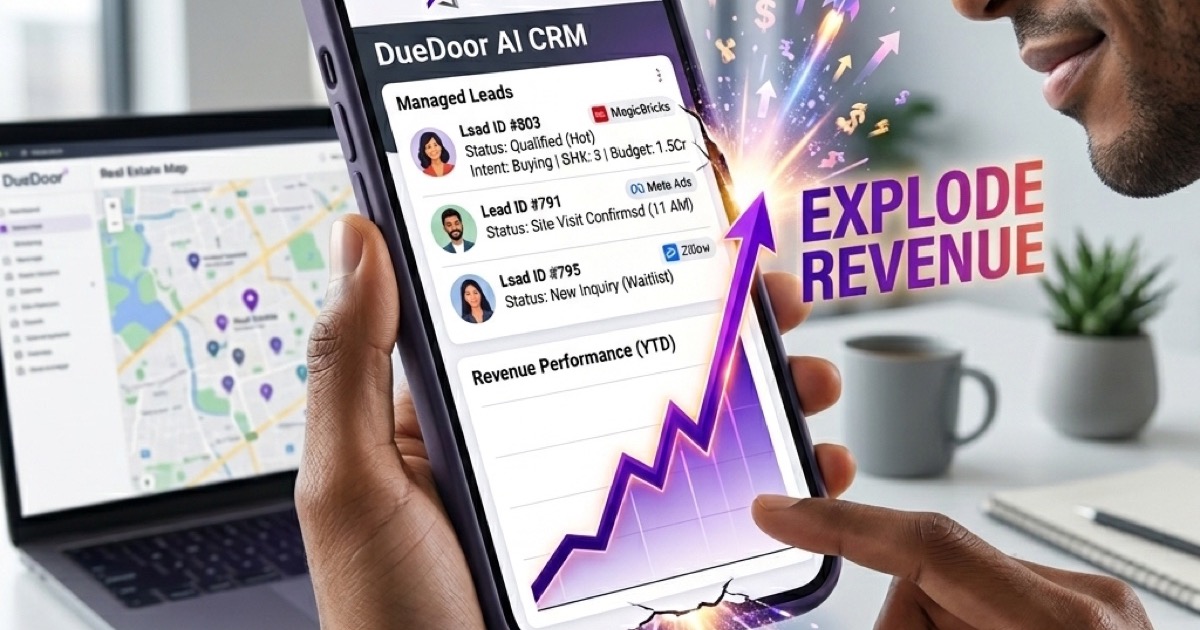
The best CRM for lead tracking in India combines pipeline visibility, WhatsApp and LinkedIn integration, and automated follow-ups built for Indian SMB workflows. DueDoor is purpose-built for this, but the right choice depends on your team size, budget, and sales channels.
India's sales landscape is noisy. Leads arrive from WhatsApp, website forms, LinkedIn outreach, trade shows, and cold calls, often landing in spreadsheets or, worse, a salesperson's memory. Without a structured system, leads go cold before anyone follows up, and revenue evaporates silently. The good news: the right CRM can transform that chaos into a predictable pipeline.
This guide cuts through the clutter and focuses specifically on what Indian SMBs, real estate firms, SaaS startups, and field sales teams actually need from a lead tracking CRM in 2026. We cover the must-have features, compare the leading platforms, and share hard-learned lessons from teams that have already made the switch.
Why Lead Tracking Matters for Indian Businesses
A lead without a home is a lead lost. Studies consistently show that most lost deals are not lost to competitors but to silence, a rep who forgot to follow up, a lead that fell out of a spreadsheet, or a WhatsApp message that got buried under dozens of others. Indian sales cycles often involve multiple touchpoints across several weeks, making structured tracking even more critical.
Consider a typical scenario: a real estate developer collects 400 inquiry leads at a property expo. Without a CRM, those leads sit in a CSV file, get distributed to three agents via WhatsApp, and within 10 days half are never contacted again. With a proper lead tracking system, each lead is assigned, scored, and placed into an automated follow-up sequence from the moment it arrives. The pipeline becomes something you can trust, not just hope works.
"The single biggest driver of improved close rates in Indian SMBs is not a better pitch, it is a system that ensures no lead is ever forgotten." - Growth operations lead at a Mumbai-based SaaS company, 2026.
What to Look for in a Lead Tracking CRM
Not every CRM is designed for the Indian market. Many Western tools assume email is the primary channel, but Indian buyers respond primarily on WhatsApp. Here are the features that genuinely matter:
- Pipeline stages you can customize: Lead, Qualified, Proposal, Negotiation, Closed. Indian sales often add stages like Site Visit or Demo Booked.
- WhatsApp integration: Native, not just a webhook. Ideally, you can see WhatsApp conversation history inside the lead card.
- Lead source attribution: Know whether your lead came from a Google Ad, a LinkedIn connection, or a website form, so you can invest budget wisely.
- Automated follow-up sequences: Drip messages over WhatsApp or email so leads are nurtured without manual effort.
- Mobile-first UI: Field sales teams in India work from phones. A CRM that is painful on mobile will be abandoned within weeks.
- INR billing and local support: Rupee pricing removes foreign-exchange headaches, and local support means issues get resolved fast.
If you are still figuring out where your leads are coming from, check this guide on the best lead generation tools for Indian businesses before investing in a CRM, because a CRM is only as good as the leads flowing into it.
Top CRMs for Lead Tracking in India Compared
Below is a practical comparison of platforms commonly used by Indian SMBs in 2026. Pricing is approximate and in INR per user per month unless noted.
| CRM | Best For | WhatsApp Native | LinkedIn Outreach | Starting Price (INR/mo) |
|---|---|---|---|---|
| DueDoor | AI-first SMB growth, multi-channel | Yes (BSP-grade) | Yes (AI-powered) | Custom / startup-friendly |
| Zoho CRM | Mid-size teams, broad integrations | Via third-party | Limited | ~1,400 |
| Salesforce Essentials | Enterprise deals, compliance | Via AppExchange | Via connector | ~2,000 |
| LeadSquared | EdTech, healthcare, field sales | Yes (add-on) | No | ~1,250 |
| HubSpot Free | Early-stage startups | No native | No | Free (limited) |
| Freshsales | B2B SaaS, email-first sales | Via integration | No | ~1,099 |
DueDoor stands out for Indian SMBs specifically because it was built around the channels Indian buyers actually use: WhatsApp Business API at scale, LinkedIn AI outreach, and a pipeline that surfaces high-intent signals automatically. For sector-specific comparisons, the CRM comparison for Indian real estate is worth reading if your business deals in property.
WhatsApp and LinkedIn as Lead Channels
In India, WhatsApp is not just a messaging app. It is the primary sales communication channel for a huge portion of SMBs. A CRM that cannot natively track WhatsApp conversations forces reps to context-switch between apps, losing critical thread history in the process. The best CRMs for lead tracking in India treat WhatsApp as a first-class inbox, not a bolt-on.
LinkedIn, meanwhile, has become India's go-to platform for B2B prospecting, especially in SaaS, consulting, logistics, and financial services. If your team is running LinkedIn outreach, you need to know which prospects have connected, which have replied, and which are sitting in a cold queue. Platforms like DueDoor provide AI-driven LinkedIn outreach that auto-sequences connection requests and follow-up messages, then logs every interaction back into the lead card.
For teams already using WhatsApp to nurture leads, this guide on effective WhatsApp marketing for lead generation explains how to structure conversations so they convert, not just engage. And if you are thinking about systematic follow-up over WhatsApp, the guide to following up with leads on WhatsApp covers templates, timing, and compliance.
Choosing a CRM on an Indian SMB Budget
Budget is a real constraint for most Indian SMBs. Here is a practical framework for making the right call without overspending:
Team size under 5 reps
Start with a free or low-cost tier. HubSpot Free works for basic pipeline tracking. If WhatsApp is core to your sales process, shortlist tools with native BSP integration even at the starter tier, because retrofitting it later is expensive in both time and data migration pain.
Team size 5 to 25 reps
This is where purpose-built Indian CRMs justify their cost. You need role-based access, team lead dashboards, and automated assignment rules. Monthly spend of INR 8,000 to 25,000 for the whole team is realistic and delivers strong ROI if the tool is actually used.
Team size over 25 reps
At this scale, automation becomes non-negotiable. AI lead scoring, drip sequences, and pipeline analytics save more time per week than the tool costs per month. Negotiate annual contracts for 20 to 30 percent savings, and insist on a 60-day onboarding SLA with the vendor.
The cost of a CRM is always dwarfed by the cost of lost leads. If your team is closing even 5 deals a month at INR 50,000 each, capturing one extra deal per month from better tracking more than pays for the tool indefinitely.
Common Lead Tracking Mistakes to Avoid
Even teams that invest in a CRM often fail to use it well. These are the most common mistakes seen in Indian SMB sales teams:
- Not tagging lead sources: If you cannot tell whether your best leads came from LinkedIn, a referral, or a Google Ad, you cannot scale what works.
- Skipping lead scoring: Treating every lead equally burns rep time on low-intent inquiries. Even a simple hot/warm/cold score changes how the team allocates effort. The guide on how to identify high-value leads provides a practical scoring framework you can implement immediately.
- Manual data entry overload: If reps hate the CRM, they will bypass it. Choose a tool where lead data auto-populates from LinkedIn, web forms, and WhatsApp, and reserve manual entry for context notes only.
- No defined pipeline stages: A pipeline with only "Open" and "Closed" tells you nothing. Define 5 to 7 stages that reflect your actual sales journey and train every rep to move leads through them consistently.
- Ignoring stale leads: Leads that have not been touched in 14 days should trigger an automatic alert or a re-engagement drip. Silence is not a strategy.
Once you have the tracking in place, the next question becomes conversion. The deep-dive guide on how to convert leads into customers covers the nurture tactics that work best once a lead is inside your pipeline.
How to Get Started with Lead Tracking Today
Getting started does not require a six-month implementation project. For most Indian SMBs, the fastest path to better lead tracking looks like this:
- Week 1: Audit where your leads currently land (WhatsApp messages, email threads, spreadsheets, sticky notes). Map every source.
- Week 2: Define your pipeline stages based on your actual sales process, not a template. Run a 30-minute workshop with your reps to get buy-in.
- Week 3: Set up your chosen CRM, import existing contacts, and connect your lead sources (website form, WhatsApp, LinkedIn).
- Week 4: Configure at least one automated follow-up sequence so that new leads receive a response within 5 minutes, even outside business hours.
The difference between teams that win and teams that leak revenue is almost never the quality of their product or pitch. It is the discipline of their system. A CRM that tracks every lead, scores intent, and fires automated follow-ups at the right moment turns an average sales team into a consistent revenue machine.
Ready to build a lead tracking system that actually works for your Indian sales team? DueDoor's AI-powered Growth CRM brings your WhatsApp, LinkedIn, and web leads into one pipeline, with automated follow-ups and live analytics, so nothing falls through the cracks. Start tracking your leads with DueDoor today.
Frequently Asked Questions
Which CRM is best for small businesses in India for lead tracking?
DueDoor, LeadSquared, and Zoho CRM are among the most popular choices for Indian small businesses. DueDoor is especially strong if WhatsApp and LinkedIn are your primary sales channels, while Zoho CRM suits teams that need deep customization and a wide app marketplace.
Does a CRM for lead tracking need WhatsApp integration in India?
For most Indian SMBs, yes. WhatsApp is the dominant sales communication channel, and a CRM without native WhatsApp integration forces reps to switch between apps and lose conversation context. Look for tools that use the official WhatsApp Business API, not unofficial workarounds.
How much does a good lead tracking CRM cost in India?
Prices range from free (HubSpot basic tier) to INR 1,000 to 2,500 per user per month for mid-range tools. For a team of 5 to 10 reps, a monthly budget of INR 8,000 to 20,000 typically covers a solid platform with automation, WhatsApp integration, and mobile access.
What is lead scoring and should I use it?
Lead scoring assigns a numeric or tiered value (hot, warm, cold) to each lead based on behavior and profile data. It helps your reps focus on the most likely-to-close prospects first. Even a simple manual scoring system increases close rates significantly compared to treating all leads equally.
Can a CRM automatically follow up with leads on WhatsApp?
Yes, modern CRMs like DueDoor can trigger WhatsApp message sequences automatically when a lead enters the pipeline, misses a scheduled callback, or goes cold for a set number of days. These sequences use the official WhatsApp Business API and comply with Meta's messaging policies.
Every lead gets an instant, qualified reply — even at 3 AM
DueDoor's AI reads the inbound WhatsApp, understands pricing/demo/support intent, replies with the right answer, and books the meeting — all in under 4 seconds. No human lifts a finger until the call itself.
- AI understands Hindi, Tamil, Telugu, Marathi, English
- Qualifies budget, team size, timeline automatically
- Books into your actual Google/Outlook calendar
- Escalates to a human only when the AI isn't 95%+ sure
WhatsApp AI
Auto-reply, drip sequences, AI qualification — 24/7.
Leads & Pipeline
Smart lead scoring with auto-routing to your team.
Email Marketing
Personalized AI emails that actually get opened.
Meta Ads AI
One-click campaigns optimized by AI daily.
SEO Engine
Content + ranking on autopilot. Like this page.
LinkedIn (PhewDo)
Outreach + replies handled end-to-end.
References & further reading
- Lead generation — Wikipedia
- HubSpot Marketing Blog
- Marketing — Wikipedia
- Digital marketing — Wikipedia
- Sales — Wikipedia