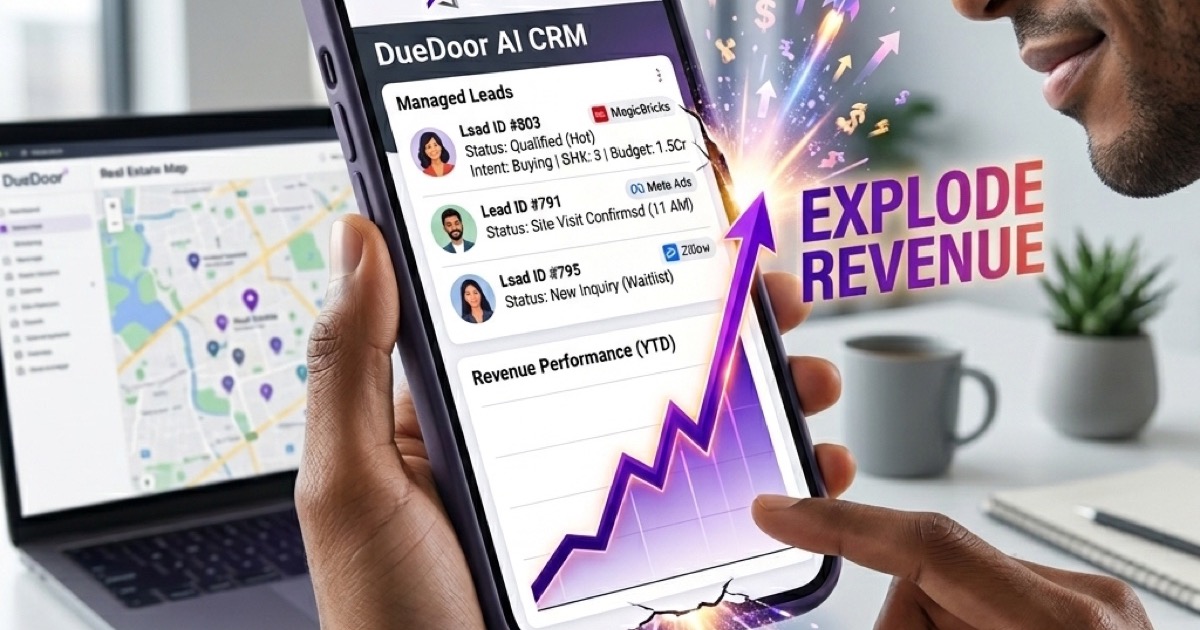
To increase lead conversion rates, score and qualify leads before investing sales time, respond within five minutes of first contact, and use automated multi-channel follow-up sequences across WhatsApp, email, and phone to keep prospects engaged.
Most Indian businesses invest heavily in generating leads but leave significant revenue on the table because their conversion process is inconsistent. A real estate developer in Pune might pull in 800 inquiries a month from portals and Google Ads, yet close fewer than 15 of them. A SaaS startup in Bengaluru runs LinkedIn campaigns that fill the pipeline with hundreds of prospects, but the sales team has no structured follow-up. The leads are not the problem. The conversion system is.
Increasing lead conversion rates is not a single tactic but a compounding set of behaviours: faster response, smarter qualification, persistent multi-channel nurturing, and continuous measurement. When each of these layers works together, conversion rates can double or triple without spending another rupee on acquisition. This guide walks through every layer, with practical benchmarks and examples relevant to Indian SMBs, mid-market companies, and global sales teams.
Why Conversion Rates Fall Short
Before optimising anything, it is worth diagnosing the root causes of poor conversion. The most common culprits are slow response time, no lead scoring, generic outreach, and leaky handoffs between marketing and sales. In high-competition markets such as real estate, edtech, or insurance, a lead who does not receive a personalised response within minutes will fill out a competitor form before lunch.
The second invisible killer is premature disqualification. Sales reps who are chasing easy wins often abandon mid-funnel prospects after two attempts. Research consistently shows that 47 percent of leads never receive a second follow-up, which means nearly half of pipeline investment is wasted. Fixing these structural issues is cheaper and faster than running another paid campaign.
Define and Score Your Leads
Lead scoring assigns numerical weight to behaviours and attributes so your team knows exactly who to call first. A prospect who visited your pricing page three times, opened two emails, and works at a company with 50-plus employees should rank far higher than someone who filled in a form but has shown no further engagement.
Build a simple scoring matrix
- Demographic fit: Industry, company size, location, and budget range. Award 10 to 30 points per matching criterion.
- Behavioural signals: Page visits, content downloads, webinar attendance, and WhatsApp replies each earn incremental points.
- Negative signals: Deduct points for personal email addresses, mismatched job titles, or long stretches of inactivity.
- Score thresholds: Define a Marketing Qualified Lead (MQL) floor and a Sales Qualified Lead (SQL) floor so handoffs happen automatically, not by gut feel.
Tools that surface high-value leads automatically save dozens of hours per week that would otherwise go into manual triage. When scoring is embedded in your CRM, every rep starts the day knowing who deserves the first call.
Speed to Lead: The Five-Minute Rule
The data on response speed is unambiguous. Contacting a lead within five minutes of their inquiry makes conversion five times more likely than waiting 30 minutes, and 21 times more likely than waiting 24 hours. For Indian SMBs handling leads from Justdial, IndiaMart, or Facebook, this window is often the difference between a booking and a bounce.
Achieving five-minute response at scale requires automation. An AI-powered CRM can detect a new inquiry, look up the prospect's profile, and fire a personalised WhatsApp message before any human even sees the notification. That first touch keeps the lead warm and buys time for a sales rep to join the conversation. DueDoor does exactly this: its AI engine triggers an immediate WhatsApp or email response the moment a lead enters the system, so no inquiry ever goes cold.
"We went from a 6-hour average response time to under 4 minutes after implementing automated lead alerts. Our real estate inquiry-to-site-visit conversion jumped from 8 percent to 22 percent in the first quarter." - Sales Director, residential developer, Hyderabad
Multi-Channel Follow-Up Sequences
A single WhatsApp message or one email rarely converts a cold lead into a customer. High-converting teams run structured sequences across multiple channels, spacing touches over days or weeks to stay visible without being intrusive. The sequence typically looks like this:
- Day 0: Instant WhatsApp acknowledgement plus a brief introductory email.
- Day 1: Phone call attempt with a voicemail if unanswered.
- Day 3: Value-add WhatsApp message - a case study, a relevant blog post, or a comparison guide.
- Day 7: Second email with a specific offer or invitation to a demo.
- Day 14: Final breakup message that creates mild urgency without pressure.
WhatsApp is the dominant channel for Indian SMB follow-up because open rates routinely exceed 90 percent. Using WhatsApp to follow up leads intelligently - with approved templates, personalised variables, and timed drips - dramatically improves response rates compared to cold calling alone. Combine WhatsApp with email and LinkedIn for enterprise prospects to cover every touchpoint in the buyer's day.
For a deeper view of how WhatsApp fits into a complete lead generation strategy, the guide on effective WhatsApp marketing for lead generation covers template design, broadcast segmentation, and reply automation in detail.
Qualification Frameworks That Work
Not every lead deserves the same depth of sales effort. BANT (Budget, Authority, Need, Timeline) is the classic framework, but modern sales teams often use MEDDIC or a simplified version called GPCTBA/C&I for complex enterprise deals. For Indian SMBs with shorter sales cycles, a three-question qualification checklist works well:
- Does the prospect have a real and immediate problem your product solves?
- Can they make or influence the buying decision?
- Is their timeline within your current quarter?
Leads that fail all three criteria should enter a long-nurture track rather than consuming active sales bandwidth. Leads that pass all three should be escalated within the hour. This triage discipline alone typically lifts overall conversion rates by 15 to 25 percent because reps stop spending half their day on leads that were never going to close this month.
Conversion Rate Benchmarks by Industry
Understanding where you stand relative to industry peers helps set realistic improvement targets. The table below shows typical lead-to-customer conversion rates for Indian B2B and B2C sectors, based on aggregated sales data from 2026.
| Industry | Average Conversion Rate | Top-Quartile Rate | Key Conversion Driver |
|---|---|---|---|
| Real Estate (residential) | 2 - 4% | 8 - 12% | Speed to site visit |
| B2B SaaS / Tech | 5 - 10% | 18 - 25% | Demo booking rate |
| Financial Services | 3 - 7% | 12 - 18% | Trust signals and follow-up cadence |
| EdTech / Coaching | 4 - 8% | 15 - 22% | Free trial or demo class offer |
| Healthcare / Clinics | 6 - 12% | 20 - 30% | WhatsApp appointment booking |
| Retail / D2C eCommerce | 1 - 3% | 5 - 9% | Abandoned-cart recovery speed |
If your conversion rate sits in the bottom half of your industry range, focus on the key driver column first. Fixing that single variable often moves the needle faster than any broad-brush optimisation effort. For real estate teams evaluating CRM options, the CRM comparison for Indian real estate outlines which platforms handle high-volume inquiry management best.
Personalisation at Scale
Generic outreach destroys conversion. A prospect who receives a WhatsApp message that reads "Hi, I saw you were interested in our product" is far less likely to respond than one who gets "Hi Rajesh, I noticed you checked out our commercial leasing page twice this week - happy to share a case study from a manufacturing company in Pune with a similar profile."
Personalisation at scale requires three things: good data capture at the point of inquiry, a CRM that surfaces context at the moment of outreach, and templatised messages with dynamic variables. DueDoor's AI Growth CRM stores prospect behaviour, company data, and conversation history in one view so reps never need to switch tabs to find context. They open the lead card, see everything, and send a personalised message in seconds.
AI-assisted personalisation is also now practical for LinkedIn outreach. Instead of sending the same connection note to 200 prospects, an AI agent can tailor each message based on the prospect's role, recent posts, and company size. When you combine personalised LinkedIn sequences with WhatsApp nurturing, you cover the two channels where Indian decision-makers spend the most time. The guide covering the best lead generation tools for Indian businesses benchmarks the top platforms that offer this kind of AI-driven personalisation without requiring a large tech team.
Measure, Optimise, and Repeat
No conversion strategy survives contact with the market unchanged. The teams that consistently hit top-quartile conversion rates run regular conversion audits, testing one variable at a time: subject line, message timing, offer framing, or follow-up channel. The four metrics that matter most are:
- Lead response time: Track median minutes from inquiry to first human or automated touch. Target under five minutes.
- Contact rate: The percentage of leads who respond to at least one outreach attempt. Under 30 percent signals a channel or message problem.
- Qualified rate: The share of contacted leads who meet your MQL or SQL criteria. If this is below 20 percent, re-examine your traffic sources and landing page copy.
- Close rate: Leads who become paying customers. This is the headline metric, but fixing the three upstream rates above is what actually moves it.
A/B test your WhatsApp templates monthly. Review lost deals every fortnight to find objection patterns. Share conversion data across sales and marketing so both teams align on what a good lead looks like. For a complete playbook on turning qualified prospects into paying customers, the article on how to convert leads into customers covers the full funnel from first touch to signed contract.
DueDoor provides built-in conversion analytics, automated follow-up sequences, and AI lead scoring in one platform built for Indian SMBs and global sales teams. If you are ready to stop leaving revenue on the table, try DueDoor free and see your conversion rate climb within the first 30 days.
Frequently Asked Questions
What is a good lead conversion rate for Indian businesses?
A good lead conversion rate varies by industry. For B2B SaaS it is typically 5 to 10 percent on average and 18 to 25 percent for top performers. For real estate the average is 2 to 4 percent. The most important benchmark is improvement over your own historical rate, not just industry averages.
How quickly should I respond to a new lead?
You should respond within five minutes of a lead's first inquiry. Studies show that leads contacted within five minutes are five times more likely to convert than those contacted after 30 minutes. Automation tools can fire an immediate WhatsApp or email response even outside business hours.
How many follow-up attempts should I make before giving up?
Most high-converting sales teams make six to eight contact attempts across multiple channels before marking a lead as unresponsive. The key is spacing them intelligently over 10 to 14 days rather than sending multiple messages on the same day, which can feel spammy.
Does lead scoring actually improve conversion rates?
Yes. Companies that use lead scoring consistently report 15 to 30 percent higher conversion rates because sales reps focus their time on the most ready-to-buy prospects. Lead scoring also reduces the time reps spend chasing low-intent leads who were never likely to close in the current quarter.
Which channel converts leads best - WhatsApp, email, or phone?
For Indian SMBs, WhatsApp typically delivers the highest engagement with open rates above 90 percent, making it the strongest first-touch and nurture channel. Phone calls remain important for high-ticket sales. A multi-channel approach combining WhatsApp, email, and phone outperforms any single channel for most business types.
Every lead gets an instant, qualified reply — even at 3 AM
DueDoor's AI reads the inbound WhatsApp, understands pricing/demo/support intent, replies with the right answer, and books the meeting — all in under 4 seconds. No human lifts a finger until the call itself.
- AI understands Hindi, Tamil, Telugu, Marathi, English
- Qualifies budget, team size, timeline automatically
- Books into your actual Google/Outlook calendar
- Escalates to a human only when the AI isn't 95%+ sure
WhatsApp AI
Auto-reply, drip sequences, AI qualification — 24/7.
Leads & Pipeline
Smart lead scoring with auto-routing to your team.
Email Marketing
Personalized AI emails that actually get opened.
Meta Ads AI
One-click campaigns optimized by AI daily.
SEO Engine
Content + ranking on autopilot. Like this page.
LinkedIn (PhewDo)
Outreach + replies handled end-to-end.
References & further reading
- Lead generation — Wikipedia
- HubSpot Marketing Blog
- Marketing — Wikipedia
- Digital marketing — Wikipedia
- Sales — Wikipedia