Lead quality is measured by scoring prospects against fit criteria (budget, authority, need, timeline) and tracking downstream metrics like close rate, sales cycle length, and revenue per lead. The higher a lead scores on these dimensions, the higher its quality.
Most sales teams obsess over the number of leads in their pipeline. More leads means more chances to close, right? Not exactly. A pipeline stuffed with poor-fit prospects drains your sales team's time, inflates your cost per acquisition, and produces revenue that never materialises. In 2026, the companies winning the growth game are those that measure and optimise lead quality, not just lead quantity.
This guide walks you through the exact metrics, models, and processes used by high-performing sales teams in India and globally to measure lead quality, rank prospects accurately, and feed only the best opportunities into their closing workflow. Whether you run a 5-person startup or a 500-person enterprise sales team, these frameworks apply directly to your situation.
Why Lead Quality Matters More Than Volume
Imagine two sales reps. Rep A works 100 leads per month with a 5% close rate and closes 5 deals. Rep B works 40 leads per month with a 20% close rate and closes 8 deals. Rep B does less work and produces 60% more revenue. The difference is almost entirely lead quality.
For Indian SMBs especially, where sales teams are lean and every hour of selling time counts, working low-quality leads is an expensive habit. A prospect who downloaded a free checklist out of idle curiosity is not the same as a prospect who compared your pricing page three times this week. Treating them the same wastes the closer's most precious resource: attention.
Lead quality directly affects:
- Average deal size and revenue predictability
- Sales cycle length (poor-fit leads drag cycles out by weeks)
- Customer lifetime value (good-fit customers churn less and expand more)
- Team morale (closing good leads is energising; chasing bad ones is demoralising)
Key Metrics to Measure Lead Quality
There is no single number that captures lead quality. Instead, you triangulate using a set of downstream metrics that reveal how a cohort of leads actually performed.
| Metric | What It Measures | Target Benchmark |
|---|---|---|
| Lead-to-Opportunity Rate | % of leads that become qualified opportunities | 20-40% for outbound, 40-60% for inbound |
| Opportunity-to-Close Rate | % of opportunities that close as won | 25-35% for SMB, 15-25% for enterprise |
| Average Sales Cycle Length | Days from first contact to closed-won | Varies by segment; track trends over time |
| Revenue per Lead (RPL) | Total closed revenue divided by total leads | Higher = better quality cohort |
| Cost per Qualified Lead (CPQL) | Spend divided by number of qualified leads | Lower than CAC target divided by close rate |
| First-Year Churn Rate by Source | Which lead sources produce customers who stay | Under 10% annually for high-quality segments |
Track these metrics segmented by source, campaign, and sales rep. Patterns in the data reveal which channels are delivering genuine buyers and which are filling your CRM with noise.
Lead Scoring Models That Actually Work
Lead scoring assigns a numerical value to each prospect based on how closely they match your ideal customer profile and how engaged they are with your brand. The two dominant frameworks are BANT and MEDDIC, but modern teams blend both with behavioural data.
BANT Scoring
BANT (Budget, Authority, Need, Timeline) is the classic qualification framework. Score each dimension on a 0-10 scale and sum them for a total out of 40. A score above 28 typically indicates a sales-ready lead.
- Budget: Can they afford your solution? Have they mentioned a budget range?
- Authority: Are you talking to the decision-maker or an influencer?
- Need: Do they have a concrete problem your product solves?
- Timeline: Are they buying in the next 30, 60, or 90 days?
Predictive Scoring
AI-powered predictive scoring analyses hundreds of attributes simultaneously, including firmographic data, technology stack, engagement history, and similar-customer patterns, to assign a probability score. Tools like DueDoor use this approach to surface high-value leads automatically, so your team focuses energy where it matters most. Predictive models improve over time as they ingest your closed-won and closed-lost data.
Behavioral vs Demographic Signals
Lead quality signals fall into two broad categories: who the prospect is (demographic/firmographic) and what they do (behavioural). Both matter, but they play different roles in qualification.
Demographic and Firmographic Signals
- Industry vertical and company size (does the prospect fit your ICP?)
- Job title and seniority (are they the buyer or the user?)
- Geography and language (Indian SMB, Gulf enterprise, global SaaS team?)
- Technology stack (are they already using complementary or competing tools?)
- Funding stage and revenue band
Behavioural Signals
- Pricing page visits (high intent, especially repeat visits)
- Demo request or free trial sign-up
- Email open and click patterns across multiple touchpoints
- WhatsApp message responses (reply speed and depth indicate genuine interest)
- LinkedIn engagement with your content
- Time spent on feature pages vs blog posts
"A prospect who visits your pricing page three times in a week is worth ten times more of your sales team's attention than one who opened a single newsletter email six months ago. Recency and depth of engagement are the sharpest quality signals available."
For Indian SMBs using WhatsApp as a primary communication channel, response behaviour on WhatsApp drip sequences is one of the richest quality signals available. Learn how to build those sequences with our guide on following up with leads on WhatsApp.
Using CRM Data and Pipeline Analysis
Your CRM is the single best source of truth for understanding lead quality patterns, but only if the data inside it is clean and consistently entered. Start with a pipeline audit.
Running a Pipeline Quality Audit
Filter your closed-won deals from the last 12 months and look for patterns: Which sources produced them? Which job titles? Which industries? Which sequence of touchpoints preceded the first serious conversation? This retrospective analysis builds your ideal lead profile, a data-backed picture of what a good lead actually looks like for your business.
Next, run the same analysis on closed-lost deals. Look for anti-patterns: sources with low close rates, deal sizes that consistently over-promise and under-deliver, segments where sales cycles run 2x longer than average. These are your low-quality lead signatures, and you can now score against them proactively.
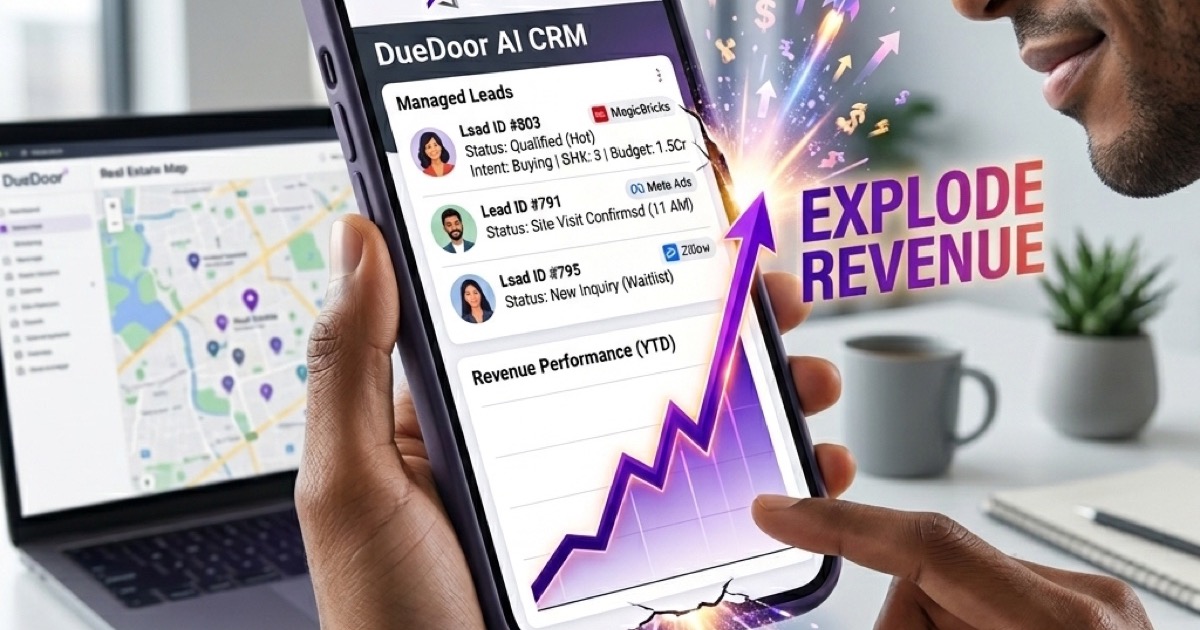
DueDoor's AI Growth CRM does this analysis automatically, tagging leads with quality scores and surfacing pipeline health warnings before a deal goes cold. It also integrates WhatsApp, LinkedIn, and email engagement data into a single prospect timeline, so your team always has full context.
For teams evaluating CRM options specifically for the Indian market, our detailed CRM comparison for Indian businesses covers the key capabilities to look for in a quality-focused pipeline tool.
Common Mistakes When Measuring Lead Quality
Even experienced sales teams make avoidable errors when setting up their quality measurement systems. Here are the most common pitfalls.
- Measuring MQLs instead of revenue: A Marketing Qualified Lead is a marketing team's opinion. Revenue per lead is a fact. Base your quality metrics on downstream outcomes, not upstream labels.
- Ignoring lead source attribution: If you don't know where a lead came from, you can't improve sourcing. Insist on source tagging for every lead entering your CRM.
- Treating all verticals the same: A 10-person real estate agency in Pune and a 200-person logistics company in Chennai have completely different buying processes. Segment your scoring models by vertical.
- Not closing the feedback loop: Sales reps hold critical quality intelligence (why deals were lost, what objections came up, which prospects ghosted). Build a structured feedback loop from sales back to marketing and demand generation.
- Updating scoring models too rarely: Market conditions, product positioning, and ICP definitions shift. Review and recalibrate your scoring model at least once a quarter.
- Confusing activity with engagement: A lead who attended three webinars but never replied to a direct outreach message may be a researcher, not a buyer. Weight direct response signals more heavily than passive consumption.
Tools and Automation to Streamline Quality Tracking
Manual lead scoring is better than no scoring, but it doesn't scale. As your pipeline grows, automation becomes essential for consistent, real-time quality assessment.
The core toolset for lead quality measurement includes:
- A CRM with native lead scoring and pipeline analytics (not just a contact database)
- Marketing automation that tracks multi-channel engagement and feeds scores into the CRM
- WhatsApp Business API integration for tracking response behaviour at scale
- LinkedIn outreach automation that logs engagement data back to prospect records
- An enrichment layer that appends firmographic data automatically on new lead creation
For Indian SMBs building this stack from scratch, our roundup of the best lead generation tools for Indian businesses covers options at every budget tier. Separately, if WhatsApp is a core part of your outreach strategy, the WhatsApp marketing guide for lead generation explains how to structure sequences that surface quality signals automatically.
DueDoor combines all of these capabilities into one platform, scoring leads in real time across WhatsApp, LinkedIn, and email touchpoints, and surfacing the warmest prospects to your sales reps with full engagement context attached.
Your 30-Day Lead Quality Action Plan
Knowing the theory is one thing. Executing it in 30 days is another. Here is a concrete plan to get your lead quality measurement system operational quickly.
- Week 1 - Audit: Export your last 12 months of closed-won and closed-lost data from your CRM. Identify your top 3 high-quality sources and your top 3 low-quality sources. Calculate current revenue per lead by source.
- Week 2 - Define: Build your ideal customer profile using the closed-won data. Define your BANT scoring rubric with specific criteria for each score level. Get buy-in from both sales and marketing on the definitions.
- Week 3 - Implement: Set up lead scoring in your CRM. Create a "high quality" threshold that auto-routes leads to your fastest responders. Tag every new lead with a source and a score on entry.
- Week 4 - Close the loop: Add a "reason for loss" field to closed-lost deals. Schedule a weekly 30-minute sales-marketing sync to review quality trends. Set a calendar reminder to recalibrate scoring criteria in 90 days.
Once your scoring system is live, the next challenge is converting those high-quality leads efficiently. Our guide on how to convert leads into customers covers the follow-up cadences, objection handling frameworks, and closing techniques that pair best with a quality-first pipeline strategy.
Ready to put lead quality measurement on autopilot? DueDoor's AI Growth CRM scores every inbound and outbound lead in real time, flags your hottest prospects, and gives your team a full engagement timeline across every channel. Start your free DueDoor trial today and see which leads in your current pipeline are actually worth chasing.
Frequently Asked Questions
What is the best way to measure lead quality?
The best approach combines a structured scoring model (such as BANT or predictive AI scoring) with downstream metrics like close rate, revenue per lead, and sales cycle length. Measuring both upfront fit signals and actual conversion outcomes gives a complete picture of quality.
What is a good lead quality score?
This depends on your scoring model, but as a general rule, leads scoring above 70% of the maximum possible score should be routed to active sales follow-up. Calibrate your threshold using historical closed-won data to find the score level that correlates with your best customers.
How is lead quality different from lead quantity?
Lead quantity is the raw count of prospects entering your pipeline. Lead quality measures how likely those prospects are to convert into revenue-generating customers. High quantity with low quality leads to wasted sales effort, while high quality leads produce more revenue from fewer prospects.
Which metrics are most useful for tracking lead quality over time?
Revenue per lead (RPL), lead-to-close rate, and first-year customer churn rate by source are the three most predictive metrics for lead quality trends. Track them monthly, segmented by source and campaign, to spot quality improvements or deterioration quickly.
Can WhatsApp engagement be used to measure lead quality for Indian SMBs?
Yes, WhatsApp response behaviour is one of the richest quality signals for Indian SMB sales teams. Leads who reply quickly, ask specific product questions, or engage across multiple WhatsApp touchpoints show much higher intent than passive email subscribers. Integrate WhatsApp engagement data into your scoring model for a sharper quality picture.
Every lead gets an instant, qualified reply — even at 3 AM
DueDoor's AI reads the inbound WhatsApp, understands pricing/demo/support intent, replies with the right answer, and books the meeting — all in under 4 seconds. No human lifts a finger until the call itself.
- AI understands Hindi, Tamil, Telugu, Marathi, English
- Qualifies budget, team size, timeline automatically
- Books into your actual Google/Outlook calendar
- Escalates to a human only when the AI isn't 95%+ sure
WhatsApp AI
Auto-reply, drip sequences, AI qualification — 24/7.
Leads & Pipeline
Smart lead scoring with auto-routing to your team.
Email Marketing
Personalized AI emails that actually get opened.
Meta Ads AI
One-click campaigns optimized by AI daily.
SEO Engine
Content + ranking on autopilot. Like this page.
LinkedIn (PhewDo)
Outreach + replies handled end-to-end.