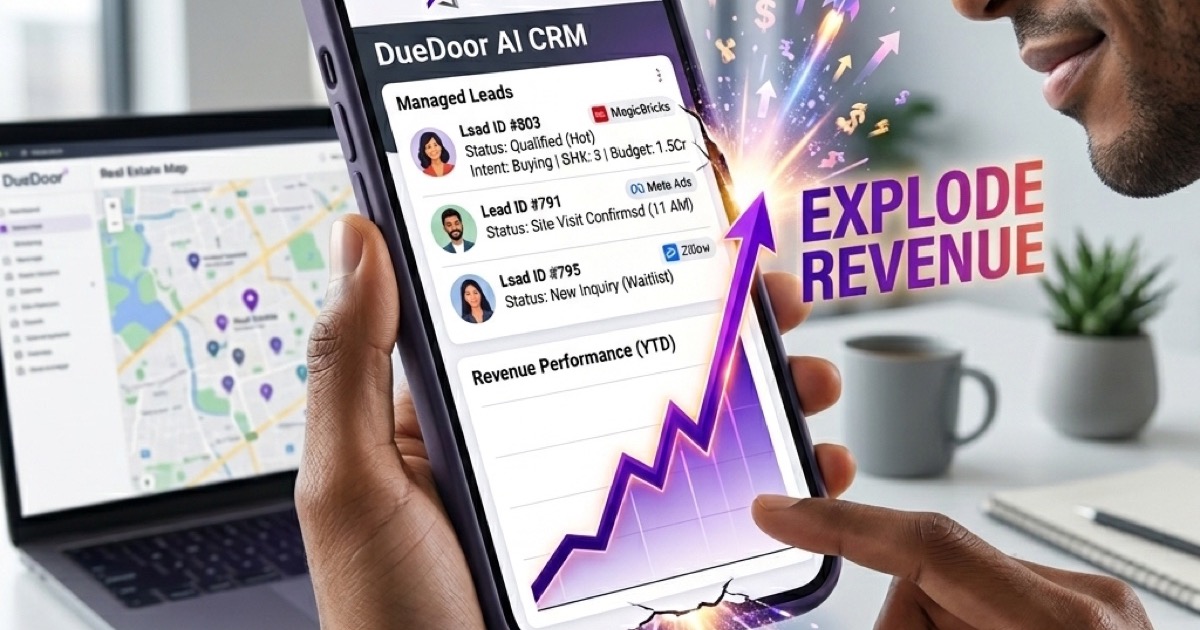
The biggest challenges faced in real estate listings include low-quality leads, inaccurate property data, slow follow-up, and poor visibility on portals. AI-driven CRM tools help agents overcome these hurdles by automating outreach, enriching listings, and tracking every inquiry in real time.
Real estate in India is one of the most competitive and fragmented markets in the world. From sprawling metro projects in Mumbai and Bengaluru to township developments in Tier-2 cities, the sheer volume of listings across platforms like MagicBricks, 99acres, and Housing.com creates a noisy battlefield where even quality properties get buried. Agents and builders who do not understand the core challenges faced in real estate listings risk losing serious buyers to competitors who simply respond faster or present information more clearly.
The good news is that most of these challenges are systematic, not random. Whether you are an individual broker managing a handful of listings or a developer handling hundreds of units, the pain points are predictable: bad lead data, slow follow-up, inaccurate listing details, pricing mismatches, and tangled compliance paperwork. This guide breaks down each challenge and shows you what modern agents are doing to fix them before deals fall apart.
Why Real Estate Listings Often Fail
A listing failure rarely happens because of the property itself. In most cases, the property is priced reasonably and located well. Listings fail because of execution gaps: unclear photographs, vague descriptions, wrong locality tags, or simply no one following up with the inquiries that do arrive. Studies across Indian real estate portals consistently show that the first agent to respond wins the appointment in over 70 percent of cases. That single fact explains why speed of response is the single most leveraged improvement any agent can make.
Beyond response speed, listings fail when they do not match search intent. A buyer searching for a 2 BHK under Rs 60 lakh in Pune's Wakad micro-market is running a very specific query. If your listing is tagged only to "Pune" without the sub-locality, the portal algorithm will not surface it to the right buyer, no matter how good the property is. Granular data entry is unglamorous work, yet it directly determines how many relevant eyes see your listing.
The Lead Quality Problem
Every agent knows the frustration: you pay for a premium listing on a portal, get thirty inquiries over two weeks, and discover that twenty-five of them are either wrong numbers, casual browsers with no budget, or worse, competitor agents doing market research. Low lead quality is perhaps the most demoralising challenge in real estate listings because it wastes time, inflates cost-per-acquisition, and burns out sales teams.
The root causes are structural. Portal lead-gen forms are deliberately low-friction to maximise volume for the platform. Buyers fill them in with a single tap, often without a clear intent to transact. Agents then spend hours on calls that lead nowhere. The fix is a two-part approach: first, enrich every inbound lead immediately with qualifying data (budget range, timeline, loan pre-approval status); second, segment leads by intent score before assigning them to senior agents. For a deeper look at how modern tools handle this, see this overview of the best tools for managing real estate leads in the Indian market.
Data Accuracy and Portal Visibility
Inaccurate listing data costs Indian real estate professionals billions of rupees in lost deals every year. Common errors include wrong carpet area versus built-up area, outdated pricing, missing amenity details, and photographs that do not represent the current state of the property. When a buyer arrives for a site visit expecting what they saw online and finds something different, trust evaporates instantly and so does the sale.
| Listing Data Issue | Frequency (Approx.) | Impact on Deal |
|---|---|---|
| Wrong carpet vs built-up area | 38% of listings | Buyer drops out at site visit |
| Outdated pricing | 29% of listings | Negotiation breakdown |
| Stale or poor-quality photos | 45% of listings | Low inquiry volume |
| Missing sub-locality tags | 33% of listings | Poor portal ranking |
| No floor plan or RERA number | 51% of listings | Reduced buyer confidence |
Portal visibility is a related but distinct challenge. Portals use algorithmic ranking that rewards freshness, completeness, and response rate. Agents who update listings weekly, respond to inquiries within minutes, and fill in every optional data field consistently outrank those who post once and forget. Understanding the common issues with property listings is a prerequisite to building a visibility strategy that actually compounds over time.
The Follow-Up Gap That Kills Deals
Real estate is a high-consideration purchase. A buyer researching a Rs 80 lakh apartment in Hyderabad will typically visit five to eight properties, speak to multiple agents, and take three to six months before making a decision. During that window, consistent, value-adding follow-up is what keeps your listing top of mind. Most agents manage this through a personal notebook, a basic spreadsheet, or memory alone. All three approaches break down under volume.
"We had over 200 active leads at any given time. Without a system, we were calling the same cold prospects twice and forgetting the hot ones entirely. Switching to an automated follow-up workflow cut our average time-to-visit by nearly half." - Sales Manager, mid-size Bengaluru developer, 2026
Automated WhatsApp follow-up sequences, personalised by property type and buyer budget, have emerged as the most effective channel for Indian real estate agents. Response rates on WhatsApp in India are significantly higher than on email, making it the default nurturing tool for serious agents. Platforms like DueDoor combine WhatsApp Business API automation with a pipeline CRM so that every lead automatically enters a nurture sequence the moment it is captured, regardless of which portal it came from. You can explore more about the common mistakes in real estate listings that stem from manual, disconnected follow-up processes.
Competition and Pricing Pressure
In any active micro-market, a buyer searching for a 3 BHK in Noida Extension might see forty similar listings within a five-kilometre radius. Differentiation becomes critical. Agents who compete solely on price enter a race to the bottom that erodes margins and undermines the perceived value of good inventory. The smarter play is to compete on information quality and service speed.
Buyers will pay a small premium, or at least shortlist you first, when you provide a detailed neighbourhood analysis, a transparent breakdown of all-in costs including stamp duty and registration, and a responsiveness that makes them feel like a priority. Agents who systemise their listing presentations, using templated pitch decks, virtual tour links, and instant WhatsApp callbacks, consistently outperform those relying on ad hoc conversations. Understanding what listing management software in India can do for presentation consistency is a practical starting point for any team feeling the squeeze from portal competition.
Compliance and Legal Hurdles in India
RERA (Real Estate Regulatory Authority) registration, GST applicability on under-construction properties, TDS deductions on property purchases above Rs 50 lakh, and state-specific stamp duty structures make Indian real estate transactions legally complex. Agents who are not up to date on compliance details lose deals because buyers feel uncertain about proceeding without clear guidance.
Common compliance traps include:
- Missing RERA registration numbers on listings for under-construction projects, which is now a legal requirement in most states.
- Incorrect GST representation where agents quote ex-GST prices without being transparent about the tax load on the buyer.
- Outdated OC (Occupancy Certificate) status for resale properties, leading to lender rejection at the loan stage.
- Non-disclosure of encumbrances such as existing mortgages or litigation, which surface during due diligence and kill otherwise agreed deals.
- TDS non-compliance where buyers are unaware of their obligation to deduct one percent TDS and deposit it with the government before completing the sale.
Building a compliance checklist into your listing creation workflow, and being the agent who proactively educates buyers about these requirements, is a genuine competitive advantage in a market where most agents stay silent until a problem arises.
Technology Solutions for Modern Agents
The challenges described above are solvable, but they require moving beyond spreadsheets and manual WhatsApp messages. The Indian market now has a mature ecosystem of affordable technology built specifically for real estate agents and developers.
A good technology stack for a real estate team in 2026 should cover four functions: lead capture and enrichment, listing management and syndication, automated follow-up and nurturing, and pipeline tracking with deal-stage visibility. DueDoor addresses all four in a single platform designed for Indian SMBs, with WhatsApp Business API integration built in rather than bolted on as an afterthought. For teams worried about budget, there are genuinely affordable CRM solutions for Indian businesses that deliver enterprise-grade automation at SMB-friendly pricing.
Key technology features that directly address the challenges in this article include:
- AI lead scoring that ranks inbound inquiries by intent, budget signals, and engagement history so agents focus their calls on the most convertible prospects first.
- Automated WhatsApp drip sequences triggered by listing inquiry, site visit booking, or re-engagement after thirty days of silence.
- Portal feed integrations that push listing updates to multiple portals simultaneously, eliminating the manual copy-paste errors that corrupt data accuracy.
- Pipeline dashboards that show exactly how many leads are at each deal stage, which listings have the longest average sales cycles, and which team members are underperforming on follow-up.
- RERA and document checklists embedded in the deal workflow so compliance tasks are never forgotten during a busy sales sprint.
For a broader look at how these tools fit into a real estate marketing strategy, see this guide on effective marketing tools for small businesses that apply directly to property sales teams.
A Practical Action Plan for 2026
If you manage real estate listings and want to address the challenges in this guide systematically, start with the highest-impact changes first:
- Audit your top ten listings this week. Check every data field: carpet area, RERA number, current photographs, sub-locality tags, and pricing. Fix errors before spending more on portal promotion.
- Set a five-minute response rule. Any inquiry that is not acknowledged within five minutes via WhatsApp or call is statistically unlikely to convert. Automate the first response if manual speed is not achievable.
- Segment your lead database by intent. Separate buyers who have a confirmed budget and a timeline from those who are still exploring. Nurture both groups, but with different cadences and content.
- Build a compliance packet for every listing type. Under-construction, resale, commercial, and plot listings each have different regulatory requirements. A ready-made explainer document you can share with buyers builds trust and reduces last-minute surprises.
- Invest in one integrated platform rather than four disconnected tools. The overhead of managing separate apps for lead capture, follow-up, listing management, and reporting is itself a productivity drain that adds up to hours every week. DueDoor is built specifically for this consolidation, with plans starting at price points accessible to independent agents and small developer teams across India.
The challenges faced in real estate listings are real and persistent, but they are not unique to any one agent. The market rewards those who build systems, not just those who work harder. In a year where AI-powered CRM adoption among Indian real estate professionals is accelerating sharply, the gap between agents using smart automation and those relying on manual processes will only widen.
Ready to eliminate the follow-up gaps, lead quality problems, and listing errors slowing down your sales pipeline? Start your free DueDoor trial and see how AI-powered listing management and WhatsApp automation can transform your real estate business. Open your DueDoor dashboard now and set up your first automated lead nurture sequence in under fifteen minutes.
Frequently Asked Questions
What are the most common challenges faced in real estate listings in India?
The most common challenges include poor lead quality from portals, inaccurate property data such as wrong carpet area or outdated pricing, slow follow-up that lets hot leads go cold, intense pricing competition within micro-markets, and compliance complexity around RERA, GST, and TDS requirements. Addressing these systematically with technology and clear processes is the path to consistent deal flow.
How does slow follow-up affect real estate listing performance?
Research consistently shows that the first agent to respond to an inquiry wins the appointment in more than 70 percent of cases. Slow follow-up, even by a few hours, allows competing agents to step in and schedule site visits first. Automated WhatsApp acknowledgements and AI-powered lead routing can close this gap without requiring a larger sales team.
Is RERA registration mandatory for all real estate listings in India?
RERA registration is mandatory for all under-construction residential projects with a land area above 500 square metres or more than eight units, as well as for real estate agents facilitating such transactions. Completed and ready-to-move properties are generally exempt, but displaying the RERA number even for resale listings where available builds buyer confidence and is considered best practice.
How can real estate agents improve lead quality from property portals?
Agents can improve lead quality by using a CRM to enrich inbound leads immediately with qualifying questions about budget, timeline, and loan pre-approval status, then scoring leads by intent before assigning them to agents. Investing in premium listings with complete data and high-quality photography also filters for more serious buyers on most portals.
What technology does a real estate agent need to manage listings effectively in 2026?
An effective technology stack for real estate agents in 2026 should include a CRM with AI lead scoring, WhatsApp Business API automation for follow-up sequences, portal syndication to push listing updates across platforms, and a pipeline dashboard to track deal stages and team performance. Integrated platforms like DueDoor combine all of these functions at pricing accessible to independent agents and small developer teams in India.
Every lead gets an instant, qualified reply — even at 3 AM
DueDoor's AI reads the inbound WhatsApp, understands pricing/demo/support intent, replies with the right answer, and books the meeting — all in under 4 seconds. No human lifts a finger until the call itself.
- AI understands Hindi, Tamil, Telugu, Marathi, English
- Qualifies budget, team size, timeline automatically
- Books into your actual Google/Outlook calendar
- Escalates to a human only when the AI isn't 95%+ sure
WhatsApp AI
Auto-reply, drip sequences, AI qualification — 24/7.
Leads & Pipeline
Smart lead scoring with auto-routing to your team.
Email Marketing
Personalized AI emails that actually get opened.
Meta Ads AI
One-click campaigns optimized by AI daily.
SEO Engine
Content + ranking on autopilot. Like this page.
LinkedIn (PhewDo)
Outreach + replies handled end-to-end.
References & further reading
- Online marketplace — Wikipedia
- Shopify (official)
- Online advertising — Wikipedia
- Marketing — Wikipedia
- Digital marketing — Wikipedia