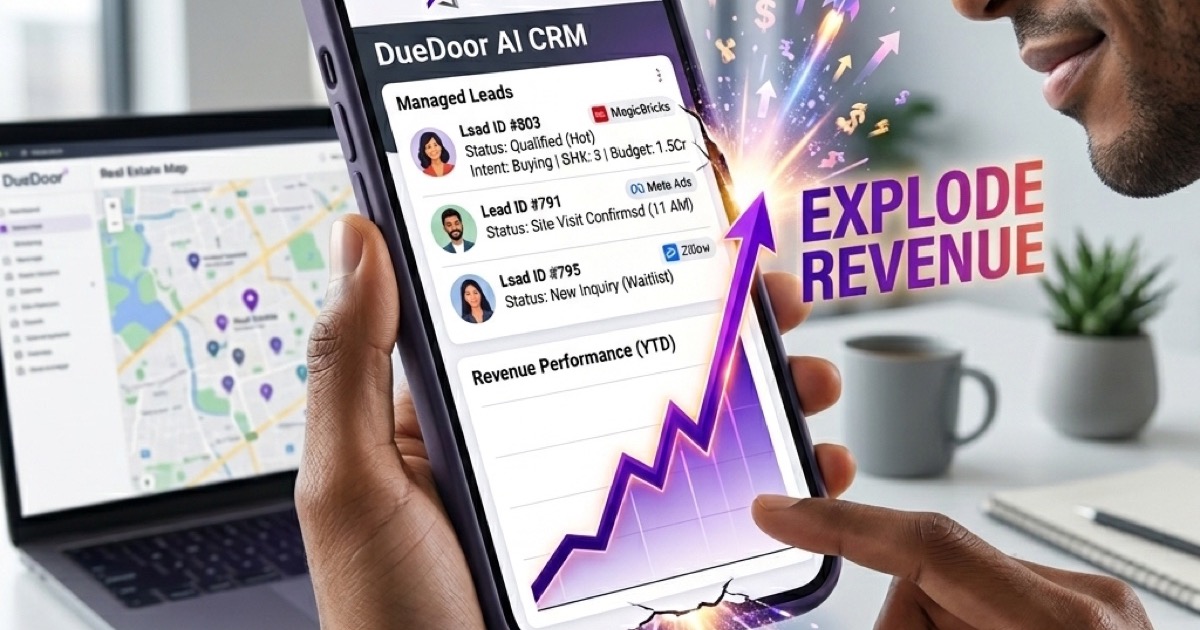
To manage leads in a CRM, capture every inbound inquiry automatically, assign a lead score or stage, set follow-up tasks, and move contacts through a defined pipeline until they convert or are disqualified.
Every rupee you spend on marketing generates a lead. What happens next decides whether that investment pays off. Most Indian SMBs lose more than half their prospects simply because there is no structured system for follow-up, handoff, or prioritisation. A CRM changes that equation completely.
Managing leads in a CRM is not just about storing contact details. It is about building a repeatable, measurable process that moves every prospect from first touch to closed deal, with the right message at the right moment. This guide walks you through the entire workflow, from pipeline setup to performance reporting, so your sales team stops guessing and starts closing.
Why Lead Management Matters
The average sales rep follows up with a lead only once or twice before moving on. Yet research consistently shows that most conversions happen after five or more contacts. That gap is where revenue disappears. A CRM closes it by making follow-up automatic, visible, and accountable.
For marketplace and listing businesses in India, the problem is even sharper. Leads arrive from multiple sources: property portals, IndiaMART listings, Google Ads, WhatsApp inquiries, and walk-ins. Without a central system, these fall into separate spreadsheets or sales reps' personal phones. Leads collide, duplicate, or simply vanish. A well-configured CRM consolidates every channel into a single, ranked queue so nothing slips.
"The businesses that win are not those that generate the most leads. They are the ones that respond fastest and follow up longest."
Setting Up Your CRM Pipeline
Before you import a single contact, define your pipeline stages. A pipeline is a visual representation of where each lead stands in the buying journey. Common stages for Indian SMBs and real estate teams include:
- New: Lead just entered the system, not yet contacted.
- Contacted: First outreach made via call, WhatsApp, or email.
- Qualified: Budget, timeline, and intent confirmed.
- Proposal Sent: Quote or listing shortlist shared.
- Negotiation: Active discussion on price or terms.
- Closed Won / Closed Lost: Deal finalised or prospect disqualified.
Keep your pipeline lean at first. Adding too many stages creates friction and slows your team down. You can always split a stage later once you see where leads are actually stalling. If you operate across multiple cities or property categories, consider building separate pipelines per segment so reporting stays clean.
Capturing and Importing Leads
A CRM is only as good as the data flowing into it. Set up automatic capture from every channel your business uses. This typically means:
- Web forms on your site that push directly to the CRM via webhook or native integration.
- WhatsApp Business API connections that create a new lead record on first message.
- CSV or Excel imports for bulk data from portals like 99acres, Housing.com, or IndiaMART.
- LinkedIn lead gen form sync for B2B outreach campaigns.
- Inbound call logging via your telephony or IVR provider.
Avoid manual data entry wherever possible. Every step a salesperson takes to log a lead is a step they are not spending selling. DueDoor, for example, auto-captures WhatsApp inquiries and web form submissions into a unified pipeline so your team opens the CRM and sees a live, updated queue rather than a stale spreadsheet. For businesses exploring affordable CRM solutions for Indian businesses, auto-capture alone often justifies the entire cost of the platform.
Qualifying and Scoring Leads
Not every lead deserves equal attention. Lead scoring lets you rank prospects by their likelihood to convert so your team focuses energy where it matters most. A basic scoring model assigns points based on:
| Signal | Points | Why It Matters |
|---|---|---|
| Replied to WhatsApp within 10 minutes | +20 | High intent, actively engaged |
| Opened proposal or listing document | +15 | Moved beyond casual browsing |
| Budget confirmed in call notes | +25 | Qualified financially |
| No response after 3 follow-ups | -10 | Low engagement, deprioritise |
| Referral from existing client | +30 | Trust already established |
You do not need complex AI to start scoring. Even a simple numerical rule set in your CRM's custom fields will lift conversion rates by ensuring your best reps call the hottest leads first. As your data grows, you can layer in AI-driven scoring that learns from past wins and losses automatically.
For real estate teams specifically, qualifying also means confirming property type, preferred locality, and possession timeline before spending an hour on a site visit. Platforms built for the sector, like those covered in the best tools for managing real estate leads, often include property-specific qualification fields out of the box.
Nurturing Leads Through Automation
Most leads are not ready to buy today. They need education, trust-building, and timely nudges. Automation handles this at scale without your team lifting a finger. A well-designed nurture sequence might look like this:
- Day 0: Instant WhatsApp acknowledgement with a relevant listing or case study link.
- Day 1: Email with product overview or project brochure.
- Day 3: Follow-up call attempt logged in CRM; automated SMS if no answer.
- Day 7: Value-add content, such as a market report or pricing comparison.
- Day 14: Personal check-in from the assigned rep with a specific offer or meeting invite.
DueDoor's AI-driven sequences adapt based on how the prospect behaves. If someone opens every email but has not replied, the system flags them as warm and prompts the rep to call. If they go cold for 30 days, they move into a re-engagement drip automatically. This kind of intelligent nurturing is especially powerful for marketplace businesses where buying cycles stretch across weeks or months.
Small businesses often struggle to build these workflows from scratch. Reviewing effective marketing tools for small businesses can surface automation-ready platforms that fit a lean team's budget and technical comfort level.
CRM Lead Management Best Practices
Even the best CRM fails if the team does not use it consistently. These practices keep your pipeline clean and your data trustworthy:
- Log every interaction immediately. A call note added two days later is missing half the context. Build mobile CRM habits so reps log on the go.
- Set a response SLA. Commit to contacting every new lead within 30 minutes during business hours. Speed is the single biggest differentiator in competitive markets.
- Clean dead leads weekly. Stale contacts pollute your pipeline and skew conversion metrics. Mark them Closed Lost with a reason code so you can analyse patterns later.
- Use tags and custom fields generously. Source, property type, city, budget range, and referral partner are all searchable segments you will want for campaigns later.
- Never duplicate a lead. Run deduplication checks on import and enforce unique phone or email constraints at the CRM level.
Listing-focused businesses should also audit how leads arrive from portals. Common data problems, from incorrect phone numbers to duplicate submissions, are detailed in guides on common issues with property listings and are worth reviewing before you build your import workflow.
Tools and Integrations to Consider
A CRM does not operate in isolation. The more it connects with the tools your team already uses, the more data flows in automatically and the less manual work is required. Key integrations for Indian marketplace and listing businesses include:
- WhatsApp Business API: Two-way messaging synced to lead records. Every chat is visible in the CRM timeline without switching apps.
- Email providers: Gmail or Outlook sync so sent and received emails attach to the correct contact automatically.
- Google Ads and Meta Ads: Lead gen form submissions land directly in the CRM pipeline with source attribution intact.
- Calendar and booking tools: Meeting bookings create follow-up tasks and move the lead to the right stage without manual input.
- Telephony or IVR: Call logs, recordings, and outcomes written back to the lead record.
Choosing the right stack is easier when you already know what capabilities each platform covers. A comparison of the best listing management software in India will show which CRMs come with these integrations built in versus which require third-party connectors that add cost and complexity.
Measuring Lead Management Performance
You cannot improve what you do not measure. Track these core metrics in your CRM dashboard every week:
- Lead-to-contact rate: Percentage of new leads reached within your SLA window. Anything below 60% signals a response time or staffing problem.
- Stage conversion rates: How many leads move from each stage to the next. A bottleneck at Qualified to Proposal usually means pricing or product fit issues, not a sales execution problem.
- Average deal cycle: Days from lead creation to Closed Won. Shortening this by even a few days compounds significantly over a full quarter.
- Lead source ROI: Revenue closed per lead source divided by the cost of that source. This tells you exactly where to increase or cut your marketing budget.
- Follow-up compliance: Percentage of leads with an overdue task. High overdue rates are a training issue or a workload issue that management needs to address.
DueDoor surfaces all of these metrics in a single dashboard view, with drill-down by rep, source, and city. Teams using it for marketplace and listing operations report that just having visibility into stage conversion rates is enough to identify and fix the one or two bottlenecks that account for the majority of lost deals. Pair that with AI-powered WhatsApp sequences and LinkedIn outreach and you have a full-funnel growth engine running on a lean team.
Ready to put these principles into practice? Try DueDoor free and set up your first AI-powered lead pipeline in under 30 minutes. No credit card required, no complex onboarding, just a clean pipeline and automated follow-ups working from day one.
Frequently Asked Questions
What is the best way to organise leads in a CRM?
Organise leads by pipeline stage first, then use tags for secondary attributes like source, city, or product interest. This keeps your main view focused on deal progression while still allowing targeted filtering for campaigns or reporting.
How do I prevent leads from going cold in a CRM?
Set up automated follow-up sequences that trigger based on inactivity, for example a WhatsApp message if no reply within 48 hours and an email after 5 days. Combine automation with overdue-task alerts so reps always have a prompted next action on every warm lead.
Can a small business in India afford a CRM with lead management features?
Yes. Several platforms offer plans starting under Rs 1,500 per user per month with pipeline management, email integration, and basic automation included. The key is to prioritise auto-capture and follow-up automation over advanced reporting until your team grows.
How many leads should one sales rep manage at a time?
Most B2B and real estate reps can actively work 50 to 80 leads simultaneously before follow-up quality drops. Above that threshold, automation takes over routine touchpoints so the rep focuses only on high-score or high-value conversations.
What should I do with leads that never respond?
After 5 to 7 unanswered contacts across at least 2 channels over 3 to 4 weeks, mark the lead Closed Lost with a reason code such as No Response. Move them to a low-frequency re-engagement drip and revisit in 60 to 90 days. This keeps your active pipeline accurate and your metrics honest.
Every lead gets an instant, qualified reply — even at 3 AM
DueDoor's AI reads the inbound WhatsApp, understands pricing/demo/support intent, replies with the right answer, and books the meeting — all in under 4 seconds. No human lifts a finger until the call itself.
- AI understands Hindi, Tamil, Telugu, Marathi, English
- Qualifies budget, team size, timeline automatically
- Books into your actual Google/Outlook calendar
- Escalates to a human only when the AI isn't 95%+ sure
WhatsApp AI
Auto-reply, drip sequences, AI qualification — 24/7.
Leads & Pipeline
Smart lead scoring with auto-routing to your team.
Email Marketing
Personalized AI emails that actually get opened.
Meta Ads AI
One-click campaigns optimized by AI daily.
SEO Engine
Content + ranking on autopilot. Like this page.
LinkedIn (PhewDo)
Outreach + replies handled end-to-end.
References & further reading
- Online marketplace — Wikipedia
- Shopify (official)
- Online advertising — Wikipedia
- Marketing — Wikipedia
- Digital marketing — Wikipedia