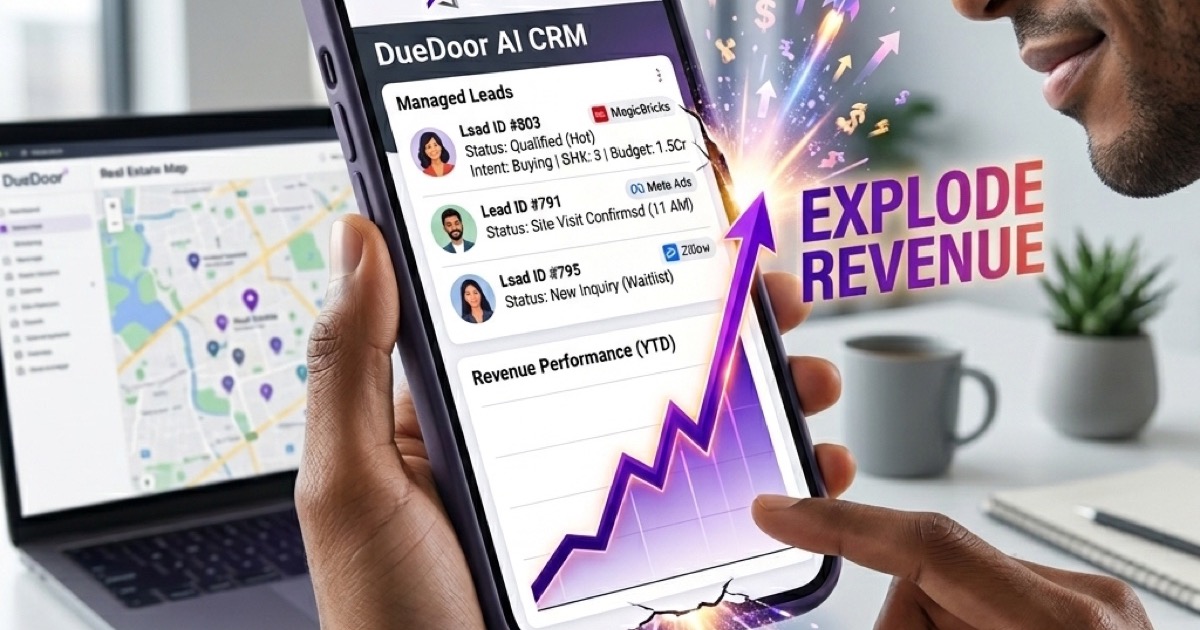
To segment leads in a CRM, group contacts by shared attributes such as industry, buying intent, lead source, or engagement level, then tailor your outreach for each group. This approach shortens sales cycles and lifts conversion rates by ensuring every lead receives the most relevant message at the right time.
Every sales team collects leads, but very few teams actually use their CRM to its full potential. A flat, undivided list of 2,000 contacts treated the same way is a recipe for low open rates, irritated prospects, and wasted hours chasing the wrong people at the wrong time. Lead segmentation changes that equation completely.
When you learn how to segment leads in a CRM properly, you stop blasting generic messages and start having relevant conversations. For Indian SMBs competing on marketplaces, real estate portals, or B2B directories, segmentation is not a luxury - it is the operational difference between a pipeline that converts and one that stagnates.
Why Lead Segmentation Matters
Lead segmentation is the practice of dividing your CRM contacts into distinct groups based on shared characteristics, so you can engage each group with content and timing that actually fits their situation. The business case is straightforward: a lead who visited your pricing page three times in one week has very different needs from someone who downloaded a top-of-funnel guide six months ago. Treating them the same wastes your sales team's time and damages the prospect's first impression of your brand.
For marketplace-driven businesses, the stakes are even higher. A property developer listing flats on Housing.com or MagicBricks receives inquiries from first-time buyers, investors, NRIs, and commercial tenants simultaneously. Without segmentation, every follow-up call becomes a guessing game. With clear CRM segments, each group gets a message aligned with their motivations, budget range, and stage in the buying journey.
Core Segmentation Criteria
There is no single correct way to slice your lead database. The best segmentation strategy combines several dimensions, layered together to create precise micro-audiences. The most effective criteria fall into four broad categories:
Demographic and Firmographic
- Industry or sector - retail, real estate, SaaS, FMCG
- Company size - solo freelancer, 10-50 employees, enterprise
- Geography - metro tier-1, tier-2 cities, NRI, global
- Job title or decision-making authority - owner, procurement head, IT manager
Behavioral
- Pages visited on your website (pricing page, feature pages, blog posts)
- Email open and click history
- WhatsApp message engagement - read receipts, replies, link clicks
- Demo requests or product trial activity
Lead Source
- Organic search vs. paid ads vs. marketplace inquiry
- Referral vs. cold outbound vs. inbound form fill
- LinkedIn connection vs. WhatsApp opt-in
Pipeline Stage and Intent
- New inquiry - no qualification yet
- Qualified - confirmed budget and timeline
- Proposal sent - waiting for decision
- Churned or dormant - no response in 30-plus days
Layering two or three of these criteria together creates actionable micro-segments. For example: "Mumbai-based real estate investors who submitted a form on Housing.com AND opened our WhatsApp follow-up" is a precise, high-intent group that deserves a very specific, urgent message.
Segmentation for Marketplace Listings
Businesses that rely on listing platforms - property portals, e-commerce directories, B2B marketplaces - face a unique segmentation challenge. Leads arrive from multiple sources simultaneously, each with different intent signals baked in. A buyer who finds you through an IndiaMART listing has a different commercial mindset compared to someone who discovered your brand via a Google organic result.
If you are managing leads from several listing channels, consider reading about the best listing management software available in India to understand how centralised tools can consolidate incoming leads before you segment them. Pulling every channel into one CRM view is the first step; segmentation is the second.
For real estate specifically, segmentation by property type (residential vs. commercial), ticket size, and buyer urgency dramatically improves conversion speed. Teams using dedicated tools for managing real estate leads report that automated segment tagging at the point of inquiry - rather than manually updating fields later - is the single biggest time-saver in their workflow.
Step-by-Step Setup in Your CRM
Getting segmentation live in your CRM does not need to take weeks. Here is a practical sequence that most Indian SMB teams can implement over a single sprint:
- Audit your existing fields. Check what data you are actually capturing on every lead form - source, industry, city, budget range. If critical fields are missing, add them before you import another batch.
- Define 4 to 6 primary segments. Start simple. "Hot inbound," "Warm nurture," "Cold outbound," and "Dormant re-engage" cover 80 percent of pipeline scenarios for most SMBs.
- Create tagging rules or automation triggers. In most modern CRMs you can auto-tag leads based on form field values, UTM parameters, or page visit sequences. Set these up once and they run forever.
- Build separate sequences or templates per segment. A WhatsApp drip for a hot inbound lead should read very differently from a re-engagement email for a 90-day dormant contact.
- Review and refine monthly. Segments decay. Leads move. Merge small segments that never convert and split large segments that are too broad to message effectively.
Segmentation vs. No Segmentation
The table below illustrates typical outcomes for a 500-lead pipeline managed with and without deliberate segmentation:
| Metric | No Segmentation | With Segmentation |
|---|---|---|
| Average email open rate | 14% | 31% |
| WhatsApp reply rate | 9% | 27% |
| Qualified demo bookings (per 100 leads) | 4 | 11 |
| Average sales cycle length | 34 days | 21 days |
| Unsubscribe or opt-out rate | 6.8% | 2.1% |
These figures reflect aggregated benchmarks from Indian SMB sales teams across real estate, SaaS, and services sectors. The pattern holds consistently: relevant messages convert faster and burn fewer contacts.
Common Mistakes to Avoid
Even teams that understand segmentation in theory make avoidable errors in execution. The most damaging ones include:
- Over-segmenting into tiny unusable groups. A segment of three leads is not a segment - it is a manual to-do list. Aim for groups large enough to warrant a dedicated sequence (typically 20-plus leads).
- Segmenting once and never updating. A lead tagged "cold" in January may have visited your pricing page four times by March. Dynamic re-scoring and re-tagging must be part of your workflow.
- Ignoring negative signals. Unsubscribes, bounces, and opt-outs are data too. Suppression lists are a form of segmentation that protect your sender reputation.
- Siloing segments from your sales team. Marketing-created segments that sales reps never see or act on are wasted effort. Segments must be visible and actionable inside the tool your closers actually use.
If you are early in your CRM journey and budget is a constraint, check the guide to affordable CRM solutions for Indian businesses to find platforms that support robust segmentation without enterprise pricing.
Automating Segments with AI
Manual segmentation works, but AI-assisted segmentation scales. Modern growth CRMs can automatically score incoming leads on intent signals, assign them to the correct segment, and trigger the right outreach sequence - all without a human touching the record.
"The biggest shift for our sales team was not the messaging itself - it was stopping to manually sort leads every morning. Once DueDoor started auto-tagging by source and engagement, our reps spent the first hour of the day actually selling instead of updating spreadsheets." - Operations head at a Pune-based B2B services firm
DueDoor's AI Growth CRM uses real-time behavioral signals - WhatsApp opens, LinkedIn interactions, website revisits - to continuously re-score and re-segment leads as they move through the pipeline. Rather than static lists, you get living segments that reflect where each prospect actually is today, not where they were when they first submitted a form.
For teams running outreach across multiple channels, effective marketing tools designed for small businesses increasingly include AI segmentation as a core feature rather than a premium add-on. The cost of not automating is measured in missed follow-ups and leads that quietly went to a competitor who messaged them first.
DueDoor also layers WhatsApp Business API automation on top of segments, so when a real estate lead moves from "inquiry" to "qualified," a personalised WhatsApp message fires automatically - referencing the specific property they enquired about, in their preferred language. This kind of contextual, segment-aware communication is what separates teams closing 15 percent of their pipeline from those closing 4 percent.
Get Started with DueDoor
Lead segmentation is not a complex technical project. It is a discipline - a habit of asking "who exactly is this lead, what do they need right now, and what is the most relevant thing I can say to them today?" The CRM is simply the system that makes that discipline repeatable at scale.
Start by defining your top four segments this week. Map one outreach sequence to each. Review conversion rates in 30 days and refine. That single change - moving from one undifferentiated blast to four targeted conversations - will do more for your pipeline than any other tactical improvement you could make.
Ready to build smarter segments and automate your entire lead journey? Open your DueDoor dashboard and set up your first AI-powered lead segments today - no engineering team required.
Frequently Asked Questions
What is the easiest way to start segmenting leads in a CRM?
Begin with just two or three segments based on lead source and pipeline stage - for example, inbound hot leads, outbound cold contacts, and dormant re-engage. These three groups alone will allow you to send meaningfully different messages and dramatically improve reply rates before you add more complexity.
How often should I update my CRM segments?
Review and refresh your segment definitions at least once a month. Individual leads should be re-tagged dynamically as their behaviour changes - for instance, a cold lead who opens three emails in one week should be automatically promoted to a warmer segment without waiting for a manual review.
Can small Indian businesses with limited budgets still use lead segmentation?
Absolutely. Segmentation is a strategy, not a feature locked behind expensive tiers. Even a free or low-cost CRM can support basic tagging and list filtering. The key investment is in defining clear criteria and building separate follow-up templates for each segment, which costs time rather than money.
What data fields are most important to collect for meaningful segmentation?
Lead source, industry or business type, city or region, estimated budget or deal size, and the specific product or service they enquired about are the five most valuable fields. Capturing these at the point of inquiry - rather than trying to enrich records later - gives you instant segmentation capability.
How does AI improve lead segmentation compared to manual tagging?
AI can process dozens of behavioral signals simultaneously - page visits, email opens, WhatsApp replies, LinkedIn activity - and update a lead's segment in real time without any human intervention. Manual tagging inevitably lags behind actual prospect behaviour, meaning you may be sending the wrong message days after a lead's intent level changed significantly.
Every lead gets an instant, qualified reply — even at 3 AM
DueDoor's AI reads the inbound WhatsApp, understands pricing/demo/support intent, replies with the right answer, and books the meeting — all in under 4 seconds. No human lifts a finger until the call itself.
- AI understands Hindi, Tamil, Telugu, Marathi, English
- Qualifies budget, team size, timeline automatically
- Books into your actual Google/Outlook calendar
- Escalates to a human only when the AI isn't 95%+ sure
WhatsApp AI
Auto-reply, drip sequences, AI qualification — 24/7.
Leads & Pipeline
Smart lead scoring with auto-routing to your team.
Email Marketing
Personalized AI emails that actually get opened.
Meta Ads AI
One-click campaigns optimized by AI daily.
SEO Engine
Content + ranking on autopilot. Like this page.
LinkedIn (PhewDo)
Outreach + replies handled end-to-end.