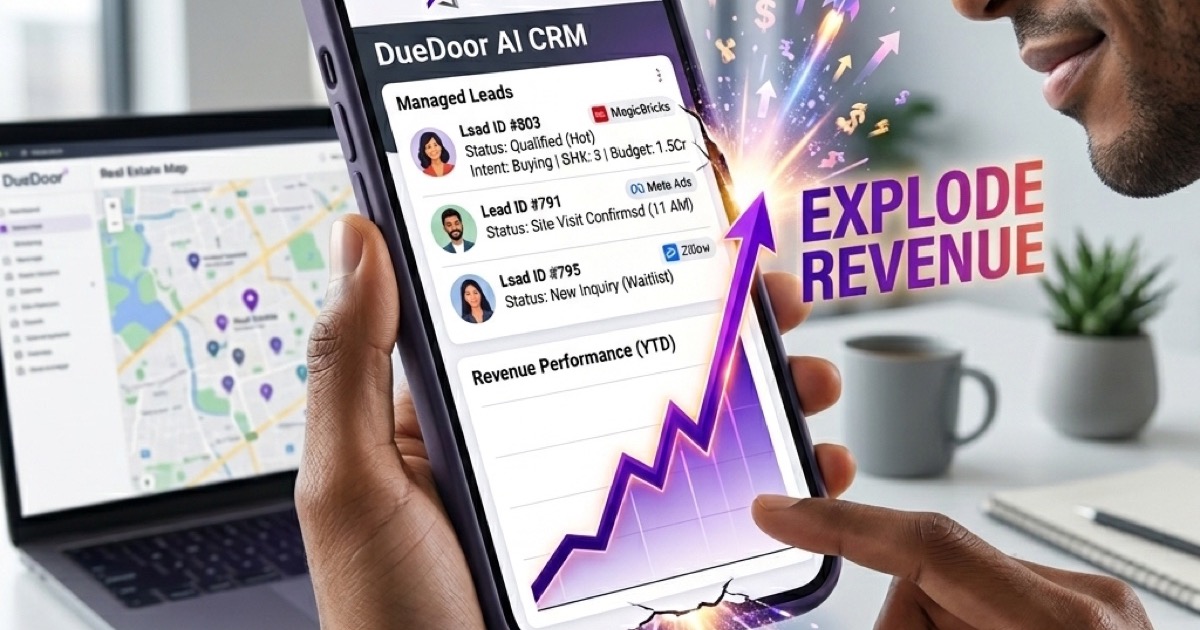
Sales teams need AI tools because they automate repetitive tasks like lead scoring and follow-ups, freeing reps to focus on selling and closing deals faster. AI also surfaces real-time insights that help teams prioritize the right prospects at the right moment.
Every sales manager has felt it: the team is working hard, calls are being made, emails are going out, yet the pipeline stays frustratingly thin. The problem is rarely effort. The problem is where that effort goes. Studies consistently show that the average sales rep spends less than 35 percent of their working week actually selling. The rest is eaten up by data entry, chasing cold leads, writing follow-up emails, and hunting for prospect information that should already be at their fingertips.
AI tools for sales teams exist to close that gap. They do not replace the human relationship at the heart of every deal. What they do is strip away the mechanical, repetitive work so that your reps can spend more time on conversations that move money. In India's hyper-competitive SMB landscape, where a single day's delay can send a prospect to a rival, the question is no longer whether your team needs AI. It is which AI tools match your workflow and how fast you can deploy them.
The Real Cost of Manual Sales
Manual sales processes carry hidden costs that rarely show up in a single line on a spreadsheet. Consider a mid-sized SaaS company in Pune with a ten-person sales team. Each rep manually updates the CRM after every call, copies contact details from LinkedIn into a spreadsheet, writes bespoke follow-up emails for each prospect, and tries to remember which leads went cold last week. That is easily two to three hours per rep per day, or 25-plus hours of lost selling time across the team, every single day.
Multiply that across a month and you are looking at hundreds of hours that could have been spent on discovery calls, product demos, and negotiations. Beyond time, manual processes introduce errors: wrong contact stages, duplicate records, missed follow-ups. Every missed follow-up is a potential deal handed to a competitor. The real cost of manual sales is not just inefficiency. It is revenue that never materialises.
What AI Tools Actually Do for Sales
There is a lot of noise around AI in sales, so it helps to be specific. Modern AI sales tools do a handful of things extremely well:
- Automate data entry by pulling contact information, company details, and interaction history from calls, emails, and social profiles directly into your CRM.
- Score and rank leads based on behavioural signals, firmographic fit, and engagement patterns, so reps always know who to call next.
- Generate and send personalised outreach at scale, including WhatsApp messages, emails, and LinkedIn follow-ups, without sounding robotic.
- Predict deal health by analysing pipeline velocity, engagement gaps, and historical conversion patterns.
- Surface next-best actions in real time, telling a rep that a prospect just opened a proposal for the third time and is likely ready for a closing call.
Platforms like DueDoor bring these capabilities together in a single Growth CRM built specifically for Indian SMBs, removing the need to stitch together five different tools and pay five different subscriptions.
Lead Qualification and Scoring
Not all leads are equal, yet most sales teams treat them that way. A rep who calls every inbound inquiry in the order they arrived will spend the same energy on a tyre-kicker from a tier-three city as on a decision-maker at a ₹50 crore manufacturing firm in Ahmedabad. AI lead scoring changes this dynamic entirely.
AI-powered scoring engines analyse dozens of signals simultaneously: company size, industry, previous interactions with your content, email open rates, website pages visited, and even the time of day a prospect is most active. The output is a ranked list of leads so your reps know exactly where to start every morning. Teams that adopt AI tools for lead conversion typically see a measurable lift in conversion rates within the first quarter, simply because reps stop wasting cycles on low-intent contacts.
"Our reps used to complain that the pipeline felt like a black hole. After we introduced AI lead scoring, they started their day knowing exactly the three contacts most likely to convert. Close rates went up 40 percent in two months." - Sales Head, B2B logistics company, Mumbai
AI-Powered Follow-Ups and Outreach
Follow-up is where most deals are won or lost, and it is also the task reps are most likely to deprioritise when things get busy. Research from various sales intelligence firms shows that 80 percent of sales require five or more follow-up touchpoints, yet 44 percent of reps give up after just one. That gap is a massive, addressable revenue leak.
AI-powered outreach tools solve this by automating follow-up sequences across multiple channels. A prospect who does not reply to an email on day one can receive a WhatsApp message on day three, a LinkedIn connection request on day five, and a personalised check-in email on day seven, all triggered automatically based on rules you set once. DueDoor's WhatsApp Business API automation layer makes this particularly powerful for Indian markets, where WhatsApp open rates consistently outperform email by a factor of four to five. If you want to understand how to analyse WhatsApp marketing data to refine these sequences, the insights available are far richer than most teams expect.
Sales Forecasting and Pipeline Visibility
One of the most valuable things AI brings to a sales organisation is honest, data-driven forecasting. Traditional forecasts rely on reps self-reporting their pipeline confidence, which is notoriously unreliable. Reps are optimistic. Managers discount that optimism. The result is a forecast that satisfies no one and rarely matches actual results.
AI forecasting models analyse the objective signals in your pipeline: how long deals have been sitting at each stage, how engaged contacts have been, what the historical conversion rate is at similar stages, and whether deal velocity is accelerating or stalling. The output is a probability-weighted forecast that finance, operations, and leadership can actually plan around. The following table shows how AI-assisted forecasting compares with traditional methods across key metrics:
| Metric | Traditional Forecasting | AI-Assisted Forecasting |
|---|---|---|
| Forecast accuracy | 55-65% | 80-90% |
| Time to generate report | 2-4 hours (manual) | Real-time, automated |
| Data sources considered | CRM stage only | CRM + email + WhatsApp + calls |
| Bias reduction | Low (rep-dependent) | High (algorithmic) |
| Early warning on at-risk deals | Rarely flagged | Auto-flagged with reasons |
Team Collaboration with AI
Sales is rarely a solo sport. Deals of any complexity involve BDRs, account executives, solution engineers, and sometimes customer success teams. AI tools strengthen collaboration by creating a shared, always-current view of every deal. No more asking a colleague what was discussed in the last call. No more discovering that two reps have been contacting the same prospect from different angles.
AI-driven collaboration features include automatic call summaries that get logged to the deal record, smart handoff notes when a deal moves between team members, and shared playbooks that surface the right battle card when a specific objection is raised. Exploring AI-driven solutions for sales team collaboration reveals how teams that share a unified AI workspace close complex deals 30 to 40 percent faster than those relying on email threads and shared spreadsheets.
Choosing the Right AI Tools for Your Team
The AI sales tool market is crowded. Global platforms like Salesforce Einstein, HubSpot AI, and Gong each offer powerful capabilities, but they are also priced for enterprise budgets and built around Western sales motions. Indian SMBs have different constraints: INR pricing sensitivity, WhatsApp-first communication habits, multi-language requirements, and the need to support a mix of field and inside sales.
When evaluating options, ask these questions:
- Does it integrate with WhatsApp Business API natively, or is that an expensive add-on?
- Can it handle the volume of contacts and deals typical of an Indian SMB growth phase?
- Is pricing transparent and available in INR without requiring a sales call first?
- Does it support LinkedIn outreach for B2B teams?
- How quickly can a rep of average technical ability get productive on it?
For real estate businesses specifically, the requirements around property inventory, site visit scheduling, and long-cycle nurturing add another layer of complexity. A comparison of the best sales automation tools for real estate shows that vertical-specific features matter enormously in this segment. Similarly, teams evaluating CRM options will find that the best CRM for small businesses in India looks quite different from a generic global recommendation.
DueDoor is built from the ground up for this market. Its AI lead generation engine, WhatsApp automation, LinkedIn outreach daemon, and AI calling module are all part of a single platform rather than disparate integrations, which dramatically reduces both cost and setup friction.
Getting Started with AI in Your Sales Process
The biggest barrier to AI adoption in sales teams is not cost or complexity. It is inertia. Teams that have managed without AI for years find it hard to believe the productivity gains are as large as advertised. The most effective way past this barrier is a focused pilot: pick one part of your process (lead scoring is usually the easiest starting point), run the AI tool in parallel with your existing process for thirty days, and measure the difference in response time, conversion rate, and rep satisfaction.
Start by auditing where your reps are losing time today. If the answer is follow-ups and data entry, prioritise automation. If the answer is not knowing which leads to call, prioritise scoring. If the answer is poor pipeline visibility, prioritise forecasting. The good news is that modern AI sales platforms address all three, so once you have picked an entry point, the rest of the value follows naturally as the team builds confidence.
AI tools do not change what great selling looks like. They change how much of the average rep's day is spent actually doing it. In markets where every competitive advantage matters and every follow-up delay costs you, that shift is not incremental. It is transformational.
Ready to see what an AI-powered sales workflow looks like for your team? Explore the DueDoor Growth CRM dashboard and discover how Indian sales teams are using AI lead generation, WhatsApp automation, and LinkedIn outreach in a single platform to hit targets faster.
Frequently Asked Questions
What is the main benefit of AI tools for sales teams?
The main benefit is freeing up selling time. AI tools automate repetitive tasks like data entry, lead scoring, and follow-up sequences, so reps can spend more of their day on conversations that actually move deals forward. Teams typically see faster response times, higher conversion rates, and better pipeline visibility within the first quarter of adoption.
Are AI sales tools affordable for Indian SMBs?
Yes, especially platforms built specifically for the Indian market. Tools like DueDoor offer INR pricing with no enterprise-level contracts required. The key is to look for platforms that bundle WhatsApp Business API, lead generation, and CRM in one subscription rather than paying separately for each capability.
Will AI tools replace sales reps?
No. AI tools replace the mechanical, repetitive parts of a sales rep's job, not the human relationship at the core of every sale. Complex negotiations, trust-building, and consultative selling all still require a skilled human. AI simply ensures reps spend more of their time on those high-value activities.
How long does it take to see results after implementing AI sales tools?
Most teams see measurable improvements in lead response time and follow-up consistency within the first two to four weeks. Conversion rate improvements typically show up within the first full quarter as the AI system accumulates enough data to score and prioritise leads accurately.
Which AI features matter most for B2B sales teams in India?
For B2B teams in India, WhatsApp automation is the highest-impact feature because of the channel's dominance in business communication. After that, AI lead scoring and LinkedIn outreach automation are the most valuable, followed by pipeline forecasting for teams with longer sales cycles.
Every lead gets an instant, qualified reply — even at 3 AM
DueDoor's AI reads the inbound WhatsApp, understands pricing/demo/support intent, replies with the right answer, and books the meeting — all in under 4 seconds. No human lifts a finger until the call itself.
- AI understands Hindi, Tamil, Telugu, Marathi, English
- Qualifies budget, team size, timeline automatically
- Books into your actual Google/Outlook calendar
- Escalates to a human only when the AI isn't 95%+ sure
WhatsApp AI
Auto-reply, drip sequences, AI qualification — 24/7.
Leads & Pipeline
Smart lead scoring with auto-routing to your team.
Email Marketing
Personalized AI emails that actually get opened.
Meta Ads AI
One-click campaigns optimized by AI daily.
SEO Engine
Content + ranking on autopilot. Like this page.
LinkedIn (PhewDo)
Outreach + replies handled end-to-end.
References & further reading
- Artificial intelligence — Wikipedia
- Harvard Business Review — Sales
- Sales — Wikipedia
- Customer relationship management — Wikipedia
- Marketing — Wikipedia