Email marketing success metrics are quantifiable data points, such as open rate, click-through rate, conversion rate, and revenue per email, that tell you whether your campaigns are generating real business results. Tracking the right combination of these metrics helps you identify what to fix and where to double down.
Most businesses send emails. Far fewer actually know whether those emails are working. You might see a decent open rate and assume everything is fine, only to discover months later that almost no one is clicking through, buying, or even staying subscribed. Email marketing success metrics close that gap between activity and outcome, turning a vague sense of "we do email" into a precise picture of what drives revenue and what drains your sending reputation.
In 2026, with inboxes more crowded than ever and Apple Mail Privacy Protection still distorting open-rate data, choosing the right metrics and interpreting them correctly is the difference between a campaign that compounds and one that quietly stagnates. This guide covers the metrics that experienced email marketers actually use, the benchmarks relevant to Indian SMBs and global sales teams, and the levers you can pull to move each number in the right direction.
Why Email Metrics Matter More Than Ever
Email remains one of the highest-ROI channels available, averaging 42x return for every rupee or dollar spent. But that average masks enormous variance. The top-performing senders achieve those returns because they are methodical about feedback loops: they send, they measure, they iterate. The bottom performers send campaigns into a void and wonder why the channel "doesn't work."
Beyond campaign optimization, metrics matter for a second reason: deliverability. Gmail, Yahoo, and Outlook all use engagement signals, including open rates, reply rates, and spam complaints, as inputs into their filtering algorithms. A list full of unengaged subscribers will quietly destroy your sender reputation and land even your best emails in spam. Tracking list-health metrics is therefore not optional; it is table stakes for sustained inbox placement.
Primary Engagement Metrics
These are the numbers most email platforms surface by default. They measure how recipients interact with the email itself.
Open Rate
Open rate is calculated as (unique opens / emails delivered) x 100. The industry average across all sectors sits around 21.5%, but B2B SaaS, financial services, and ed-tech typically see 25 to 35% when targeting a warm list. One important caveat for 2026: Apple Mail Privacy Protection pre-loads tracking pixels for a large share of iOS and macOS users, inflating reported open rates. Treat your open rate as a directional trend signal rather than an absolute count of humans who actually read your message.
Click-Through Rate (CTR)
CTR measures (unique clicks / emails delivered) x 100. A good CTR for most B2B campaigns falls between 2.5% and 5%. CTR is a cleaner signal than open rate because a click requires deliberate human action and is not distorted by privacy proxies. If your open rate is healthy but your CTR is low, the problem is inside the email: your offer, your copy, your CTA button, or your layout.
Click-to-Open Rate (CTOR)
CTOR divides unique clicks by unique opens, giving you a picture of email body effectiveness independent of subject line performance. A CTOR above 20% is strong. This metric helps you isolate whether a drop in clicks is caused by fewer people opening (a subject-line problem) or fewer openers clicking (a content problem).
Reply Rate
For cold outreach and sales sequences, reply rate is often more meaningful than CTR. A reply, even a negative one, confirms deliverability and human attention. Aim for 3 to 8% on a well-targeted cold sequence. For tips on structuring those sequences, the guide on best practices for cold email outreach covers personalization, send-time, and follow-up cadence in detail.
Conversion and Revenue Metrics
Engagement metrics tell you how people interact with your email. Revenue metrics tell you whether any of that interaction translates into business outcomes.
Conversion Rate
Conversion rate is (number of recipients who completed a desired action / emails delivered) x 100. The "desired action" could be booking a demo, signing up for a trial, downloading a resource, or completing a purchase. This metric requires you to track post-click behavior via UTM parameters and website analytics. Without it, you are optimizing for clicks without knowing whether those clicks lead anywhere valuable.
Revenue Per Email (RPE)
RPE is total revenue attributed to a campaign divided by the number of emails sent. It is the single most direct measure of campaign profitability and forces you to think about the entire funnel, not just inbox engagement. Even a campaign with a modest 2% CTR can have an excellent RPE if the landing page converts well and the product has strong margins.
Revenue Per Subscriber (RPS)
Where RPE looks at individual campaigns, RPS looks at your list as a whole: total revenue from email divided by total active subscribers over a period. RPS helps you make decisions about list growth investment. If your RPS is high, aggressive list-building is worth it. If it is low, the problem is more likely to be in your funnel than in your list size.
List Health and Deliverability Metrics
These metrics do not get headlines but they protect the foundation everything else is built on.
Bounce Rate
Hard bounces (invalid addresses) should stay below 0.5%. Anything above that signals a list acquisition or hygiene problem. Soft bounces (temporary delivery failures) are more forgiving but should still be monitored. Most platforms automatically suppress hard bounces; make sure yours does and audit the suppression list quarterly.
Unsubscribe Rate
A healthy unsubscribe rate is below 0.2% per send. A spike in unsubscribes after a specific campaign type is useful diagnostic information: it tells you that segment did not want that content. For Indian audiences in particular, sending frequency and relevance are the two biggest drivers of unsubscribes. The article on best email marketing practices for Indian audiences explores these preferences in depth, including language, timing, and offer framing.
Spam Complaint Rate
Keep spam complaints below 0.08%. Google's 2024 sender guidelines made 0.10% the threshold for bulk senders before deliverability degrades, and that threshold has not relaxed. A rising complaint rate is almost always caused by one of three things: sending to people who did not explicitly opt in, emailing too frequently, or making the unsubscribe process difficult. You also need to stay aware of legal requirements: the article on email marketing compliance in India covers TRAI regulations and consent obligations that every Indian sender must follow.
List Growth Rate
List growth rate is ((new subscribers - unsubscribes - bounces) / total list size) x 100 over a period. A healthy list grows at least 2 to 5% per month net. A shrinking list means you are churning subscribers faster than you are adding them, which caps your ceiling regardless of how well individual campaigns perform.
Benchmarks for Indian SMB Email Campaigns
Global benchmarks are useful but Indian market dynamics differ. B2B email in India tends to see lower initial open rates (many corporate accounts use Microsoft 365 with aggressive spam filters) but higher engagement from mobile (over 60% of Indian email opens happen on mobile). Promotional emails during festive periods like Diwali, Holi, and the financial year-end in March see spikes of 30 to 50% above baseline open rates. Campaigns sent in Hindi or regional languages to the right segments consistently outperform English-only versions in Tier 2 and Tier 3 cities.
For SMBs selling to other businesses in India, a realistic benchmark set looks like this: open rate 22 to 28%, CTR 2 to 4%, CTOR 14 to 18%, unsubscribe rate below 0.3%, and a spam complaint rate below 0.05%. Comparing yourself against global SaaS averages will often give you a misleadingly negative picture. Use India-specific data where available and build your own internal benchmarks over 6 to 12 months of consistent sending.
Metrics at a Glance: What Good Looks Like
| Metric | Weak | Average | Strong | Primary Lever |
|---|---|---|---|---|
| Open Rate | Below 15% | 18 to 25% | Above 30% | Subject line, sender name, send time |
| CTR | Below 1.5% | 2 to 4% | Above 5% | Offer clarity, CTA design, segmentation |
| CTOR | Below 10% | 12 to 18% | Above 22% | Email body copy, single focused CTA |
| Conversion Rate | Below 0.5% | 1 to 3% | Above 4% | Landing page, offer, audience match |
| Unsubscribe Rate | Above 0.5% | 0.1 to 0.3% | Below 0.1% | Frequency, relevance, segmentation |
| Spam Complaint Rate | Above 0.1% | 0.03 to 0.07% | Below 0.03% | Consent quality, easy unsubscribe |
| Hard Bounce Rate | Above 1% | 0.3 to 0.6% | Below 0.2% | List hygiene, verification at signup |
"The goal of measuring email metrics is not to chase a benchmark number, it is to understand the story your audience is telling you with their behavior. Every dip in CTR and every spike in unsubscribes is a message. Your job is to read it."
Practical Ways to Improve Every Metric
Knowing what to measure is the first step. Knowing how to move the numbers is the second.
- Open rate: A/B test subject lines systematically, not just occasionally. Keep sender names consistent and recognizable. Send at times when your specific audience is likely to check email (for Indian B2B, Tuesday to Thursday between 9am and 11am IST tends to outperform).
- CTR: Use one primary CTA per email. Make the CTA a button with high-contrast color. Put it above the fold and repeat it at the bottom for longer emails. Remove navigation links and sidebar clutter that compete for attention.
- Conversion rate: Ensure message-to-landing-page continuity. If your email promises a free demo, the landing page should headline that same offer with zero friction to sign up.
- Unsubscribe rate: Segment more aggressively. Sending a promotional offer to a customer who just purchased the promoted item is the fastest way to lose trust. Use behavioral triggers to send the right message at the right stage.
- Bounce rate: Verify emails at the point of collection using a real-time validation API. Run your existing list through a bulk verification service at least twice a year.
- List growth rate: Add email capture to high-traffic pages. Use content upgrades (a downloadable checklist or template tied to a specific blog post) to convert organic traffic into subscribers with demonstrated interest in that topic.
Segmentation consistently shows the highest leverage across all metrics. Campaigns sent to properly segmented lists generate 3.6x more revenue than broadcasts sent to the full list. Start with basic segmentation by industry, company size, and funnel stage, and layer in behavioral triggers as your data matures. If you are comparing this channel against alternatives, the analysis in email marketing vs social media marketing is a useful reference for understanding where email has structural advantages and where it does not.
Tools and Automation That Make Measurement Easy
Manual tracking spreadsheets break down fast. You need a platform that surfaces the metrics discussed here automatically, allows you to slice by segment, and connects email performance to downstream revenue data.
For Indian startups on a budget, the guide on automated email marketing tools for startups covers the leading platforms with honest assessments of pricing, deliverability infrastructure, and automation depth. Beyond the email platform itself, connecting your email tool to your CRM is what unlocks revenue-level metrics like RPE and RPS. Without CRM integration, you can see who clicked but not who bought.
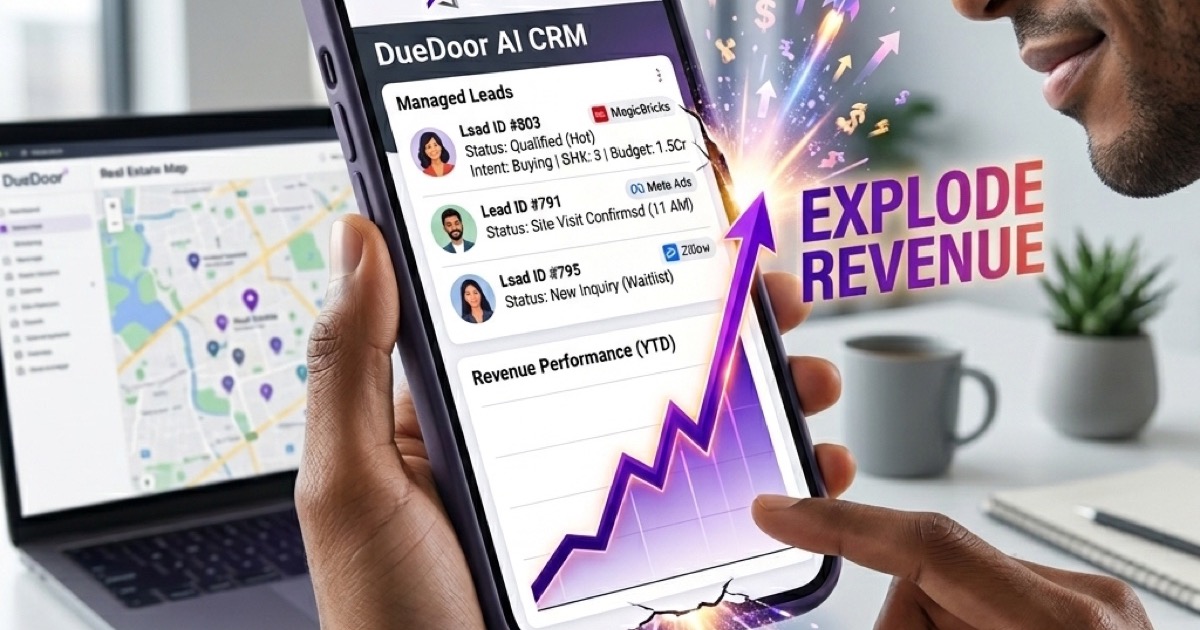
DueDoor is built for exactly this connection. As an AI-powered Growth CRM, DueDoor ties email engagement data directly to pipeline stages, so you can see which campaign sequences are generating qualified leads and which are generating clicks that go nowhere. Its automated drip sequences, contact-level engagement scoring, and lead-stage tracking give Indian SMBs the kind of closed-loop measurement that was previously only accessible to enterprises with dedicated marketing ops teams. Paired with WhatsApp automation and LinkedIn outreach in a single platform, DueDoor lets you attribute revenue across channels rather than optimizing each channel in isolation. For best practices on structuring campaigns within that multi-channel context, the article on best practices for email marketing in India covers sequencing, compliance, and audience-specific optimization.
If you are ready to move from tracking vanity metrics to measuring what actually drives growth, get started with DueDoor and connect your email campaigns to a CRM that closes the loop between send and revenue.
Frequently Asked Questions
What is the most important email marketing metric to track?
There is no single most important metric because the right one depends on your goal. For deliverability health, spam complaint rate is critical. For campaign profitability, revenue per email is the most direct signal. For optimizing engagement, click-to-open rate isolates body-copy performance from subject-line performance. Track a dashboard of 5 to 7 metrics together rather than fixating on one.
Why is my open rate high but my CTR very low?
A high open rate with a low CTR means your subject line is compelling but your email body is not converting attention into action. Common causes include a weak or buried CTA, an offer that does not match the subject line promise, too many competing links, or copy that fails to communicate clear value. Focus on a single primary CTA and make sure the email delivers on whatever the subject line implied.
What is a good email open rate for Indian B2B campaigns in 2026?
A realistic benchmark for Indian B2B email is 22 to 28% open rate for warm lists and 15 to 20% for cold outreach sequences. Note that Apple Mail Privacy Protection inflates open rates for users on iOS and macOS, so treat these numbers as directional trends. Build your own internal benchmarks over 6 to 12 months of sending to your specific audience.
How do I reduce my email unsubscribe rate?
The two biggest drivers of unsubscribes are irrelevance and excessive frequency. Segment your list so each group only receives content and offers relevant to their stage and interests. Set clear expectations about email frequency at the point of signup and honor them. Also make the unsubscribe link easy to find: a subscriber who cannot easily unsubscribe will hit the spam button instead, which is far more damaging to your sender reputation.
How does email marketing ROI compare to other digital channels?
Email consistently delivers among the highest ROI of any digital channel, averaging around 42x return. This is driven by low marginal cost per send combined with the ability to reach an owned audience without paying for reach on each campaign. Social media and paid search require ongoing spend to maintain visibility; a well-built email list compounds in value over time.
Every lead gets an instant, qualified reply — even at 3 AM
DueDoor's AI reads the inbound WhatsApp, understands pricing/demo/support intent, replies with the right answer, and books the meeting — all in under 4 seconds. No human lifts a finger until the call itself.
- AI understands Hindi, Tamil, Telugu, Marathi, English
- Qualifies budget, team size, timeline automatically
- Books into your actual Google/Outlook calendar
- Escalates to a human only when the AI isn't 95%+ sure
WhatsApp AI
Auto-reply, drip sequences, AI qualification — 24/7.
Leads & Pipeline
Smart lead scoring with auto-routing to your team.
Email Marketing
Personalized AI emails that actually get opened.
Meta Ads AI
One-click campaigns optimized by AI daily.
SEO Engine
Content + ranking on autopilot. Like this page.
LinkedIn (PhewDo)
Outreach + replies handled end-to-end.
References & further reading
- Email marketing — Wikipedia
- HubSpot Email Marketing Guide
- Mailchimp Resources
- Digital marketing — Wikipedia
- Marketing — Wikipedia