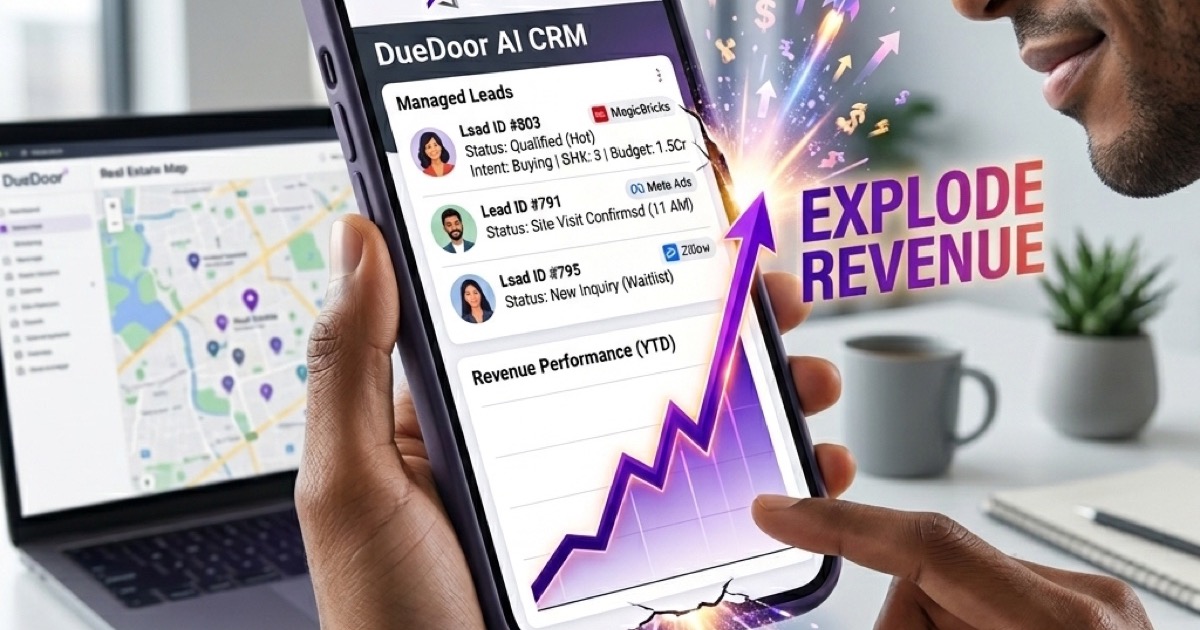
When comparing CRM features for email marketing, prioritize segmentation depth, automation workflows, deliverability infrastructure, and native analytics. The best CRM unifies contact data with email sending so every campaign is informed by real sales context.
Choosing a CRM purely for contact management is a 2015 mindset. In 2026, the most important question a growth team asks is: does this CRM make our email marketing smarter? The answer depends on a set of specific, often overlooked features that sit at the intersection of sales data and campaign execution. Get this right and every email you send is backed by intent signals, deal stage, and behavioral history. Get it wrong and you are blasting the same message to a cold list and wondering why conversions are flat.
This guide breaks down exactly what to look for when comparing CRM features for email marketing, with a practical lens for Indian startups, SMBs, and growth teams operating at scale. Whether you are evaluating your first combined platform or deciding whether to replace a disconnected stack, the framework here will sharpen your decision.
Why CRM and Email Marketing Integration Matters
Most businesses start with a standalone email tool and a separate CRM. The immediate pain is obvious: sales reps cannot see which prospects opened the last campaign, and marketers cannot suppress contacts who are mid-negotiation. This disconnect costs money. Studies consistently show that CRM-integrated email campaigns generate 4.2x higher open rates because the audience targeting is grounded in actual pipeline data, not just list imports.
Integration means more than a simple data sync. It means campaign triggers fire based on deal stage changes, lead scores update when a prospect clicks a pricing email, and sales reps see a full communication timeline before they pick up the phone. Platforms like DueDoor are built around this principle: the CRM and outreach engine share the same data model, so there is no gap between who a prospect is and how you communicate with them.
Core CRM Email Features to Compare
When you sit down to evaluate platforms, you will encounter marketing language that sounds similar across vendors. Cut through it by focusing on these concrete capability areas:
- Contact and list management: Can you build dynamic segments that update in real time based on CRM field changes?
- Native email builder: Is there a drag-and-drop editor with responsive templates, or does the platform rely on third-party integrations?
- Send limits and pricing: Is email volume priced separately from CRM seats, or bundled? For Indian SMBs watching cash flow, per-contact billing can scale painfully.
- Two-way data sync: Do email engagement events (opens, clicks, unsubscribes) flow back into CRM contact records automatically?
- Multi-channel coordination: Can the same CRM trigger a WhatsApp follow-up or LinkedIn touchpoint after an email is opened? Email and social channels complement each other far better when orchestrated from one platform.
These five dimensions separate a true CRM-email platform from a basic email sender bolted onto a contact database.
Segmentation and Personalization Depth
Segmentation is where the real ROI gap appears. A basic tool lets you filter by industry or location. An advanced CRM lets you build segments like: contacts who opened the last two emails, are in the Proposal stage, have not replied in 14 days, and have company revenue above Rs. 5 crore. That specificity transforms a generic nurture sequence into a precisely timed intervention.
Look for these segmentation capabilities specifically:
- Behavioral triggers: Segment based on email opens, link clicks, and page visits, not just static fields.
- Deal-stage filters: Target leads at specific pipeline stages with stage-appropriate messaging.
- Lead score thresholds: Route high-intent leads to sales sequences automatically when they cross a score threshold.
- Negative segments: Exclude current customers from acquisition campaigns, or suppress churned accounts from renewal emails.
Personalization goes beyond a first-name merge tag. Strong CRM-email platforms pull in company name, industry, last activity date, assigned sales rep name, and even custom CRM fields into email copy. For reaching Indian audiences effectively, the ability to personalize by city, language preference, or festival timing creates measurably higher engagement.
The difference between a 12% open rate and a 34% open rate is almost never the subject line. It is the quality of the segment. Send the right message to the wrong people and no copywriting will save you. - Growth lead at a B2B SaaS company scaling through Tier 2 Indian cities
Automation Workflows and Triggers
Email automation in a CRM context is fundamentally different from drip sequences in a standalone tool. CRM-native automation responds to sales events, not just time delays. Here is what to look for:
- Deal-stage triggers: Automatically send a case study when a lead moves to Evaluation, or a pricing summary when they reach Negotiation.
- Inactivity re-engagement: Flag and email contacts who have gone dark for a defined period, with messaging crafted for re-engagement.
- Post-meeting follow-up: Trigger a personalized summary email after a meeting is logged in the CRM.
- Assignment notifications: Alert newly assigned reps with a pre-written intro email template when a lead is handed over.
For startups with small teams, automation is the multiplier that lets two people do the outreach work of ten. Automated email tools built for startups should have low-code workflow builders that a founder can configure without an IT team. Avoid platforms that require developer involvement for every new trigger condition.
Deliverability, Sending Infrastructure, and Compliance
The most sophisticated segmentation means nothing if your emails land in spam. Deliverability depends on both technical infrastructure and behavioral hygiene. Evaluate these factors when comparing CRMs:
- Dedicated IP options: Shared IPs drag down your sender reputation when other users on the platform send spammy campaigns. Dedicated IPs are essential at volume above 50,000 emails per month.
- Custom domain authentication: The platform must support SPF, DKIM, and DMARC configuration on your own sending domain.
- Bounce and complaint management: Automatic suppression of hard bounces and spam complaints is non-negotiable. Manual list cleaning is a time sink and a deliverability risk.
- Warm-up tooling: For new domains or IPs, look for built-in warm-up schedules that gradually increase sending volume.
Compliance is equally critical, especially in India. The IT Act and evolving data protection rules require clear unsubscribe mechanisms and documented consent. Email marketing compliance in India is not just a legal checkbox: non-compliant sends damage brand trust with sophisticated B2B buyers who notice sloppy practice. Your CRM should enforce opt-out at the data layer, not just at the template level.
Analytics, Reporting, and Revenue Attribution
Vanity metrics (open rate, click rate) are the starting point, not the destination. The best CRM-email platforms tie campaign performance directly to pipeline and revenue:
- Campaign-to-deal attribution: Which email sequences influenced closed deals? What was the assisted revenue value?
- Sequence performance by persona: Compare open and reply rates across different ICP segments to sharpen targeting.
- Unsubscribe analysis: Track which email types drive opt-outs so you can adjust frequency or content mix.
- A/B test reporting: Statistical significance reporting, not just raw percentages, is essential before you call a winner.
For sales leaders presenting to founders or investors, revenue attribution from email is a powerful story. CRMs that can generate a report showing Rs. X in closed revenue influenced by email campaigns give marketing a seat at the growth table. Platforms without this visibility leave email permanently treated as a cost center rather than a revenue driver. Following best practices for cold email outreach is easier when you have attribution data showing which approaches actually convert.
CRM Email Marketing Feature Comparison Table
| Feature | Basic CRM + Email Add-on | Mid-tier CRM-Email Platform | Advanced Growth CRM (e.g. DueDoor) |
|---|---|---|---|
| Dynamic segmentation | Static lists only | Basic behavioral filters | Real-time CRM + behavioral + deal-stage filters |
| Automation triggers | Time-delay drips only | Field-change triggers | Pipeline events, lead score, meeting logs, multi-channel |
| Deliverability tools | Shared IP, basic bounce | Custom domain auth | Dedicated IP option, warm-up, complaint suppression |
| Personalization depth | First name, company | CRM field merge tags | Dynamic content blocks by segment, deal context |
| Revenue attribution | None | Click-to-deal manual link | Automated campaign-to-pipeline-to-revenue reporting |
| Compliance features | Manual unsubscribe | List-level suppression | Data-layer opt-out enforcement, consent tracking |
| Multi-channel coordination | Email only | Email + limited SMS | Email + WhatsApp + LinkedIn + AI calling from one workflow |
This comparison illustrates why evaluating CRMs purely on price-per-seat misses the point. The operational leverage of advanced features compounds over time: better segmentation drives higher conversion, which funds the tool cost many times over.
Choosing the Right CRM for Indian SMBs
Indian SMBs face a specific set of constraints that not every global CRM addresses well. Pricing in USD is painful when the rupee fluctuates. Support in Indian time zones matters for fast-moving sales cycles. And the Indian buyer journey often involves multiple channels simultaneously: a prospect may click an email, then send a WhatsApp message, then book a call, all within 48 hours. A CRM that treats these as separate events loses the thread.
The right CRM for an Indian SMB in 2026 should offer rupee-denominated pricing, strong WhatsApp integration alongside email, and a workflow engine that handles the high-velocity, relationship-driven nature of Indian B2B sales. Email marketing best practices for India emphasize timing around local events, vernacular subject line testing, and mobile-first template design because a large share of Indian B2B buyers read email on Android phones.
DueDoor is purpose-built for this context. Its Growth CRM combines AI-powered lead generation, email automation, WhatsApp Business API, LinkedIn outreach, and pipeline management in a single platform priced for Indian SMBs. Sales teams using DueDoor can trigger a WhatsApp follow-up automatically when a prospect opens an email but does not click, bridging the gap between email engagement and conversational selling without switching tools.
Before finalizing any CRM, run a structured evaluation using the features in this guide. Request a live demo that specifically shows deal-stage triggered emails, dynamic segmentation, and the attribution report. Ask vendors how their platform handles Indian compliance requirements. And calculate the total cost including per-email fees, automation tier costs, and integration fees, not just the base seat price.
If you are ready to see how a unified CRM-email platform can accelerate your pipeline, try DueDoor free and explore the email automation, segmentation, and multi-channel workflow features built specifically for growth-focused Indian and global sales teams.
Frequently Asked Questions
What is the most important CRM feature for email marketing?
Dynamic segmentation that updates in real time based on CRM data is the single highest-impact feature. It ensures every email reaches a precisely defined audience informed by deal stage, behavior, and sales context, which dramatically improves open and conversion rates.
Should I use a separate email marketing tool or one built into my CRM?
For growth teams and SMBs, a CRM with native email marketing eliminates the data sync gap that causes missed follow-ups and duplicate contact records. Separate tools require ongoing integration maintenance and often lack deal-stage triggered automation that drives the highest conversion rates.
How does CRM email marketing improve deliverability?
CRM-managed lists are cleaner because contact status (active, churned, unsubscribed) is maintained in real time by sales activity. This reduces hard bounce rates and spam complaints, both of which are the primary signals inbox providers use to determine sender reputation.
What compliance features should a CRM email tool have for Indian businesses?
Look for data-layer opt-out enforcement (not just template-level unsubscribe links), consent date and source tracking, automatic suppression of opted-out contacts across all campaigns, and audit logs. These features align with India's IT Act requirements and the emerging DPDP framework.
How do I measure ROI from CRM-integrated email marketing?
Use campaign-to-pipeline attribution reporting to connect email sequences to deal creation and closure. Track assisted revenue (deals where email was part of the journey) alongside direct attribution. Compare cost per email-influenced deal against your average contract value to calculate net ROI.
Every lead gets an instant, qualified reply — even at 3 AM
DueDoor's AI reads the inbound WhatsApp, understands pricing/demo/support intent, replies with the right answer, and books the meeting — all in under 4 seconds. No human lifts a finger until the call itself.
- AI understands Hindi, Tamil, Telugu, Marathi, English
- Qualifies budget, team size, timeline automatically
- Books into your actual Google/Outlook calendar
- Escalates to a human only when the AI isn't 95%+ sure
WhatsApp AI
Auto-reply, drip sequences, AI qualification — 24/7.
Leads & Pipeline
Smart lead scoring with auto-routing to your team.
Email Marketing
Personalized AI emails that actually get opened.
Meta Ads AI
One-click campaigns optimized by AI daily.
SEO Engine
Content + ranking on autopilot. Like this page.
LinkedIn (PhewDo)
Outreach + replies handled end-to-end.