Effective lead nurturing combines timely multi-channel follow-ups, personalized messaging, and consistent value delivery to guide prospects from interest to purchase. Businesses that nurture leads systematically close deals 30-50% faster than those relying on cold outreach alone.
Most sales teams lose deals not because their product is weak, but because they stop engaging leads too soon. Research consistently shows that 80% of sales require at least five follow-up touches, yet more than half of sales reps give up after just two attempts. The gap between those two numbers is where revenue disappears.
Lead nurturing is the practice of building relationships with prospects at every stage of their buying journey, delivering the right message at the right moment through the right channel. Done well, it transforms lukewarm interest into confident purchase decisions. This guide covers the best practices every Indian SMB and growing sales team should follow in 2026 to nurture leads effectively and close more business.
Why Lead Nurturing Matters
The average B2B buyer in India interacts with a brand six to eight times before committing to a demo or trial. Real estate developers, SaaS companies, and service businesses all face the same reality: a lead who enquired today may only be ready to buy in 30, 60, or even 90 days. Without a structured nurture process, that lead quietly drifts to a competitor who stayed in touch.
Nurtured leads also spend more. According to Demand Gen benchmarks, prospects who move through a deliberate nurture sequence make purchases that are 47% larger on average compared to non-nurtured buyers. For an Indian business selling a product at even modest ticket sizes, that difference compounds quickly across a pipeline. Understanding how to identify high-value leads before you invest nurturing effort is the logical first step, ensuring your team spends energy where it will generate the best return.
Segment Your Leads First
Blasting the same message to every lead in your CRM is one of the fastest ways to earn unsubscribes and damage your brand. Effective nurturing starts with segmentation: grouping leads by behavior, intent, industry, deal size, or stage in the funnel so that each group receives messaging that feels relevant rather than generic.
Common segmentation criteria for Indian SMBs include:
- Lead source: organic search visitors behave differently from paid ad clicks or WhatsApp inbound enquiries
- Industry vertical: a textile exporter in Surat needs different proof points than a tech startup in Bengaluru
- Funnel stage: MQL (Marketing Qualified Lead) vs. SQL (Sales Qualified Lead) vs. opportunity
- Engagement score: opens, clicks, replies, and page visits signal readiness
- Budget range: enterprise accounts warrant white-glove sequences; SME accounts need fast self-serve proof
Once segments exist, build a distinct nurture track for each. Even two or three well-defined tracks outperform a single generic drip sequence every time.
Multi-Channel Nurturing Approach
Indian prospects today expect brands to meet them where they are, and that means more than email. A multi-channel nurture strategy combines email, WhatsApp, LinkedIn, phone calls, and retargeting ads into a coordinated sequence rather than treating each channel as a siloed campaign.
"The businesses winning in 2026 are not the ones with the biggest ad budgets. They are the ones that show up consistently, in context, on the channels their prospects actually use."
WhatsApp deserves special attention in the Indian market. With over 500 million active users in India, WhatsApp response rates dwarf email open rates for most B2B and B2C categories. If you have not yet built a WhatsApp-first nurture layer, the guide on effective WhatsApp marketing for lead generation lays out a practical framework for getting started without spamming your contact list.
LinkedIn works particularly well for high-ticket B2B nurturing. A connection request followed by a value-add message, then a relevant article share, builds familiarity before any sales conversation begins. Combine LinkedIn with email and WhatsApp and you create multiple touch points that reinforce each other organically.
Timing and Cadence
Timing is the variable most sales teams get wrong. Contact a lead too quickly after an initial enquiry and you feel pushy. Wait too long and the lead goes cold or signs with someone else. The optimal nurturing cadence depends on your average sales cycle, but a general framework for Indian SMBs looks like this:
| Day | Touch | Channel | Goal |
|---|---|---|---|
| Day 0 | Instant acknowledgement | WhatsApp or email | Confirm receipt, set expectation |
| Day 1 | Value asset (case study, guide) | Build credibility | |
| Day 3 | Personalised follow-up | WhatsApp or call | Gauge interest, answer questions |
| Day 7 | Social proof or testimonial | Reduce objections | |
| Day 14 | Demo invite or offer | WhatsApp + email | Move to opportunity stage |
| Day 30+ | Monthly value newsletter | Stay top-of-mind for future cycle |
This cadence works for mid-funnel leads. Top-of-funnel leads who are still in research mode need a slower, education-heavy sequence. Bottom-of-funnel leads who have requested pricing need a faster, urgency-driven track. Treat the table above as a starting point, then refine based on your reply and conversion data.
Personalization at Scale
Personalization does not mean hand-writing every message. It means using the data you have to make automated messages feel human. At minimum, every nurture message should include the lead's first name, a reference to their business or industry, and a clear reason why the content you are sharing is relevant to their specific situation.
More sophisticated personalization layers in behavioral triggers: if a lead visits your pricing page twice in one week, fire a WhatsApp message offering to answer questions. If they open your proposal email three times without replying, that is a strong buying signal worth a phone call. The best practices for following up with leads on WhatsApp cover how to craft these trigger-based messages without coming across as surveillance-level creepy.
Variable fields to personalize in your sequences:
- First name and company name
- Industry-specific pain points and terminology
- The product or service they enquired about
- The city or region of their business
- Their specific stage objection (price, timing, trust, authority)
Content That Moves Leads Forward
Every piece of content in a nurture sequence should serve one of three jobs: build trust, reduce a specific objection, or create urgency. Content that does none of these is noise that trains leads to ignore you.
Map your content to funnel stages:
- Awareness stage: blog posts, industry reports, educational videos that help leads understand their problem more clearly
- Consideration stage: case studies, comparison guides, webinar replays, and ROI calculators that help leads evaluate options
- Decision stage: free trials, demos, limited-time offers, client testimonials, and direct one-to-one outreach
A common mistake is sending decision-stage content (discount offers, urgent CTAs) to leads who are still in the awareness stage. This mismatch creates friction instead of trust. Invest in case studies from recognizable Indian brands in your category. A Mumbai-based FMCG distributor seeing results from your tool is 10 times more compelling to a similar prospect than a generic global statistic.
If you are still building your lead generation engine and want to assess the tools available for Indian businesses before designing your content strategy, the roundup of best lead generation tools for Indian businesses gives you a practical comparison to work from.
Measuring Nurturing Effectiveness
You cannot improve what you do not measure. The key metrics for a lead nurturing program are not vanity metrics like total emails sent. They are conversion metrics that tell you whether leads are actually moving through your funnel.
Track these four numbers weekly:
- Lead-to-MQL conversion rate: what percentage of raw leads become marketing-qualified leads?
- MQL-to-SQL conversion rate: how many qualified leads accept a demo or enter a sales conversation?
- SQL-to-close rate: what percentage of sales conversations convert to paying customers?
- Average time-to-close: how many days does it take from first touch to signed contract?
Segment these metrics by channel, campaign, and lead source. If your WhatsApp sequences convert at three times the rate of email for a particular segment, that is a signal to invest more in WhatsApp nurturing for that audience. Good data hygiene in your CRM makes this analysis possible. The guide on how to convert leads into customers dives deeper into the conversion-rate optimization tactics that complement a strong nurture program.
Automating Your Nurture Sequences
Manual follow-up at scale is a myth. A sales rep managing 200 leads cannot personally track where each one is in a nurture sequence, remember to send a follow-up on day seven, and still find time to close deals. Automation is what makes lead nurturing sustainable.
A modern nurturing automation stack for Indian SMBs should handle:
- Triggered WhatsApp messages based on form fills, page visits, or CRM stage changes
- Email drip sequences that pause automatically when a lead replies or books a meeting
- LinkedIn connection requests and follow-up messages scheduled in a compliant cadence
- Lead scoring that automatically escalates hot leads to a human sales rep
- Re-engagement campaigns for leads that go quiet after 30 or 60 days
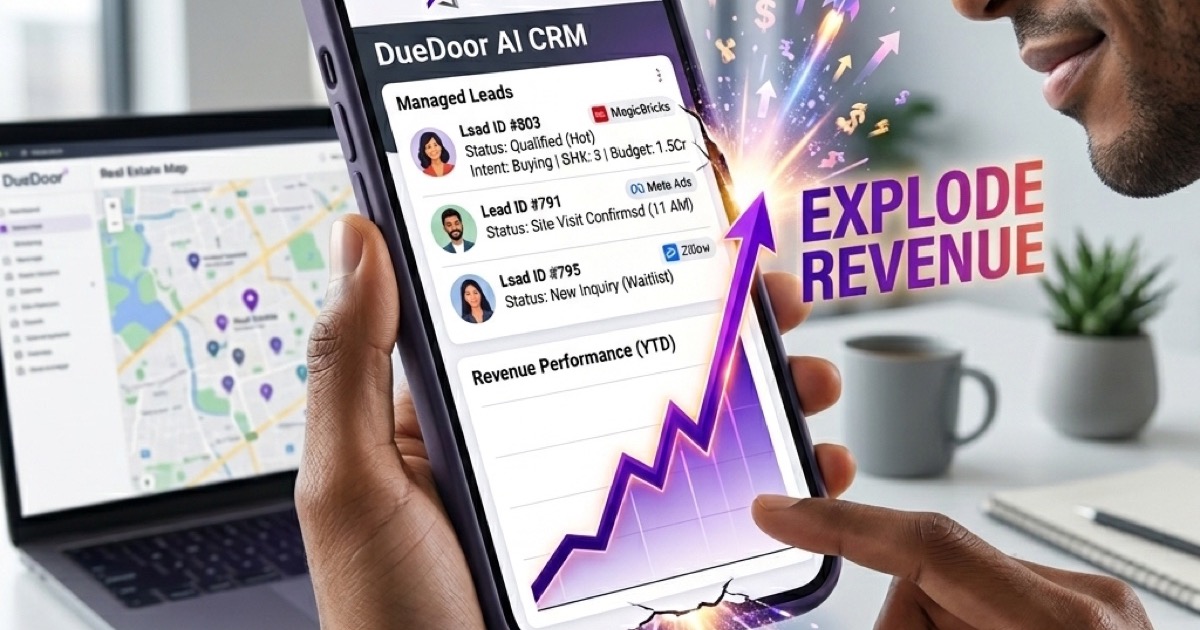
DueDoor is built specifically for this kind of multi-channel automation in the Indian market. Its AI Growth CRM connects WhatsApp Business API, LinkedIn outreach, email sequences, and sales pipeline management into a single platform, so nurture sequences trigger automatically based on real lead behavior rather than manual calendar reminders. Teams using DueDoor have reported cutting their average time-to-close by more than 40% in the first quarter by simply automating the follow-up touches that previously fell through the cracks. Whether you are an early-stage startup in Pune or a 50-person sales team in Delhi, DueDoor scales with the complexity of your nurturing needs without requiring a dedicated marketing operations hire to run it.
Automation does not replace human judgment. It handles the repetitive cadence work so your sales team can focus on high-value conversations: the calls where empathy, negotiation, and relationship skills actually matter. Build your automation layer first, then layer human touchpoints at the highest-leverage moments in your funnel.
If you are ready to build a lead nurturing system that runs on autopilot and surfaces your best prospects automatically, start your free DueDoor trial and see how the platform maps to your existing sales process in under 30 minutes. The setup wizard walks you through your first WhatsApp and email nurture sequence step by step, with Indian-market templates built in from day one.
Frequently Asked Questions
What is the difference between lead generation and lead nurturing?
Lead generation is the process of attracting and capturing new prospects, while lead nurturing is the ongoing effort to build relationships with those prospects until they are ready to buy. Both are essential: generation fills the top of your funnel, and nurturing converts that interest into revenue.
How long should a lead nurturing sequence last?
The length depends on your average sales cycle. For short-cycle products (under 30 days), a 2 to 3 week sequence with 5 to 7 touches is typically sufficient. For complex B2B sales with cycles of 60 to 180 days, sequences should run continuously with monthly value-add content to maintain top-of-mind awareness.
Which channels work best for lead nurturing in India?
WhatsApp delivers the highest response rates for Indian SMBs because of its near-universal adoption. Email works well for longer-form content like case studies and proposals. LinkedIn is effective for high-ticket B2B nurturing. The strongest results come from combining all three in a coordinated multi-channel sequence.
How many follow-up touches does it take to convert a lead?
Industry data consistently shows that 80% of sales happen after the fifth contact, yet most sales reps stop following up after two touches. A structured nurture sequence ensures leads receive the recommended minimum of five to eight meaningful touches before a buying decision is expected.
Can small Indian businesses afford lead nurturing automation?
Yes. Modern CRM platforms like DueDoor are designed specifically for Indian SMBs and include WhatsApp automation, email sequences, and LinkedIn outreach in a single affordable subscription. The cost of automation is nearly always recovered within the first month through improved conversion rates on leads that would otherwise have gone cold.
Every lead gets an instant, qualified reply — even at 3 AM
DueDoor's AI reads the inbound WhatsApp, understands pricing/demo/support intent, replies with the right answer, and books the meeting — all in under 4 seconds. No human lifts a finger until the call itself.
- AI understands Hindi, Tamil, Telugu, Marathi, English
- Qualifies budget, team size, timeline automatically
- Books into your actual Google/Outlook calendar
- Escalates to a human only when the AI isn't 95%+ sure
WhatsApp AI
Auto-reply, drip sequences, AI qualification — 24/7.
Leads & Pipeline
Smart lead scoring with auto-routing to your team.
Email Marketing
Personalized AI emails that actually get opened.
Meta Ads AI
One-click campaigns optimized by AI daily.
SEO Engine
Content + ranking on autopilot. Like this page.
LinkedIn (PhewDo)
Outreach + replies handled end-to-end.
References & further reading
- Lead generation — Wikipedia
- HubSpot Marketing Blog
- Marketing — Wikipedia
- Digital marketing — Wikipedia
- Sales — Wikipedia