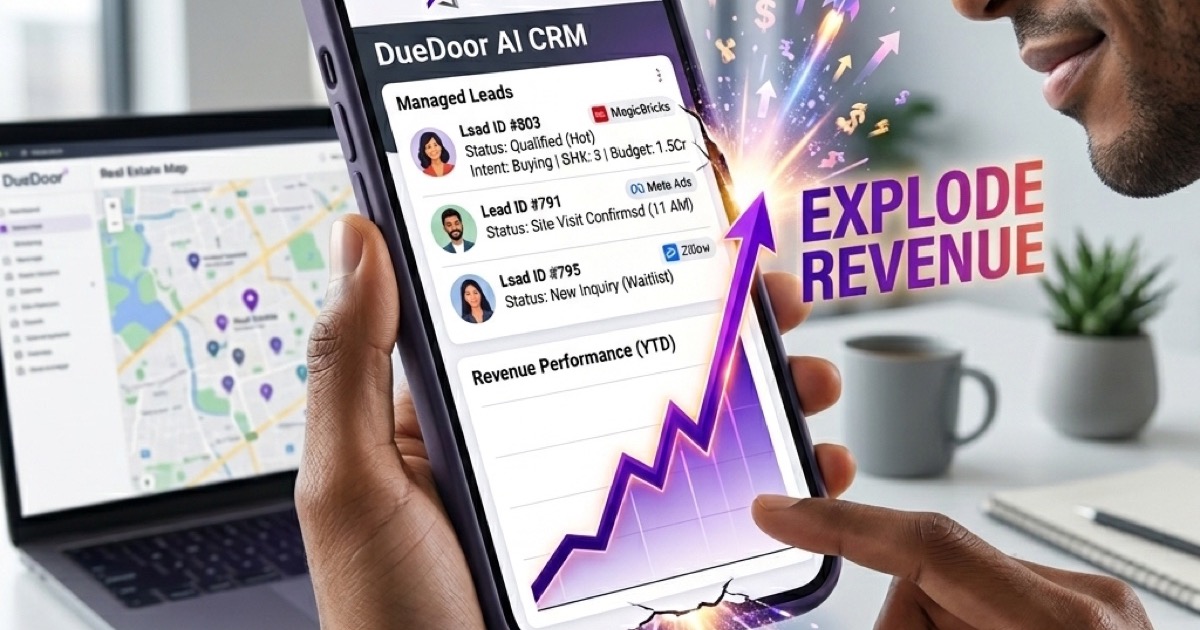
Analyzing lead data effectively means tracking source, behavior, engagement, and demographic signals to score, prioritize, and route leads so your sales team focuses time only on prospects most likely to convert.
Most sales teams collect lead data but very few actually use it well. Forms get filled, spreadsheets grow, CRM rows accumulate, and yet conversion rates stay flat. The difference between a team closing 12 percent of leads and one closing 30 percent often comes down to one thing: how systematically they analyze the data sitting right in front of them.
Effective lead data analysis is not about running complex SQL queries or hiring a data scientist. It is about building a repeatable habit of looking at the right signals, understanding what they mean, and using those insights to take faster, smarter action. This guide walks through exactly how to do that, whether you are a solo founder in Pune running outbound campaigns or a growth team managing thousands of inbound leads every month.
Why Lead Data Analysis Matters
Every lead that enters your pipeline carries a story. Where they came from, what page they visited, how long they spent on your pricing section, whether they opened your WhatsApp message at 9 AM or ignored it for three days , all of this is signal. When you read that signal correctly, you stop wasting time on cold prospects and start doubling down on the ones already leaning toward yes.
For Indian SMBs especially, where sales cycles are relationship-heavy and margins on sales headcount are tight, poor lead prioritization is expensive. A field sales rep who spends two days chasing a prospect who was never going to buy is a real, quantifiable loss. Data analysis turns gut-feel prioritization into a reliable, auditable system.
"The best sales teams do not work harder , they work on better data. Knowing which lead to call next is worth more than any closing script."
Key Data Points to Track for Every Lead
Before you can analyze anything, you need to capture the right inputs. Most businesses track surface-level fields like name, phone, and company. High-performing teams go deeper. Here are the data categories that actually drive analysis quality:
- Source and channel: Did the lead come from Google Ads, an organic blog post, a WhatsApp broadcast, or a LinkedIn connection? Source data tells you which acquisition channels deserve more budget.
- Behavioral signals: Page visits, time on site, return visits, link clicks in emails or WhatsApp messages. A lead who visits your pricing page three times in a week is far warmer than one who opened a single email.
- Demographic and firmographic fit: Industry, city, company size, and role. A procurement head at a 200-person manufacturing firm in Ahmedabad fits very differently than a freelancer in Bengaluru.
- Engagement velocity: How fast did they respond to your first message? Did they reply in minutes or days? Velocity correlates strongly with intent.
- Stage history: How long has this lead sat at each pipeline stage? Stale leads need a different playbook than fresh ones.
- Rejection and disqualification signals: Reasons why past similar leads did not convert. This negative data is just as valuable as positive patterns.
If your current CRM is not capturing all of these, that is the first gap to fix. Tools built for lead generation for Indian businesses increasingly offer auto-enrichment that pulls firmographic data without manual entry.
Lead Scoring Models That Actually Work
Lead scoring assigns a numeric value to each lead based on how well they match your ideal customer profile and how much buying intent they have shown. There are two main approaches, and mature teams use both together.
Demographic Scoring
Award points for matching your target profile. For example: +15 for decision-maker title, +10 for company size above 50 employees, +10 for target industry, -10 for student email domain. This filters out structural mismatches before you spend any selling time.
Behavioral Scoring
Award points for actions that signal intent. Visited pricing page: +20. Replied to WhatsApp message: +25. Attended a demo: +40. Did not open last three messages: -15. Unsubscribed: disqualify immediately.
The combined score gives you a single number to sort your pipeline by. Leads above 70 points go to immediate outreach; leads between 40 and 70 go into a nurture sequence; leads below 40 get low-touch automated follow-up. This is the foundation of identifying your highest-value leads at scale without manual triage.
Segmenting Your Lead Database for Better Targeting
Scoring tells you how hot a lead is. Segmentation tells you how to speak to them. A well-segmented lead database means every message, offer, and follow-up sequence is relevant to the specific person receiving it.
| Segment | Criteria | Recommended Action |
|---|---|---|
| Hot / Ready to Buy | Score 70+, visited pricing, recent engagement | Immediate personal outreach within 2 hours |
| Warm / Nurture | Score 40-69, multiple touchpoints, no demo yet | Automated WhatsApp or email sequence, invite to demo |
| Cold / Early Stage | Score below 40, single touchpoint | Low-touch drip, educational content, re-engagement ping in 14 days |
| Disqualified | Wrong fit, budget mismatch, unsubscribed | Remove from active pipeline, archive for future reference |
| Stale / Dormant | No activity for 30+ days, previously warm | Win-back campaign, new offer or context hook |
Segmentation also enables channel-specific analysis. If your WhatsApp sequences are converting warm leads at 18 percent but email is converting the same segment at only 6 percent, that is a strategic finding. You can learn more about building high-converting WhatsApp follow-up flows in this guide to following up on leads via WhatsApp.
Tools and CRM Features for Lead Analysis
The right tooling removes friction from the analysis habit. You should not have to export CSVs and build pivot tables every Monday morning. A modern CRM or growth platform should surface these insights automatically.
Key features to look for when evaluating your stack:
- Pipeline velocity dashboards: Average time per stage, bottlenecks by source, conversion rate by rep or channel.
- Lead source attribution: Multi-touch, not just first-touch. Knowing that 60 percent of your closed deals touched your WhatsApp broadcast at some point before closing is strategic gold.
- Engagement timelines: A chronological view of every interaction with a lead , email opens, page visits, WhatsApp replies, call recordings , in one place.
- Auto-scoring and tagging: Rules-based or AI-driven scoring that updates dynamically as the lead engages or goes quiet.
- Cohort analysis: Group leads by acquisition month or campaign and track how each cohort progresses over time. This reveals whether your lead quality is improving or degrading.
DueDoor is purpose-built for this kind of layered lead intelligence. Its AI Growth CRM combines WhatsApp Business API automation, LinkedIn outreach tracking, and pipeline analytics into one view, so you can move from raw data to prioritized action without switching between five tools. For teams already evaluating options, the CRM comparison for Indian businesses breaks down how platforms stack up on exactly these capabilities.
Common Lead Data Mistakes to Avoid
Even teams with good intentions make systematic errors that corrupt their analysis. Here are the most common ones:
- Treating all sources equally: A lead from a targeted LinkedIn campaign and a lead from a broad Facebook ad are not the same prospect. Mixing them in one bucket hides the performance difference.
- Ignoring time-to-first-contact: Research consistently shows that responding within 5 minutes of a lead submitting a form increases conversion by more than 20x compared to responding after an hour. If you are not tracking this metric, you are blind to one of the highest-leverage variables in your pipeline.
- Confusing activity with progress: Sending 200 messages is not the same as moving 20 leads to the next stage. Track stage transitions, not just activity counts.
- Never cleaning your database: A CRM full of dead, duplicate, or disqualified leads corrupts every metric. Quarterly database hygiene is non-negotiable.
- Analyzing in isolation: Lead data analysis only becomes powerful when it feeds back into your acquisition strategy. If paid search leads close at half the rate of organic leads, that insight must change your budget allocation , not just live in a report.
Fixing these errors directly improves your ability to use WhatsApp marketing for lead generation more precisely, since you will know exactly which segments respond best to which message types and timing windows.
Turning Lead Insights Into Sales Actions
Analysis without action is just reporting. The goal of every lead data review session should be a specific decision or change: a new scoring rule, a revised follow-up sequence, a budget shift, a sales rep coaching point, or a campaign pause. Here is a simple weekly review framework that keeps analysis actionable:
- Monday pipeline review (15 minutes): Sort all active leads by score. Identify any that jumped from warm to hot over the weekend based on behavior. Assign immediate outreach tasks.
- Wednesday source audit (10 minutes): Compare conversion rates by source for the current month versus last month. Flag any channel showing a drop of more than 10 percent for deeper investigation.
- Friday cohort check (20 minutes): Review the cohort of leads acquired four to six weeks ago. What percentage have progressed beyond initial contact? What percentage are stale? Use this to predict pipeline health three weeks out.
This rhythm, combined with a platform that surfaces data automatically, means analysis stops feeling like a project and becomes a reflex. The teams that master this cycle are the ones who consistently convert more leads into paying customers without adding headcount.
DueDoor's AI engine continuously scores, segments, and routes leads based on real-time engagement signals, so your team always knows exactly which prospect to prioritize and what to say next. Whether you are running a 5-person sales team in Mumbai or a distributed team across three cities, the platform removes the guesswork from lead prioritization and replaces it with data-backed clarity.
Ready to put your lead data to work? Start your free DueDoor trial and see how AI-powered lead analysis can help your team close more deals in less time, starting today.
Frequently Asked Questions
What does it mean to analyze lead data effectively?
Effective lead data analysis means systematically reviewing source, behavioral, demographic, and engagement signals for each lead to score their intent, segment them by fit and readiness, and prioritize outreach so your team focuses on prospects most likely to convert.
How do you build a lead scoring model from scratch?
Start by listing your ideal customer profile attributes and assigning positive points for matches (right industry, decision-maker title, company size). Then add behavioral scores for high-intent actions like visiting your pricing page or replying to messages. Calibrate the thresholds by comparing scores against your historical close data.
How often should you review and clean your lead database?
A light review should happen weekly as part of your pipeline meetings. A deeper database hygiene pass, including removing duplicates, archiving disqualified leads, and updating stale records, should happen at minimum quarterly to keep your metrics accurate.
Which CRM features matter most for lead data analysis?
The most important features are pipeline velocity dashboards, multi-touch source attribution, engagement timelines that combine all channels in one view, automated lead scoring, and cohort tracking. These together give you a complete picture without manual reporting work.
Can small Indian businesses use lead data analysis, or is it only for large enterprises?
Lead data analysis is especially valuable for small businesses because resources are limited and every sales hour needs to count. Even a basic scoring system that separates hot leads from cold ones, combined with a CRM that tracks source and engagement, can significantly improve conversion rates without requiring a dedicated analyst.
Every lead gets an instant, qualified reply — even at 3 AM
DueDoor's AI reads the inbound WhatsApp, understands pricing/demo/support intent, replies with the right answer, and books the meeting — all in under 4 seconds. No human lifts a finger until the call itself.
- AI understands Hindi, Tamil, Telugu, Marathi, English
- Qualifies budget, team size, timeline automatically
- Books into your actual Google/Outlook calendar
- Escalates to a human only when the AI isn't 95%+ sure
WhatsApp AI
Auto-reply, drip sequences, AI qualification — 24/7.
Leads & Pipeline
Smart lead scoring with auto-routing to your team.
Email Marketing
Personalized AI emails that actually get opened.
Meta Ads AI
One-click campaigns optimized by AI daily.
SEO Engine
Content + ranking on autopilot. Like this page.
LinkedIn (PhewDo)
Outreach + replies handled end-to-end.
References & further reading
- Lead generation — Wikipedia
- HubSpot Marketing Blog
- Marketing — Wikipedia
- Digital marketing — Wikipedia
- Sales — Wikipedia