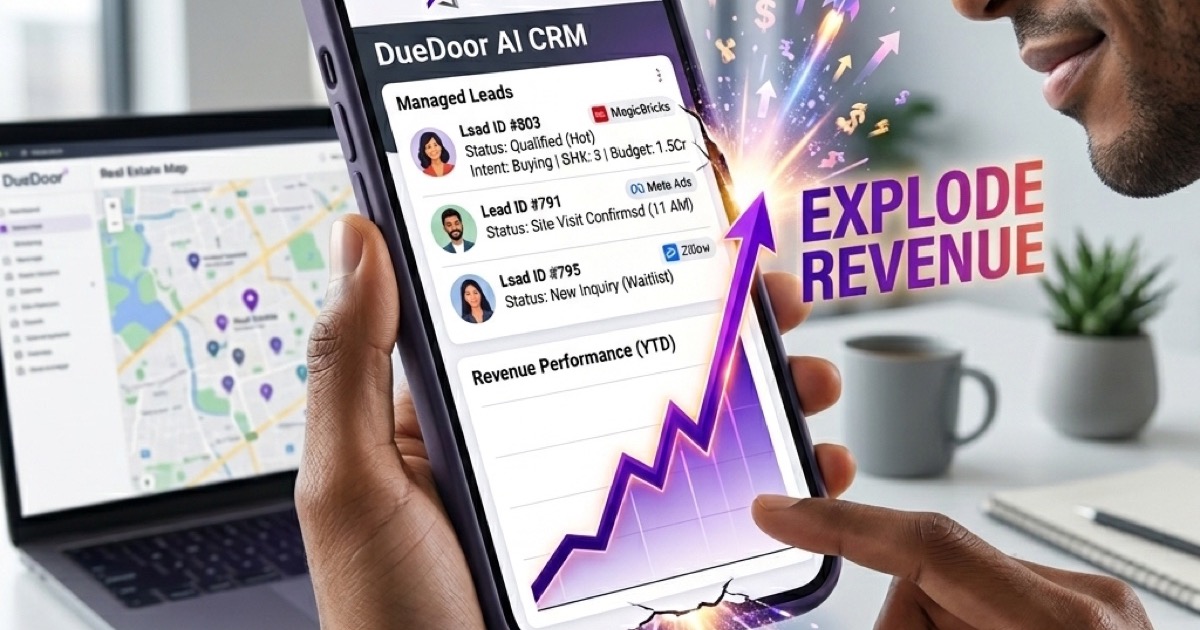
AI-powered CRMs automate lead scoring, follow-ups, and pipeline management using machine learning, giving sales teams 3x more closed deals with less manual work. Traditional CRMs are static databases that require humans to do all the thinking and acting.
Every growing Indian business eventually hits the same wall: leads pile up in spreadsheets, follow-ups slip through the cracks, and the sales team spends more time updating a CRM than actually selling. Traditional CRMs promised to fix this, but for most SMBs, they became another form of data-entry burden. The CRM was supposed to serve the salesperson; instead, the salesperson ended up serving the CRM.
AI-powered CRMs flip that equation. Instead of storing what happened, they tell you what to do next. They score leads automatically, trigger follow-ups without reminders, and surface insights your team would never find manually. This guide breaks down exactly what separates AI-powered CRMs from traditional ones, with specific examples relevant to Indian founders, agencies, and sales teams, so you can make an informed decision for your business.
What Is a Traditional CRM?
A traditional CRM is essentially a structured database for your customer and prospect information. Tools like early Salesforce, Zoho CRM (basic tier), or Freshsales at its most minimal form fall into this category. You import contacts, log calls manually, set reminders by hand, and move deals across pipeline stages yourself.
The key characteristic of a traditional CRM is that it is passive. It stores whatever you put in. It surfaces whatever you ask for. It never proactively tells you that a lead is about to go cold, that a deal has stalled, or that one segment of prospects converts far better than another. The intelligence lives entirely with the sales rep, and the CRM is simply a filing cabinet with a search bar.
What Traditional CRMs Do Well
- Centralise contact data so nothing lives only in one person's inbox
- Create a shared pipeline view across a sales team
- Log activity history for audit and accountability
- Generate basic reports on deal volume and revenue
For a business with fewer than 5 salespeople handling under 100 leads a month, a traditional CRM can still be adequate. The problem is that most Indian SMBs aiming for real growth are generating far more leads than that, across WhatsApp, Instagram, Google Ads, referrals, and LinkedIn simultaneously.
What Is an AI-Powered CRM?
An AI-powered CRM does everything a traditional CRM does, and then it thinks. It analyses patterns across thousands of interactions to predict which leads are most likely to convert, automatically routes high-intent prospects to the right salesperson, triggers personalised follow-up messages without human intervention, and continuously learns from outcomes to improve its predictions.
Platforms like the best AI CRMs built for small businesses in India go even further by integrating WhatsApp Business API, LinkedIn outreach, AI calling, and multi-channel engagement into a single system. Instead of managing five separate tools, your team works from one intelligent hub.
Core AI Capabilities in a Modern CRM
- Lead scoring: Machine learning ranks every lead by conversion probability in real time
- Predictive follow-up: The system triggers the next touchpoint automatically based on behaviour signals
- Conversation intelligence: AI reads WhatsApp chats and call transcripts to flag buying intent
- Pipeline forecasting: Revenue predictions based on current deal velocity, not gut feel
- Auto-enrichment: Contacts are enriched with firmographic data without manual research
"Our team used to spend 2 hours a day just updating the CRM and deciding who to call. After switching to an AI CRM, those 2 hours became 2 hours of actual selling. The system tells us exactly who to call and when." - Sales Head, Mumbai-based B2B SaaS company
AI vs Traditional CRM: Head-to-Head Comparison
The differences between AI-powered and traditional CRMs are not just feature-level. They represent a fundamentally different philosophy about where intelligence should live in your sales process.
| Feature | Traditional CRM | AI-Powered CRM |
|---|---|---|
| Lead Scoring | Manual, rule-based or absent | Automatic, ML-driven, updates in real time |
| Follow-up Triggers | Manual reminders set by rep | Auto-triggered based on behaviour and time signals |
| Data Entry | Mostly manual | Auto-logged from calls, WhatsApp, email |
| Pipeline Forecasting | Static reports, historical | Predictive, updated continuously |
| WhatsApp Integration | Third-party add-on or absent | Native, two-way, automated drip sequences |
| LinkedIn Outreach | Not supported | Built-in multi-step sequences with AI messaging |
| Response Speed | Depends on rep availability | Instant AI responses on WhatsApp and chat |
| Team Collaboration | Shared notes and tasks | AI-assisted handoffs, context-aware alerts |
| Pricing (India) | ₹800 to ₹3,500/user/month | ₹2,500 to ₹8,000/month flat, multi-channel included |
Where Traditional CRM Falls Short for Indian SMBs
The failure mode of traditional CRMs in Indian SMBs follows a predictable pattern. The company invests ₹20,000 to ₹50,000 a year on Zoho or HubSpot Starter, spends two weeks onboarding the team, and within three months 60% of activity is back in WhatsApp groups and personal phone contacts. The CRM becomes a graveyard of incomplete records.
This is not a user discipline problem. It is a design problem. Traditional CRMs were built for Western enterprise sales cycles: long, email-heavy, single-channel. Indian SMB sales happen on WhatsApp, over quick calls, via referrals, and through Instagram DMs. A system that does not natively handle these channels requires too much manual translation, and busy reps skip it.
The Hidden Cost of Manual CRM Work
- A rep handling 80 leads a week spends an estimated 6 to 8 hours just on CRM data entry
- Leads that do not get followed up within 5 minutes have a 10x lower conversion rate
- Managers spend 3 to 5 hours per week pulling reports that an AI CRM generates automatically
- Deals lost to silence cost Indian SMBs an estimated ₹1.2 lakh per salesperson per quarter on average
Understanding how AI tools improve lead conversion rates makes it clear that the gap between AI and traditional CRMs is not incremental. It is the difference between a tool that helps you remember and a tool that helps you act.
Key Advantages of AI-Powered CRM
Beyond automating the obvious, AI CRMs create compounding advantages that grow over time. The more data they process, the smarter the scoring gets. The more follow-ups they send, the better the timing models become. A traditional CRM gets no smarter after year one. An AI CRM gets measurably better every month.
1. Instant Lead Response Across Channels
When a lead fills out a form at 11pm, an AI CRM sends a personalised WhatsApp message within seconds, qualifies the lead with a bot conversation, and schedules a call for the next morning. A traditional CRM just stores the form submission and waits for someone to log in tomorrow.
2. Intelligent Pipeline Management
AI CRMs flag deals that have gone quiet for too long, identify which pipeline stages have the worst drop-off, and suggest specific actions to revive stalled conversations. This kind of AI-driven collaboration across your sales team eliminates the weekly pipeline review meeting that most teams dread.
3. Multi-Channel Outreach From One Place
A modern AI CRM like DueDoor combines WhatsApp Business API automation, LinkedIn outreach sequences, AI calling, and email into one unified pipeline. Your team sees every touchpoint in one thread, not scattered across five apps.
4. Revenue Forecasting That Is Actually Accurate
Traditional CRM forecasts are based on the stage a rep assigned manually. AI CRM forecasts factor in how long a deal has been at each stage, the rep's historical close rate, similar deal patterns, and current engagement levels. The accuracy difference is significant, especially for teams pitching to investors or planning hiring.
Real-World Use Cases for Indian Businesses
The impact of an AI CRM over a traditional one shows up most clearly in specific Indian business contexts. Consider a few scenarios:
Real Estate Developers and Brokers
A real estate team in Pune or Hyderabad might receive 300 to 500 inbound WhatsApp inquiries a week during a project launch. A traditional CRM cannot handle WhatsApp natively. An AI CRM auto-qualifies each inquiry by budget, timeline, and property type, instantly sends relevant brochures, and routes hot leads to senior closers. For context on how this plays out specifically in property sales, the breakdown of the best CRM features for Indian real estate is worth reviewing.
B2B Agencies and SaaS Startups
A digital agency running LinkedIn outreach for client acquisition needs to track 50 to 100 prospect conversations across connection requests, messages, and follow-ups. A traditional CRM requires manual logging of every LinkedIn interaction. DueDoor's AI CRM automates multi-step LinkedIn sequences, logs every reply, and scores each prospect based on engagement, so the agency founder only talks to people who are genuinely interested.
Financial Services and EdTech
Insurance advisors, loan DSAs, and EdTech counsellors in India handle enormous lead volumes from Meta Ads. An AI CRM sends the first follow-up instantly, runs a qualification sequence over WhatsApp over 48 hours, and only escalates leads who have shown genuine interest. The rep's time goes to closing, not chasing cold leads who never intended to buy.
These scenarios also align with the broader question of which sales automation tools work best for high-volume, relationship-driven industries.
Cost and ROI Breakdown
One common objection to AI CRMs from Indian SMBs is cost. Traditional CRM tools start at ₹800 to ₹1,200 per user per month, which feels safe. But the real cost comparison must include the hidden costs of the traditional approach.
True Cost of a Traditional CRM (5-Person Sales Team)
- CRM subscription: ₹5,000/month
- Separate WhatsApp tool: ₹4,000/month
- LinkedIn Sales Navigator: ₹7,500/month
- Email outreach tool: ₹3,000/month
- Lost deals from slow follow-ups: estimated ₹60,000/month
- Total: ₹79,500/month
True Cost of an AI-Powered CRM Like DueDoor (5-Person Sales Team)
- All-in-one AI CRM subscription: ₹8,000 to ₹15,000/month
- WhatsApp, LinkedIn, calling included in platform
- Automated follow-ups reduce lost deals significantly
- Total: ₹8,000 to ₹15,000/month
The ROI math is straightforward. Even if an AI CRM closes just 2 additional deals per month that a traditional CRM would have lost to slow follow-up, the payback in most Indian B2B contexts covers the entire annual subscription cost in a single month.
How to Choose the Right CRM for Your Business
If your business is generating fewer than 30 leads a month, following up mostly by phone, and has a sales cycle longer than 90 days, a traditional CRM may still serve you adequately for now. The ROI from AI features is most dramatic when lead volume is high, follow-up speed matters, and multiple channels are in play simultaneously.
If any of the following apply to your business, an AI-powered CRM is worth the switch immediately:
- You receive more than 50 inbound inquiries a month across any combination of WhatsApp, forms, LinkedIn, or ads
- Your team follows up manually and deals regularly go cold due to timing
- You are running any form of outbound outreach (LinkedIn, cold email, WhatsApp campaigns)
- You have tried a traditional CRM and adoption was poor within 3 months
- You want accurate revenue forecasts to make hiring or expansion decisions
DueDoor is built specifically for this context: Indian SMBs and global sales teams that need WhatsApp-native, LinkedIn-connected, AI-driven pipeline management without the enterprise price tag or implementation complexity of tools built for Fortune 500 companies. It combines every channel your team already uses, adds AI intelligence across all of them, and gives founders and sales leaders a single source of truth for their entire growth pipeline.
Ready to move beyond spreadsheets and static CRMs? Start with DueDoor today and see how an AI-powered CRM transforms your lead-to-close rate in the first 30 days.
Frequently Asked Questions
What is the main difference between an AI CRM and a traditional CRM?
A traditional CRM stores and organises customer data but requires humans to analyse it and take action. An AI CRM analyses patterns automatically, scores leads, triggers follow-ups, and predicts pipeline outcomes without manual input, making the system proactive rather than passive.
Is an AI-powered CRM worth the cost for a small Indian business?
Yes, especially if you handle more than 50 leads a month. When you factor in the cost of separate WhatsApp tools, LinkedIn tools, and deals lost to slow follow-up, an AI CRM is often cheaper in total and generates measurably higher revenue through better conversion rates.
Can an AI CRM handle WhatsApp business communication?
Modern AI CRMs like DueDoor include native WhatsApp Business API integration. This means automated drip sequences, instant lead responses, two-way conversation tracking, and pipeline stage updates all triggered directly from WhatsApp interactions.
How long does it take to see results after switching from a traditional CRM to an AI CRM?
Most businesses see measurable improvements in lead response time within the first week, as automated follow-ups start working immediately. Conversion rate improvements typically show up within 30 to 60 days as the AI scoring and routing optimises based on your specific lead patterns.
Does DueDoor work for industries beyond B2B sales, such as real estate or financial services?
Yes. DueDoor is used by real estate developers, financial advisors, EdTech counsellors, and B2B agencies across India. Its multi-channel approach covering WhatsApp, LinkedIn, AI calling, and email suits any high-volume, relationship-driven sales process.
Every lead gets an instant, qualified reply — even at 3 AM
DueDoor's AI reads the inbound WhatsApp, understands pricing/demo/support intent, replies with the right answer, and books the meeting — all in under 4 seconds. No human lifts a finger until the call itself.
- AI understands Hindi, Tamil, Telugu, Marathi, English
- Qualifies budget, team size, timeline automatically
- Books into your actual Google/Outlook calendar
- Escalates to a human only when the AI isn't 95%+ sure
WhatsApp AI
Auto-reply, drip sequences, AI qualification — 24/7.
Leads & Pipeline
Smart lead scoring with auto-routing to your team.
Email Marketing
Personalized AI emails that actually get opened.
Meta Ads AI
One-click campaigns optimized by AI daily.
SEO Engine
Content + ranking on autopilot. Like this page.
LinkedIn (PhewDo)
Outreach + replies handled end-to-end.
References & further reading
- Artificial intelligence — Wikipedia
- Harvard Business Review — Sales
- Sales — Wikipedia
- Customer relationship management — Wikipedia
- Marketing — Wikipedia