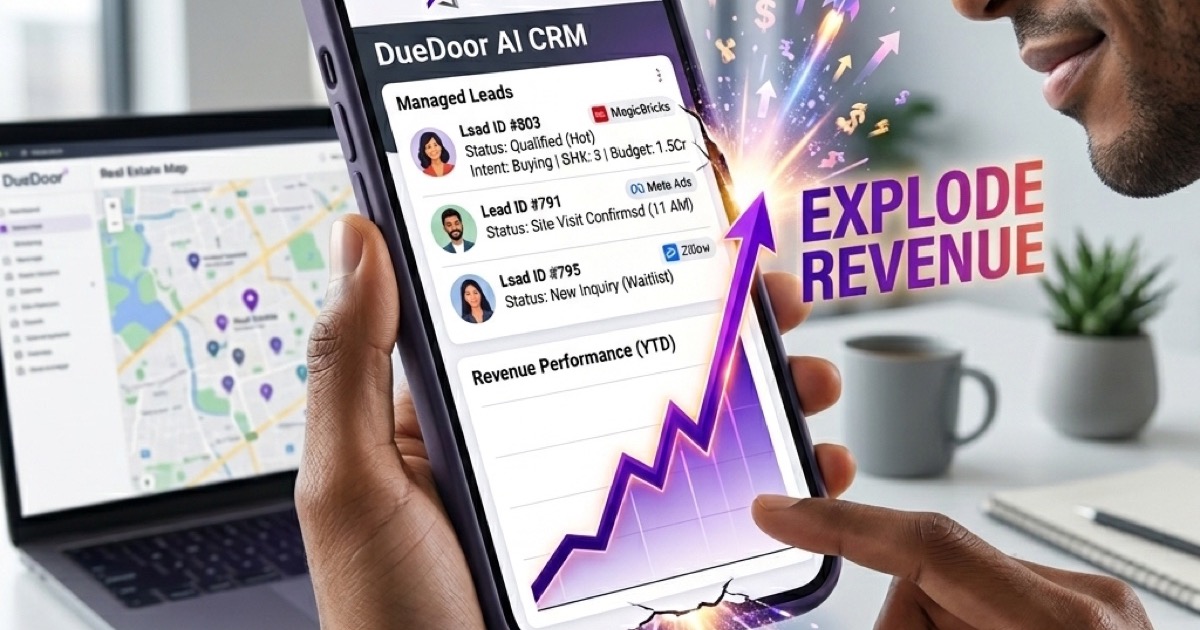
Measure WhatsApp marketing effectiveness by tracking delivery rate, open rate, reply rate, click-through rate, and conversion rate against your campaign goals. Pair these metrics with a CRM that ties WhatsApp activity to revenue to get a full picture of ROI.
WhatsApp has become the default communication channel for hundreds of millions of Indian consumers and business buyers. For sales teams, that reach is a massive opportunity, but only if you can tell which campaigns are working, which templates are converting, and where prospects are dropping off. Without measurement, you are essentially running on instinct in a channel that generates richer signal than almost any other.
This guide walks through every metric that matters for WhatsApp marketing, how to interpret each one in the context of Indian SMB sales cycles, and how to build a measurement system that feeds back into smarter campaigns. Whether you are sending broadcast promotions, drip sequences, or transactional nudges, the framework below applies.
Why Measuring WhatsApp Marketing Matters
Most Indian SMBs start using WhatsApp Business because it is free, familiar, and fast. The problem is that "free" can quietly become expensive when untracked campaigns flood inboxes with irrelevant messages, erode opt-in lists, and invite Meta to restrict the Business Account. Measurement is not a nice-to-have: it is the mechanism that keeps your account healthy, your audience warm, and your sales pipeline moving.
Unlike email, WhatsApp gives you near-real-time delivery and read receipts at the individual message level. That granularity lets you diagnose problems in hours, not weeks. A campaign that lands on Friday evening with a 40% read rate but zero replies is telling you something very specific about timing or template copy. A campaign that generates a 60% reply rate but zero downstream conversions is pointing to a handoff failure, not a messaging failure. Measurement separates the two.
Core KPIs Every Team Must Track
Before diving into individual metrics, agree on a short list of KPIs that map to your actual business goals. A typical Indian SMB sales team running WhatsApp outreach should track five primary KPIs:
- Delivery Rate - the percentage of sent messages that reached the recipient's device.
- Read Rate - the percentage of delivered messages that were opened (blue ticks).
- Reply Rate - the percentage of read messages that received a response.
- Click-Through Rate (CTR) - the percentage of recipients who tapped a link or CTA button inside the message.
- Conversion Rate - the percentage of conversations that resulted in a defined goal: a demo booked, a quote requested, a payment made.
Secondary KPIs worth monitoring include opt-out rate, cost per conversation, and time-to-first-reply. Platforms like deep WhatsApp marketing data analysis tools aggregate all of these into a single view so nothing slips through manually.
Delivery Rate, Read Rate, and What They Tell You
A delivery rate below 95% on a warm opted-in list is a red flag. Common causes include invalid numbers, numbers that have changed, or recipients who have blocked the business account. Clean your list quarterly and remove contacts with repeated delivery failures.
Read rate is where WhatsApp truly outperforms every other marketing channel. Industry-wide, WhatsApp messages are opened at rates of 90 to 98%, compared to 18 to 22% for email. In the Indian SMB context, campaigns sent between 10 AM and 12 PM IST or 6 PM and 8 PM IST consistently outperform off-peak sends by 15 to 25 percentage points. If your read rate is below 70% on a broadcast, the most common culprits are poor send timing, a preview line that reads like spam, or a list that has gone cold.
"A read rate above 85% tells you your audience still wants to hear from you. Anything below 60% means you have a list quality or timing problem that no amount of creative will fix."
Reply Rate, Click Rate, and Engagement Depth
Reply rate is the metric that separates WhatsApp from every other broadcast channel. A recipient who replies is expressing intent. For B2B sales teams, even a simple "tell me more" reply is a qualified hand-raise that should immediately trigger a human or AI follow-up sequence.
Industry benchmarks for reply rates vary widely by message type:
| Message Type | Typical Reply Rate | Typical CTR (link/button) |
|---|---|---|
| Promotional broadcast | 8 to 15% | 5 to 12% |
| Follow-up after demo | 30 to 50% | 20 to 35% |
| Abandoned cart / quote nudge | 20 to 40% | 15 to 28% |
| Drip sequence (day 3-5) | 10 to 25% | 8 to 18% |
| Re-engagement (90-day dormant) | 5 to 10% | 3 to 8% |
Click-through rate depends heavily on your call-to-action design. Single-tap Quick Reply buttons consistently outperform plain links by 2 to 3x because they eliminate the friction of typing. If you are using AI tools built for lead conversion, these systems can automatically A/B test button labels and message variants to optimise CTR without manual effort.
Tying WhatsApp Activity to Conversions and Revenue
This is the step most SMBs skip, and it is the most valuable. Tracking read and reply rates is useful. Knowing that a specific WhatsApp drip sequence generated 47 demo bookings worth a combined revenue of Rs 18,40,000 last quarter is transformative.
To connect WhatsApp activity to revenue you need three things: a unique identifier per contact (phone number, prospect ID), a way to log every message event against that contact, and a CRM that stores both the WhatsApp interactions and the downstream deal outcomes. Choosing the right CRM for Indian small businesses is therefore a prerequisite for serious WhatsApp measurement, not an afterthought.
DueDoor ties every WhatsApp conversation to the prospect's pipeline stage, so you can see at a glance whether a campaign moved contacts from Lead to Demo Booked or stalled them at Contacted. This kind of stage-level attribution is what separates a measurement system from a mere reporting dashboard.
Attribution rules to adopt from day one:
- Tag every outbound campaign with a source label (e.g., waba-promo-june26) so you can filter pipeline by campaign origin.
- Set a conversion window: for most Indian SMB deals, a 7 to 14-day window after a WhatsApp touch is a reasonable attribution period.
- Track multi-touch: if a prospect received a LinkedIn message and then a WhatsApp nudge before converting, credit both. Use AI-driven solutions for sales team collaboration to get multi-channel attribution in one place.
Indian SMB Benchmarks for WhatsApp Campaigns
Global WhatsApp benchmarks can mislead Indian teams because the market dynamics are different. Indian SMB buyers are heavy WhatsApp users personally, which means business messages face higher scrutiny for relevance. At the same time, a well-crafted message from a recognised brand name can achieve reply rates that are 2x the global average.
Based on aggregated data from Indian SMB campaigns across real estate, financial services, SaaS, and retail:
- Healthy delivery rate: above 95%
- Strong read rate: above 75% for broadcast, above 85% for triggered messages
- Good reply rate: above 12% for cold broadcast, above 35% for warm follow-ups
- Solid CTR: above 10% for promotional, above 20% for nurture sequences
- Conversion rate target: 2 to 5% of total delivered messages resulting in a defined sales outcome
Real estate teams in particular see outsized results because buyers are highly engaged and deals are high-value. If you operate in that sector, the measurement principles covered in sales automation tools for real estate build directly on the WhatsApp KPI framework above.
Tools and Dashboards for WhatsApp Analytics
The Meta Business Suite provides basic delivery and read data for WhatsApp Business API accounts. It is a good starting point but lacks CRM integration, making it hard to connect message activity to revenue. For any team sending more than 500 messages per month, a dedicated analytics layer is essential.
Key capabilities to look for in a WhatsApp analytics tool:
- Real-time delivery and read dashboards segmented by campaign, template, and time-of-send
- Conversation-level logs with timestamps so you can measure response latency
- A/B test reporting for template variants
- Opt-out tracking with automatic list suppression
- Pipeline stage mapping so each conversation shows its current deal status
DueDoor's built-in WhatsApp analytics layer does all of the above and surfaces the data alongside LinkedIn, email, and AI calling activity, giving sales managers a single performance view across every channel. This matters because isolated channel metrics can be misleading: a WhatsApp campaign may look mediocre on its own but prove to be a critical assist in a multi-touch sequence.
How to Optimise Campaigns Using Your Data
Measurement without action is just bookkeeping. The value lies in creating a fast feedback loop: run a campaign, read the metrics within 48 hours, identify the weakest step in the funnel, and fix it before the next send.
A practical optimisation cycle for WhatsApp looks like this:
- Low delivery rate: audit your number list for validity, check if the account has any Meta quality restrictions, and reduce send frequency if you have been flagged.
- High read, low reply: the message is being seen but not compelling action. Rewrite the opening line and shorten the message body. Test a Quick Reply button instead of a plain URL.
- High reply, low conversion: the conversation is starting but the handoff is failing. Review how your team or AI agent responds to inbound replies. Speed matters: responding within 5 minutes of a reply increases conversion probability by 9x in most SMB categories.
- Good conversion, poor ROI: check cost per conversation against deal value. Tighten your audience targeting so you are spending on the highest-intent segments.
Combine WhatsApp optimisation with broader pipeline intelligence. DueDoor lets you see which lead sources are converting best across the full funnel, so you can allocate WhatsApp budget where it will have the most impact rather than spreading it evenly across a cold list.
Ready to build a WhatsApp marketing measurement system that connects directly to your revenue pipeline? Start your free DueDoor trial and get WhatsApp analytics, CRM attribution, and AI-powered follow-up working together from day one.
Frequently Asked Questions
What is a good open rate for WhatsApp marketing in India?
A healthy read rate for WhatsApp broadcast campaigns in India is above 75%. For triggered messages sent to warm contacts, such as post-demo follow-ups or abandoned quote nudges, aim for above 85%. Rates below 60% usually indicate list quality issues or poor send timing.
How do I track conversions from WhatsApp campaigns?
Tag every outbound campaign with a unique source label and log all WhatsApp interactions against each prospect's CRM record. Set a 7 to 14-day attribution window and track whether the contact moved to a qualifying pipeline stage after the WhatsApp touch. A CRM like DueDoor that natively stores WhatsApp conversations alongside deal stages makes this straightforward.
What metrics should I monitor to keep my WhatsApp Business account healthy?
Monitor your opt-out rate, spam report rate, and delivery rate daily. If your opt-out rate rises above 2% on a campaign or Meta flags your account quality as medium or low, pause outreach, audit your templates, and clean your contact list before resuming.
How often should I review WhatsApp campaign performance?
For active campaigns, review delivery and read metrics within 24 to 48 hours of sending. Review reply and conversion metrics at the 7-day mark. Conduct a full monthly review to compare campaign performance trends and update templates based on what is working.
Is WhatsApp marketing more effective than email for Indian SMBs?
For most Indian SMB sales use cases, yes. WhatsApp open rates of 90 to 98% far exceed email open rates of 18 to 22%, and reply rates on WhatsApp are typically 3 to 5x higher than email response rates. However, the channels complement each other: use email for detailed proposals and WhatsApp for real-time nudges and conversation starters.
Every lead gets an instant, qualified reply — even at 3 AM
DueDoor's AI reads the inbound WhatsApp, understands pricing/demo/support intent, replies with the right answer, and books the meeting — all in under 4 seconds. No human lifts a finger until the call itself.
- AI understands Hindi, Tamil, Telugu, Marathi, English
- Qualifies budget, team size, timeline automatically
- Books into your actual Google/Outlook calendar
- Escalates to a human only when the AI isn't 95%+ sure
WhatsApp AI
Auto-reply, drip sequences, AI qualification — 24/7.
Leads & Pipeline
Smart lead scoring with auto-routing to your team.
Email Marketing
Personalized AI emails that actually get opened.
Meta Ads AI
One-click campaigns optimized by AI daily.
SEO Engine
Content + ranking on autopilot. Like this page.
LinkedIn (PhewDo)
Outreach + replies handled end-to-end.
References & further reading
- Artificial intelligence — Wikipedia
- Harvard Business Review — Sales
- Sales — Wikipedia
- Customer relationship management — Wikipedia
- Marketing — Wikipedia