To optimize email subject lines, keep them under 50 characters, personalize with the recipient's name or company, use curiosity or urgency triggers, and A/B test at least two variants before sending to your full list.
Your email subject line is the single most important line of copy you will ever write for a campaign. It decides whether a recipient opens your message, ignores it, or sends it straight to the spam folder. In a crowded inbox, you have roughly two seconds to make an impression, and the subject line is your entire pitch.
For Indian SMBs sending cold outreach, drip sequences, or broadcast campaigns, subject line quality directly determines revenue. A one-percentage-point improvement in open rate across a 50,000-contact list can mean hundreds of extra conversations and lakhs in pipeline. The tactics below are grounded in 2026 benchmark data and real-world practice, so you can apply them immediately regardless of the email platform you use.
Why Subject Lines Matter More Than You Think
Research consistently shows that 47 percent of email recipients decide whether to open an email based solely on the subject line. Yet most senders spend 90 percent of their effort on the email body and less than a minute on the subject. This is backwards. A brilliant email body is worthless if no one opens it.
Subject lines also affect deliverability. Spam filters score subject line patterns: excessive capitals, certain trigger words, and misleading phrasing all push your sender reputation down. A well-crafted subject line protects your domain health while lifting open rates simultaneously.
The relationship between subject line quality and downstream metrics is direct. Higher open rates feed higher click-through rates, more replies, and more booked meetings. Every optimization dollar you spend on subject lines compounds across every email you send.
Anatomy of a Great Subject Line
A high-performing subject line typically combines three elements: relevance, specificity, and emotional pull. Relevance means the subject matches what the reader actually cares about. Specificity means it contains a concrete detail (a number, a company name, a timeframe) rather than vague promises. Emotional pull means it triggers curiosity, urgency, or self-interest.
Consider the difference between these two subject lines sent to a Mumbai-based logistics founder:
- Check out our new features - generic, zero relevance signal
- How Mahindra Logistics cut delivery disputes by 38% - specific, credible, emotionally relevant
The second example uses a named company, a precise number, and a pain point that a logistics founder recognizes instantly. Every word earns its place.
Rule of thumb: Read your subject line out loud. If it sounds like something a real person would say in a conversation, it will perform well. If it sounds like ad copy from 2010, rewrite it.
Subject lines also benefit from preview text (the snippet shown after the subject in most mobile clients). Treat the first sentence of your email as an extension of the subject line. Together they form a two-line pitch that either earns the open or loses it.
Personalization and Segmentation Tactics
Personalized subject lines lift open rates by an average of 26 percent, but basic first-name personalization is now table stakes. Sophisticated senders go further:
- Company-level personalization: Reference the recipient's company name, recent funding, or industry event. Example: Razorpay-style growth for [Company]?
- Role-based personalization: Segment by job title and write subjects that speak to that role's specific goals. A CFO subject line reads differently from a VP Sales subject line.
- Behavioral triggers: Trigger subject lines based on actions the recipient has already taken, such as visiting your pricing page or opening a previous email but not clicking.
- Geographic cues: For Indian audiences, city-level references outperform generic national copy. A Bengaluru SaaS founder responds to Bengaluru context; a Delhi distributor responds to Delhi context.
Segmentation is the engine that makes personalization scalable. When you segment your list by industry, company size, or funnel stage, you can write one genuinely relevant subject line for each segment rather than a watered-down compromise for everyone. For a deeper look at audience-specific tactics, the guide on best email marketing practices for Indian audiences covers regional segmentation in detail.
Power Words and Emotional Triggers
Certain words reliably increase open rates because they activate psychological responses. These fall into a few categories:
| Trigger Type | Example Words | Use Case |
|---|---|---|
| Curiosity | secret, little-known, surprising, what most | Top-of-funnel cold outreach |
| Urgency | today only, last chance, closing soon, 48 hours | Time-limited offers, event registration |
| Specificity | 3 steps, in 10 minutes, by Friday, exact | Tutorial emails, onboarding sequences |
| Social proof | 500+ teams, trusted by, case study, results | Mid-funnel nurture, re-engagement |
| Personalization | [First name], your industry, your competitors | Cold outreach, account-based campaigns |
The key is to match the trigger type to the email's purpose and the recipient's stage in your funnel. Urgency language works for a flash sale but feels manipulative in a cold introduction. Curiosity language works for top-of-funnel but can feel vague to a warm prospect who has already done their research.
Avoid overusing any single trigger. If every subject line you send uses urgency, your list becomes desensitized. Rotate triggers deliberately across a campaign sequence to keep engagement fresh.
Length and Mobile Optimization
In 2026, more than 60 percent of emails are first opened on a mobile device. Most mobile email clients display 30 to 40 characters before truncating the subject line. This means your most important words must appear at the front.
Optimal subject line length by goal:
- Under 30 characters: Maximum mobile visibility, best for urgent or punchy messages. Risk: may lack enough context to be compelling.
- 30 to 50 characters: The sweet spot for most campaigns. Enough room for specificity without truncation risk.
- 50 to 70 characters: Works on desktop, partially truncated on mobile. Use only when the extra detail is genuinely necessary.
- Over 70 characters: Avoid. You are writing for the desktop minority and losing the mobile majority.
Front-load your most important information. If you are referencing a company name, a number, or a keyword the recipient will recognize, put it in the first four words. Everything after character 40 is bonus context, not the hook.
Emoji use is a nuanced topic. A single relevant emoji at the start of a subject line can increase open rates in consumer lists but can feel out of place in B2B outreach to senior decision-makers. Test it on your specific audience rather than following blanket advice.
A/B Testing Your Subject Lines
No amount of copywriting theory replaces data from your own list. A/B testing subject lines is the single highest-leverage activity you can do to improve email performance over time. Teams that run consistent A/B tests see 3.4 times more clicks than those that do not test at all.
A practical A/B testing process for Indian SMBs:
- Test one variable at a time. If you change both the length and the emotional trigger simultaneously, you cannot attribute the result to either change.
- Use a meaningful sample size. For lists under 5,000, send variant A to 30 percent and variant B to 30 percent, then send the winner to the remaining 40 percent after four hours.
- Test subject line pairs that represent real strategic questions. For example: curiosity vs. specificity, personalized vs. generic, question format vs. statement format.
- Track open rate as the primary metric but watch reply rate and unsubscribe rate too. A clickbait subject line may inflate opens while tanking engagement downstream.
Document every test result. Over six months, you will build a picture of what your specific audience responds to, which is far more valuable than any industry benchmark. For complete cold email frameworks including testing cadences, the best practices for cold email outreach guide provides a structured approach.
Common Mistakes to Avoid
Even experienced email marketers make these recurring errors:
- All-caps words: Writing FREE or URGENT in capitals triggers spam filters and feels aggressive to readers. Use sentence case throughout.
- Misleading subjects: Subject lines that do not match the email body destroy trust and spike unsubscribe rates. Short-term open rate gains are not worth long-term list damage.
- Filler phrases: Phrases like "Just checking in," "Quick question," and "Following up" are so overused they have become invisible. They signal low effort and get ignored.
- Ignoring spam trigger words: Words like "free offer," "cash," "winner," "guaranteed," and "no cost" in subject lines can push your email into the spam folder before a human ever sees it.
- Sending without preview text: Leaving preview text as the first HTML text in your email (often an unsubscribe link or alt text) wastes the second most visible piece of real estate in the inbox.
For campaigns targeting Indian audiences specifically, subject lines that assume Western cultural references or use currency symbols like $ when targeting INR-paying customers can reduce relevance. The guide on email marketing best practices in India covers localization in depth, including language switching for Hindi-speaking segments.
Compliance is another area where mistakes happen in subject lines. In India, TRAI regulations and the DPDP Act 2023 govern commercial email. Deceptive subject lines that misrepresent the sender or content are not just bad practice, they create legal exposure. The email marketing compliance guide for India is essential reading before you scale any campaign.
Subject Line Performance Benchmarks
Understanding where you stand relative to industry benchmarks helps you set realistic improvement targets. Average open rates in India vary significantly by sector:
- SaaS and technology: 22 to 28 percent average open rate
- Financial services: 25 to 32 percent
- Real estate: 19 to 24 percent
- E-commerce and retail: 15 to 20 percent
- Professional services (CA, legal, consulting): 28 to 35 percent
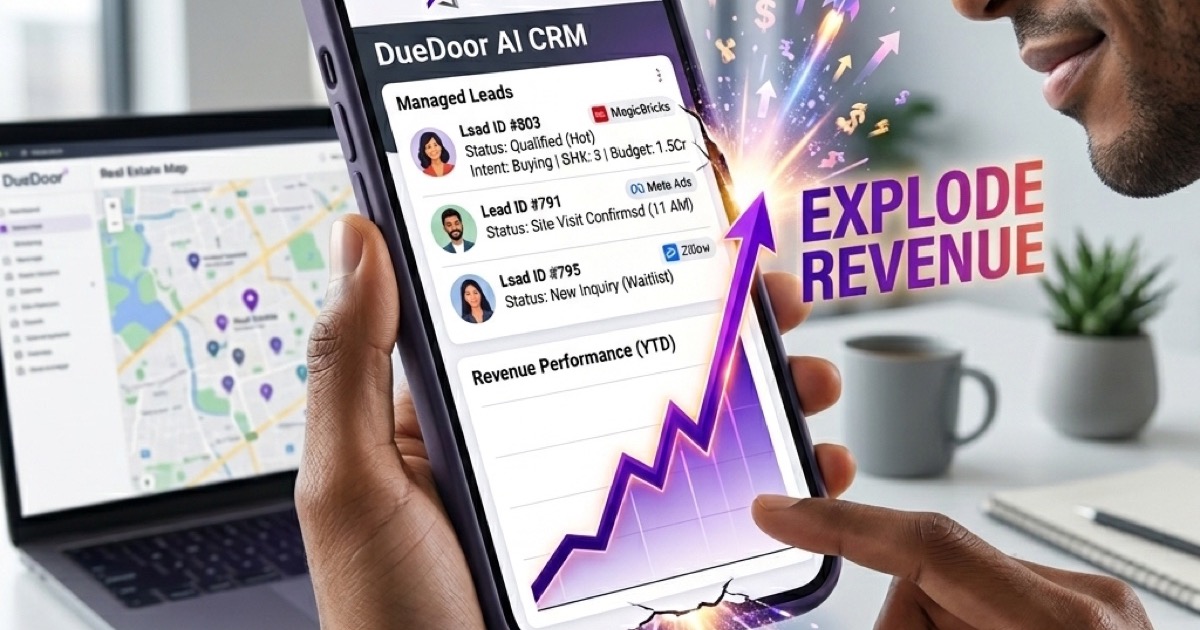
DueDoor's AI-driven email campaigns consistently outperform these benchmarks for clients because the platform combines behavioral segmentation with automated subject line recommendations based on past campaign data. When you connect CRM signals (deal stage, last activity, company size) directly to subject line logic, personalization moves from manual effort to systematic output at scale. Teams using automated email marketing tools consistently see faster iteration cycles and higher cumulative open rates than manual senders.
Subject line optimization is not a one-time project. It is an ongoing discipline that compounds over time. Each test you run, each result you record, and each audience insight you capture makes every future campaign more effective. The teams that treat subject lines as a strategic asset rather than an afterthought consistently outperform their competitors in pipeline generation and customer lifetime value.
If you want to put these principles to work on a platform built for Indian SMBs and global sales teams, try DueDoor's Growth CRM free. DueDoor connects AI-powered subject line recommendations, automated segmentation, and full-funnel analytics so your email campaigns generate pipeline, not just opens.
Frequently Asked Questions
What is the ideal length for an email subject line?
The ideal email subject line length is between 30 and 50 characters. This range provides enough specificity to be compelling while avoiding truncation on mobile devices, where over 60 percent of emails are first opened.
How much does personalization improve email open rates?
Personalized subject lines improve open rates by an average of 26 percent compared to generic ones. Going beyond first-name personalization to include company names, role-specific language, or behavioral triggers can push this lift even higher.
Which words should I avoid in email subject lines?
Avoid spam-trigger words like free offer, cash, guaranteed, and winner. Also avoid all-caps words, misleading phrases that do not match the email body, and overused fillers like just checking in or quick question, all of which reduce open rates and can damage deliverability.
How often should I A/B test my email subject lines?
You should A/B test subject lines on every major send where your list is large enough to generate statistically meaningful results (typically 1,000 or more recipients). For smaller lists, run tests on every send and accumulate learnings over time rather than waiting for a single decisive result.
Does using emojis in subject lines increase open rates?
Emojis can increase open rates for consumer-facing and younger B2B audiences, but they can reduce perceived professionalism in senior B2B contexts. The safest approach is to A/B test emoji vs. no-emoji on your specific list before committing to either approach across all campaigns.
Every lead gets an instant, qualified reply — even at 3 AM
DueDoor's AI reads the inbound WhatsApp, understands pricing/demo/support intent, replies with the right answer, and books the meeting — all in under 4 seconds. No human lifts a finger until the call itself.
- AI understands Hindi, Tamil, Telugu, Marathi, English
- Qualifies budget, team size, timeline automatically
- Books into your actual Google/Outlook calendar
- Escalates to a human only when the AI isn't 95%+ sure
WhatsApp AI
Auto-reply, drip sequences, AI qualification — 24/7.
Leads & Pipeline
Smart lead scoring with auto-routing to your team.
Email Marketing
Personalized AI emails that actually get opened.
Meta Ads AI
One-click campaigns optimized by AI daily.
SEO Engine
Content + ranking on autopilot. Like this page.
LinkedIn (PhewDo)
Outreach + replies handled end-to-end.
References & further reading
- Email marketing — Wikipedia
- HubSpot Email Marketing Guide
- Mailchimp Resources
- Digital marketing — Wikipedia
- Marketing — Wikipedia