Automate lead follow ups by setting up triggered sequences across WhatsApp, email, and calls that activate based on prospect behavior, so no lead goes cold without a timely, personalized touchpoint.
Most sales teams lose deals not because their product is weak, but because they stop reaching out too soon. Research consistently shows that over 80% of leads never receive a second follow-up message, even though most purchases happen after the fifth or sixth touchpoint. When you automate lead follow ups, you close that gap permanently without adding headcount or burning out your sales reps.
For Indian SMBs managing dozens of inbound inquiries daily from property portals, WhatsApp broadcasts, Google Ads, and social media, manual follow up is simply not scalable. A structured, automated nurture sequence keeps your pipeline warm, surfaces the buyers who are ready to act, and lets your team focus on conversations that actually convert. This guide breaks down exactly how to build that system from scratch.
Why Follow-Up Automation Matters
The economics of lead follow up are brutally simple. Every lead you generate costs money, whether through paid ads, content, referrals, or outreach tools. When a prospect fills out a form or sends a WhatsApp message and receives no reply within the hour, the buying intent that drove that action starts to decay. Within 24 hours, many prospects have already spoken to a competitor.
Automation solves the timing problem at scale. Instead of relying on a sales rep to remember to call back on day three, the system fires a personalized WhatsApp message, queues a follow-up email, and flags the lead for a call if there is no response, all without manual intervention. The result is a consistent experience for every prospect, regardless of team capacity or time zone.
"The team that follows up fastest and most consistently wins the deal, not the team with the best brochure." Automating that consistency is the single highest-leverage activity in outbound sales for growing Indian businesses.
How Automated Follow Ups Work
At its core, automated follow up is a sequence of pre-written touchpoints that trigger based on time, prospect behavior, or CRM stage changes. The sequence runs without human input until the prospect responds, books a meeting, or reaches the end of the cadence.
Here is a simplified view of how a typical automated sequence flows:
- Trigger event: A lead fills a form, clicks an ad, or messages on WhatsApp.
- Immediate response: An instant WhatsApp or SMS acknowledgment is sent within seconds.
- Day 1 follow up: A value-add message with a case study, demo link, or pricing summary.
- Day 3 follow up: A soft nudge asking if they have questions, with a direct booking link.
- Day 7 follow up: A last-chance message referencing a specific pain point or offer expiry.
- Unresponsive path: Lead is tagged for quarterly re-engagement or a manual call flag.
Each step can be personalized dynamically using merge fields like the prospect's name, company, city, or the product they enquired about. This makes the sequence feel personal even when it runs automatically for thousands of leads simultaneously.
Best Channels for Automated Follow Ups
Channel selection depends on your audience and product. Indian SMB buyers are highly active on WhatsApp, which makes it the highest-response channel for most local businesses. Global B2B teams layer in LinkedIn and email. AI calling works well for high-ticket categories like real estate, financial products, and enterprise software.
| Channel | Best Use Case | Typical Open/Response Rate |
|---|---|---|
| Immediate acknowledgment, document sharing, local SMB | 85-95% open, 40-60% reply | |
| Detailed nurture, B2B sequences, re-engagement | 25-40% open, 5-15% reply | |
| Enterprise, SaaS, professional services outreach | 30-50% open, 10-25% reply | |
| AI Calling | High-ticket deals, real estate, financial services | 60-75% answer rate |
| SMS | Reminders, appointment confirmation, rural reach | 70-90% open, 15-25% reply |
A multi-channel approach consistently outperforms single-channel follow up. Pairing a WhatsApp drip with a LinkedIn touchpoint on day four, for instance, can lift response rates significantly compared to WhatsApp alone. For a deep dive on using WhatsApp as a primary lead channel, see this guide on effective WhatsApp marketing for lead generation.
Building Your Follow-Up Sequence
A high-converting follow-up sequence is not just a string of "just checking in" messages. Each touchpoint must deliver value, create urgency, or lower a specific objection. Here is how to build one that actually works.
Step 1 - Map the buyer journey
Before writing any messages, map out the key questions a prospect has at each stage. What do they worry about on day one? What information helps them move forward by day three? Answering these questions shapes each message in the sequence.
Step 2 - Write for segments, not the average buyer
A real estate lead from Mumbai and an MSME owner from Coimbatore looking at a SaaS tool have completely different contexts. Segment your sequences by lead source, product category, city, or deal size so the messaging is specific and relevant.
Step 3 - Set clear exit conditions
Every sequence needs defined exit points. If the prospect replies, the automated sequence should pause and route to a human rep. If they book a demo, the sequence stops and a meeting reminder series begins. If they opt out, they are removed immediately. Failing to set these conditions leads to prospects receiving tone-deaf follow ups after already buying or declining, which damages the brand.
Step 4 - Include a single CTA per message
Each automated follow up should ask for exactly one action: reply with a question, click to book a demo, or confirm a preferred time slot. Multiple CTAs in one message dilute attention and lower conversion rates. Keep it simple and direct.
If you are still building your lead generation infrastructure, this overview of the best lead generation tools for Indian businesses covers the full stack you need before automating follow ups.
CRM Triggers and Lead Scoring
Not all leads deserve the same follow-up intensity. A prospect who has opened your WhatsApp message three times, clicked your pricing link, and visited your demo page is fundamentally different from someone who filled a form six weeks ago and never engaged again. Lead scoring lets your CRM distinguish between the two and route them to different sequences.
Behavioral triggers you should be tracking and acting on include:
- Opening a WhatsApp message or email more than twice
- Clicking a product or pricing link
- Visiting the demo or signup page
- Replying with a question or objection
- Returning to the website after a gap of more than seven days
When a lead crosses a score threshold, the CRM should automatically escalate: trigger a high-priority WhatsApp message, alert the assigned rep, or even initiate an AI call. Identifying your highest-value leads early is what separates teams that consistently hit targets from those that chase every inquiry with equal effort and burn out.
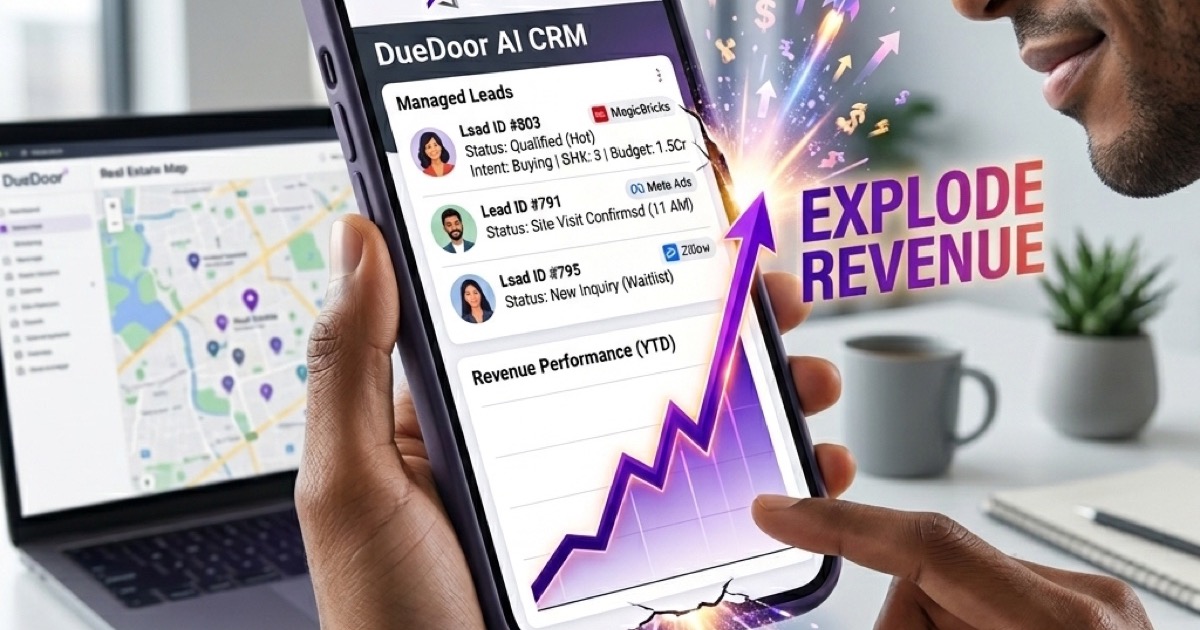
DueDoor's AI Growth CRM handles this natively. The platform scores leads in real time using engagement signals across WhatsApp, email, and LinkedIn, then fires the appropriate follow-up action automatically. Reps see a live, ranked pipeline instead of a flat list of contacts, so they always know who to call next.
Common Mistakes to Avoid
Even well-intentioned automation can hurt conversions if it is set up carelessly. These are the most common mistakes Indian sales teams make when they automate lead follow ups for the first time.
- Sending too many messages too fast: Blasting a prospect with five messages in 48 hours reads as spam. Space out touchpoints and honor WhatsApp's 24-hour session window rules.
- Using generic templates: "Hi [First Name], just following up on my previous message" is not personalization. Reference the product, pain point, or city to show you read their inquiry.
- Forgetting to pause when prospects reply: If your sequence keeps firing after someone has replied and is in active conversation with a rep, it creates confusion and damages trust.
- Not testing sequences before going live: Run every sequence through a test account first. Broken merge fields or mis-timed triggers that reach real prospects are hard to recover from.
- Neglecting opt-out compliance: Under TRAI and WhatsApp Business Policy, prospects must be able to opt out easily. Every sequence should include a simple unsubscribe path.
For businesses already using WhatsApp at scale, the dedicated guide on following up with leads on WhatsApp covers platform-specific best practices in detail, including template approval, session messaging, and broadcast list management.
Measuring Follow-Up Performance
Automation without measurement is guesswork. Tracking the right metrics tells you which sequences are working, which steps are causing drop-off, and where your conversion funnel leaks.
The metrics that matter most for follow-up automation are:
- First response rate: What percentage of leads reply to any touchpoint in the sequence?
- Touchpoint conversion rate: Which specific message in the sequence generates the most replies or demo bookings?
- Time to first reply: How quickly does your sequence get a prospect to respond? Faster is better.
- Sequence completion rate: How many leads make it to the end of the sequence without replying? A high rate signals the sequence needs revision.
- Deal close rate by sequence: Are leads from a specific campaign or source closing at a higher rate after automation?
Review these numbers weekly and A/B test message copy, send timing, and channel order. Even small improvements, like changing a WhatsApp message from morning to afternoon delivery, can meaningfully shift reply rates for Indian audiences. Understanding the full picture of how to convert leads into customers gives you the strategic context to interpret these metrics correctly and optimize the right steps.
Getting Started with DueDoor
DueDoor is built specifically for teams that want to automate lead follow ups without stitching together five separate tools. The platform combines a WhatsApp Business API inbox, AI-powered LinkedIn outreach, multi-step email sequences, lead scoring, and a sales pipeline into a single Growth CRM dashboard. You connect your lead sources once, configure your sequences, and the system runs automatically across every channel your prospects use.
Teams using DueDoor report significantly faster response times, higher lead-to-meeting conversion, and more consistent pipeline coverage without adding headcount. The AI engine prioritizes the warmest leads in real time so reps always work the highest-probability opportunities first. Whether you are a real estate developer in Pune managing 500 inbound inquiries a month, or a SaaS startup running outbound to SMBs across tier-2 cities, DueDoor's automation layer removes the manual follow-up bottleneck that stalls most growing sales teams.
Ready to stop losing leads to slow or inconsistent follow up? Start your free trial on DueDoor and set up your first automated follow-up sequence in under 30 minutes. No complex integrations, no coding required.
Frequently Asked Questions
What is the best way to automate lead follow ups?
The best approach combines behavioral triggers with multi-channel sequences. Set up WhatsApp messages for immediate acknowledgment, layer in email and LinkedIn touchpoints over the following week, and use CRM lead scoring to escalate hot leads to a human rep automatically. Tools like DueDoor handle this end to end.
How many follow up messages should I send before giving up?
Most sales research suggests five to eight touchpoints across multiple channels before marking a lead as cold. The key is spacing them correctly: day 0, day 1, day 3, day 7, and day 14 is a common starting cadence. Always include an easy opt-out option.
Is WhatsApp automation allowed for lead follow ups in India?
Yes, with conditions. You must use the official WhatsApp Business API, get template messages pre-approved by Meta, and ensure recipients have opted in to receive communications from your business. Unsolicited messages to cold lists violate WhatsApp policy and can result in account suspension.
How do I personalize automated follow up messages at scale?
Use dynamic merge fields to insert the prospect's name, city, product of interest, and lead source into each message template. Segment your sequences by lead source or category so the messaging context is relevant. Avoid purely generic templates, as they significantly reduce reply rates.
What is the difference between a follow-up sequence and a drip campaign?
A follow-up sequence is typically short (five to ten messages over two to three weeks) and triggered by a specific inquiry or action, with the goal of getting a reply or booking. A drip campaign is longer-term nurture content sent on a fixed schedule to an audience, with the goal of building awareness and trust over months.
Every lead gets an instant, qualified reply — even at 3 AM
DueDoor's AI reads the inbound WhatsApp, understands pricing/demo/support intent, replies with the right answer, and books the meeting — all in under 4 seconds. No human lifts a finger until the call itself.
- AI understands Hindi, Tamil, Telugu, Marathi, English
- Qualifies budget, team size, timeline automatically
- Books into your actual Google/Outlook calendar
- Escalates to a human only when the AI isn't 95%+ sure
WhatsApp AI
Auto-reply, drip sequences, AI qualification — 24/7.
Leads & Pipeline
Smart lead scoring with auto-routing to your team.
Email Marketing
Personalized AI emails that actually get opened.
Meta Ads AI
One-click campaigns optimized by AI daily.
SEO Engine
Content + ranking on autopilot. Like this page.
LinkedIn (PhewDo)
Outreach + replies handled end-to-end.
References & further reading
- Lead generation — Wikipedia
- HubSpot Marketing Blog
- Marketing — Wikipedia
- Digital marketing — Wikipedia
- Sales — Wikipedia