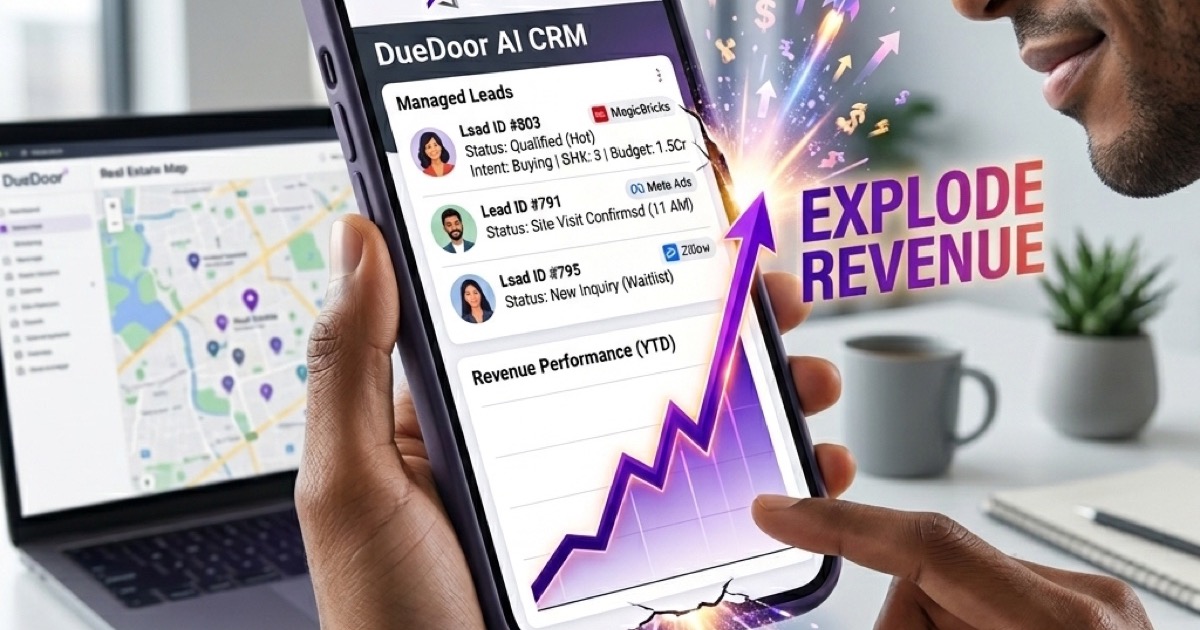
The most common lead generation mistakes include targeting too broad an audience, neglecting lead qualification, and failing to follow up promptly. Fixing these three areas alone can dramatically increase conversion rates.
Lead generation sits at the heart of every growing business, yet most teams repeat the same costly errors year after year. A poorly designed lead generation process does not just waste marketing budget; it burns sales team morale, damages brand credibility, and hands warm prospects directly to competitors who are more organised.
Whether you run a 10-person real estate agency in Pune, a SaaS startup in Bengaluru, or a mid-size manufacturing firm selling across Southeast Asia, the mistakes below are almost universal. Recognising them early and building systems around them is what separates consistently growing businesses from those stuck in a perpetual feast-or-famine cycle.
Why Lead Generation Mistakes Are So Costly
Every unqualified lead that enters your pipeline consumes real resources: salesperson time, WhatsApp credits, email sends, and CRM seats. According to multiple sales benchmarking studies, up to 79% of marketing leads never convert to a sale because they are either poorly qualified or completely neglected after the first touchpoint. For Indian SMBs operating on tight margins, a leaky pipeline is not just an efficiency problem; it is an existential one.
The compounding effect is even more damaging. When sales reps spend their days chasing cold, unfit prospects, they have less energy for the warm, high-intent buyers who are ready to close. The first step toward fixing lead generation is accepting that the volume of leads matters far less than their quality and the process around them.
Targeting Too Broad or the Wrong Audience
One of the most common lead generation mistakes is casting the widest possible net and hoping something sticks. This approach leads to bloated ad spend, low click-through rates, and an inbox full of leads that your sales team cannot do anything meaningful with.
Effective targeting starts with building a precise Ideal Customer Profile (ICP). For a B2B team in India, that means defining industry vertical, company size in employees and revenue, geography (metro vs. tier-2 city), and the specific pain point your product solves. Running LinkedIn or Google campaigns without this specificity is roughly equivalent to printing flyers and dropping them from a building.
- Define one primary ICP first - resist the urge to target everyone simultaneously.
- Use intent signals - website visits, content downloads, and search queries are far stronger indicators than demographic match alone.
- Test audience segments - run parallel small-budget campaigns to validate ICP assumptions before scaling spend.
If you are evaluating tools that help with audience discovery and lead scoring for Indian markets, this guide on the best lead generation tools for Indian businesses covers platform-specific recommendations worth reviewing.
Skipping Proper Lead Qualification
Routing every enquiry directly to a sales rep without any qualification layer is one of the fastest ways to demoralise your team. Not every person who fills a contact form or messages your WhatsApp number is a buyer. Some are researchers, some are competitors, and some are simply curious.
A structured qualification framework - BANT (Budget, Authority, Need, Timeline) is the classic starting point - helps you separate prospects worth pursuing from those who need more nurturing first. In practice, this can be as simple as a three-question WhatsApp bot that fires immediately after a lead enquires.
| Lead Stage | Qualification Signal | Recommended Action |
|---|---|---|
| Cold / Unaware | Downloaded a generic resource | Enter drip nurture sequence |
| Warm / Interested | Visited pricing page or replied to a message | SDR outreach within 2 hours |
| Hot / Intent | Booked a demo or requested a quote | Senior rep call same day |
| Disqualified | Wrong industry, budget, or role | Archive and tag for future re-engagement |
Knowing how to identify high-value leads from the noise is a skill that compounds over time. The sooner you build a qualification layer, the sooner your sales reps start spending time on deals that can actually close.
Poor Follow-Up Timing and Inconsistency
Speed-to-lead is one of the most researched variables in sales, and the data is unambiguous: the probability of qualifying a lead drops by over 80% if you wait longer than five minutes after an enquiry. Most Indian SMBs are responding within 24 to 48 hours - sometimes longer - which effectively hands warm prospects to whoever responds first.
Inconsistency compounds the timing problem. Many teams send one or two follow-up messages and give up. Research consistently shows that most deals close after the fifth or sixth touchpoint, yet the majority of outreach stops after the second. This is not persistence for its own sake; it is recognising that buyers have competing priorities and need multiple well-timed nudges before they act.
"The best time to follow up with a lead is immediately. The second best time is right now. Waiting until tomorrow means your competitor already had that conversation."
Automated follow-up via WhatsApp is one of the most effective solutions for Indian SMBs, given that open rates on WhatsApp messages routinely exceed 90%. A detailed breakdown of how to structure these sequences is available in this guide on following up with leads over WhatsApp.
Ignoring Channel Fit for Your Market
Not every lead generation channel works equally well for every business. A real estate developer in Chennai will see vastly different results from Facebook Lead Ads versus a SaaS company targeting HR managers in Gurugram who are better reached via LinkedIn or cold email outreach.
Channel fit mistakes usually fall into two categories. The first is investing exclusively in channels because they are popular, rather than because they match how your target buyers actually research and purchase. The second is spreading budget across too many channels simultaneously without enough depth in any one of them to get reliable signal.
- Real estate and local services - WhatsApp, Facebook Lead Ads, and Google Local Services Ads tend to outperform.
- B2B SaaS and professional services - LinkedIn outreach, content SEO, and targeted email sequences deliver stronger pipeline quality.
- E-commerce and D2C - Instagram, Google Shopping, and WhatsApp retargeting work best together.
For real estate teams specifically, understanding which CRM and lead management tools suit Indian real estate is a prerequisite before doubling down on any channel investment.
No Lead Nurturing Strategy After First Contact
Lead generation does not end when someone fills a form or sends a WhatsApp enquiry. In B2B and high-consideration B2C markets (real estate, education, financial services), the average buyer takes weeks or months before making a decision. Businesses that treat the first contact as the whole funnel lose most of their addressable market.
Nurturing means staying relevant and helpful between touchpoints. This can include educational content sent via WhatsApp or email, case studies matched to the prospect's industry, re-engagement messages triggered by website revisits, or periodic check-ins from a named sales rep. The goal is to be the most helpful and most present option when the buyer is finally ready to purchase.
WhatsApp has emerged as the highest-engagement nurture channel in India. Structured message sequences with a mix of value content, proof points, and soft CTAs outperform cold follow-ups significantly. This overview of effective WhatsApp marketing for lead generation covers template structures and compliance requirements for Indian businesses.
Not Tracking the Right Lead Generation Metrics
Teams that only track lead volume are flying blind. Volume is a vanity metric unless paired with quality and conversion data. The metrics that actually predict revenue health are lead-to-opportunity rate, opportunity-to-close rate, average response time, cost per qualified lead, and lead source attribution by revenue (not just by count).
Many Indian SMBs track enquiry count on a spreadsheet and nothing else. This makes it impossible to know which campaigns, channels, or team members are actually driving business. Without attribution data, budget decisions default to gut feel rather than evidence - and gut feel routinely over-invests in high-volume but low-quality channels.
- Set up UTM tracking on every paid and organic source.
- Log response times per rep to identify bottlenecks.
- Review lead-to-close rates by source monthly - not just quarterly.
- Segment metrics by ICP match to understand which audiences convert best.
Understanding the full journey from first enquiry to closed deal is covered in depth in this guide on how to convert leads into paying customers, including the hand-off process between marketing and sales.
A Practical Fix Plan for Indian SMBs
Fixing lead generation mistakes does not require a complete overhaul overnight. The highest-leverage interventions are typically speed (respond faster), qualification (stop routing unqualified leads to reps), and consistency (build a nurture sequence that runs automatically). These three changes alone can meaningfully improve conversion rates within 30 to 60 days.
The most scalable approach combines a well-defined ICP, a qualification bot or intake form, an automated WhatsApp or email nurture sequence, and a CRM that gives your team full visibility into where every lead stands. DueDoor is built specifically for this use case: an AI-powered Growth CRM that automates lead capture from WhatsApp, LinkedIn, and web forms, qualifies incoming enquiries using conversational AI, and routes hot prospects to the right rep in real time. Teams using DueDoor report significantly shorter average response times and a measurable increase in pipeline quality within the first month.
The combination of DueDoor's WhatsApp Business API integration, LinkedIn outreach automation, and pipeline tracking gives Indian SMBs a single system that handles the entire journey from cold prospect to closed deal, without the spreadsheet chaos that characterises most early-stage sales operations.
If you are ready to stop losing leads to slow response times, poor qualification, and inconsistent follow-up, get started with DueDoor's Growth CRM dashboard and see how an AI-powered pipeline fixes these exact mistakes at scale.
Frequently Asked Questions
What is the single biggest lead generation mistake most businesses make?
The most damaging mistake is slow or inconsistent follow-up. Research shows that response times beyond 5 minutes dramatically reduce the chance of qualifying a lead, yet most businesses take 24 hours or longer. Automating the first touchpoint via WhatsApp or email solves this immediately.
How do I know if my lead qualification process is working?
Track your lead-to-opportunity conversion rate. If fewer than 20% of incoming leads become genuine sales opportunities, your qualification layer is either too loose or absent entirely. Add a structured intake process and review the numbers monthly.
Is WhatsApp a reliable channel for lead generation in India?
Yes, WhatsApp is one of the highest-performing lead generation and nurture channels for Indian businesses. Open rates consistently exceed 90%, and response rates far outperform email. Using a compliant WhatsApp Business API setup is essential for scale.
How many follow-up messages should I send before giving up on a lead?
Most research suggests a minimum of 5 to 7 touchpoints spread across different channels and timings before classifying a lead as inactive. Many deals close on the sixth or seventh contact. Automated sequences make this sustainable without overwhelming your sales team.
What metrics should a small business track to improve lead generation?
Focus on lead-to-opportunity rate, average response time, cost per qualified lead, and lead source attribution by revenue. These four metrics give a complete picture of both acquisition efficiency and pipeline health, far more useful than raw lead volume alone.
Every lead gets an instant, qualified reply — even at 3 AM
DueDoor's AI reads the inbound WhatsApp, understands pricing/demo/support intent, replies with the right answer, and books the meeting — all in under 4 seconds. No human lifts a finger until the call itself.
- AI understands Hindi, Tamil, Telugu, Marathi, English
- Qualifies budget, team size, timeline automatically
- Books into your actual Google/Outlook calendar
- Escalates to a human only when the AI isn't 95%+ sure
WhatsApp AI
Auto-reply, drip sequences, AI qualification — 24/7.
Leads & Pipeline
Smart lead scoring with auto-routing to your team.
Email Marketing
Personalized AI emails that actually get opened.
Meta Ads AI
One-click campaigns optimized by AI daily.
SEO Engine
Content + ranking on autopilot. Like this page.
LinkedIn (PhewDo)
Outreach + replies handled end-to-end.
References & further reading
- Lead generation — Wikipedia
- HubSpot Marketing Blog
- Marketing — Wikipedia
- Digital marketing — Wikipedia
- Sales — Wikipedia