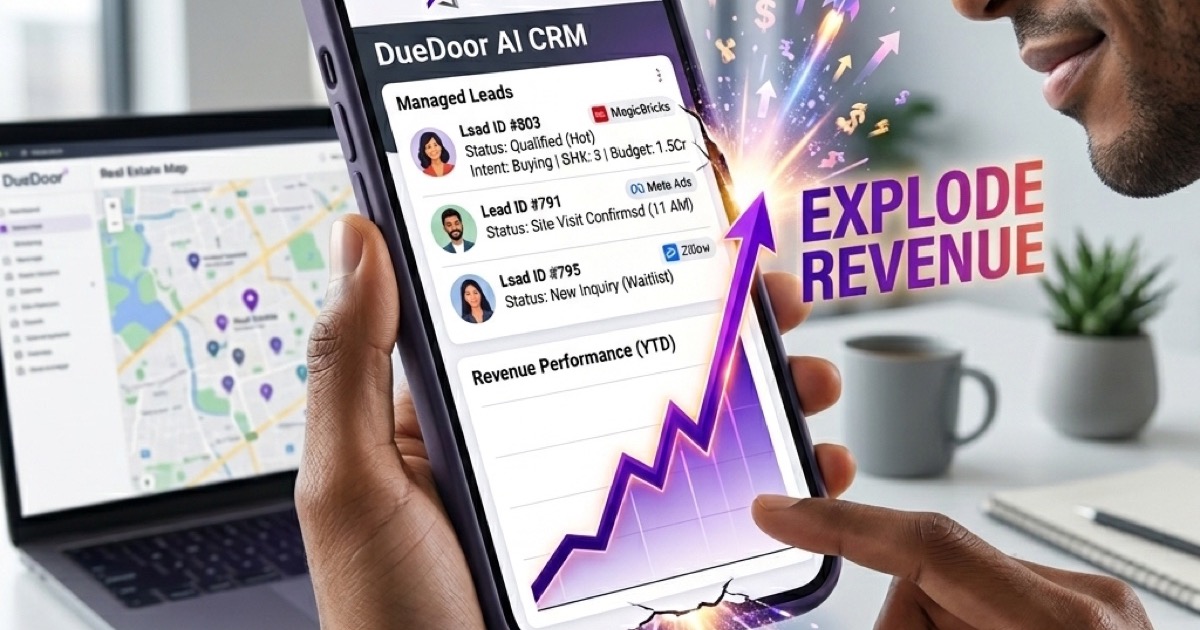
An effective lead magnet solves one specific pain point for your target audience and delivers immediate, tangible value in exchange for contact information. The best ones are hyper-relevant to your buyer, easy to consume, and directly connected to your core product or service.
Every business wants more leads, but most lead generation efforts stall at the same point: asking strangers for their contact details without offering anything in return. A well-built lead magnet fixes that equation instantly. It gives your ideal prospect a compelling reason to raise their hand, share their email or phone number, and step into your sales funnel willingly.
For Indian SMBs competing in crowded markets, from edtech to real estate to B2B SaaS, lead magnets are one of the highest-leverage tactics available. The businesses winning in 2026 are not the ones spending the most on ads; they are the ones offering the most relevant free value upfront. This guide walks you through exactly how to create lead magnets that attract the right people and convert them into pipeline.
What Is a Lead Magnet
A lead magnet is any piece of value, a resource, tool, template, discount, or piece of knowledge, that you offer for free in exchange for a prospect's contact information. The term "magnet" is apt: the offer pulls people toward your brand rather than forcing them through interruptive ads. Common formats include ebooks, checklists, free trials, webinars, calculators, templates, and exclusive reports.
The fundamental trade is simple. Your prospect gives you their email address or phone number. You give them something they genuinely want. From that moment, you have permission to nurture, educate, and eventually sell. Without a lead magnet, you are asking for permission without offering anything in return, and most prospects will decline.
Why Lead Magnets Work
Lead magnets work because they align with how buyers actually make decisions. Research consistently shows that B2B buyers complete 60 to 70 percent of their decision-making process before ever speaking to a salesperson. They want to educate themselves first. A lead magnet positions your brand as the educator, which builds trust and authority before any sales conversation begins.
In the Indian context, where trust is a significant purchase trigger, this matters even more. A prospect who has downloaded your ROI calculator or read your industry benchmarking report already has a positive association with your brand. When your sales team follows up, it is a warm conversation, not a cold pitch. This directly improves conversion rates at every stage of the funnel.
"The best lead magnet does not feel like marketing. It feels like the most useful thing you found this month." Businesses that build with that standard in mind consistently outperform those treating lead magnets as a checkbox exercise.
Platforms like the best lead generation tools for Indian businesses are increasingly built around lead magnet distribution, automated follow-up, and qualification scoring so that every captured lead gets the right nurture sequence without manual effort.
Types of Lead Magnets
Not all lead magnets are created equal, and different formats work better for different audiences and buying stages. Here is a breakdown of the most effective types:
- Checklists and templates: Fast to create, extremely high perceived value. A "WhatsApp campaign launch checklist" or "CRM migration template" solves an immediate operational problem.
- Ebooks and guides: Best for mid-funnel prospects who are researching deeply. A 12-page guide titled "How to generate 100 qualified leads per month without cold calling" speaks directly to a pain point.
- Free tools and calculators: Interactive lead magnets (like an ad spend ROI calculator or a lead conversion rate benchmarker) deliver personalized value and tend to have very high conversion rates.
- Webinars and masterclasses: High-trust format, especially for high-ticket B2B products. Prospects invest time, which signals serious intent.
- Free trials or freemium access: The product is the magnet. Works best when the core value is demonstrable within minutes of signup.
- Industry reports and benchmark data: Exclusive data that prospects cannot get elsewhere. Particularly powerful for SaaS, real estate, and financial services.
- Email courses and mini-series: Deliver value over 5 to 7 days, keeping your brand top of mind through the full evaluation window.
How To Choose the Right Lead Magnet
The single biggest mistake businesses make is choosing a lead magnet format first and then trying to fill it with content. The correct order is the reverse: start with your audience's most urgent problem, then pick the format that solves it most efficiently.
| Audience Stage | Primary Pain Point | Best Lead Magnet Format | Conversion Likelihood |
|---|---|---|---|
| Awareness | "I don't know where to start" | Checklist, quick-start guide | High |
| Consideration | "I need to compare options" | Comparison report, benchmark data | Medium-High |
| Decision | "I need to justify the investment" | ROI calculator, free trial, case study | Very High |
| Re-engagement | "I tried before and it didn't work" | Webinar, 1:1 audit offer | Medium |
Matching lead magnet to buyer stage dramatically increases both opt-in rate and downstream conversion. A prospect at the awareness stage does not want a 40-page ebook; they want a one-page cheat sheet they can act on immediately. A decision-stage prospect does not want another blog post; they want a concrete reason to choose you over the alternative. Understanding how to identify high-value leads helps you design magnets that speak specifically to your most profitable buyer profiles.
Building Your Lead Magnet Step by Step
Once you have chosen your format, follow this build process to maximize quality and conversion:
Step 1: Define one specific outcome
Your lead magnet should promise and deliver a single, concrete result. "Generate 50 WhatsApp leads this week" is better than "Improve your marketing." Specificity signals expertise and filters for buyers who actually need what you offer.
Step 2: Research the gap
Search for the topic on Google, scan Reddit and LinkedIn discussions, and review the questions your sales team hears repeatedly. Your lead magnet should answer the question that keeps your target buyer awake at night. Do not guess; use real signals.
Step 3: Create the content
Keep it lean. A checklist with 12 actionable items beats a bloated ebook with padding. Every line should earn its place. Use your company's real experience, data, and case studies wherever possible. Generic content does not build trust; proprietary insight does.
Step 4: Design for first impressions
Presentation matters, especially in India where visual credibility is strongly correlated with purchase intent. Use clean layouts, brand colors, and professional typography. A polished PDF or landing page signals that your main product will be equally high quality.
Step 5: Build a dedicated landing page
Never bury your lead magnet in a generic contact form. Build a single-purpose landing page with: a clear headline stating the exact benefit, 3 to 5 bullet points on what they will learn or get, a simple opt-in form (name + email or phone), and social proof like a testimonial or download count.
Promoting and Distributing Your Lead Magnet
A great lead magnet that no one sees generates zero leads. Distribution is as important as creation. Here are the channels that work best for Indian SMBs in 2026:
- WhatsApp broadcast campaigns: India's highest-engagement channel. A short broadcast message with a direct link to your lead magnet landing page can generate dozens of opt-ins in hours. Learn more about effective WhatsApp marketing for lead generation to maximize reach.
- LinkedIn organic and paid: For B2B audiences, LinkedIn document posts (uploading the first 5 pages of your ebook as a carousel) with a link to the full download in comments consistently outperform standard link posts.
- Website popups and exit-intent triggers: Time your lead magnet offer to appear when a visitor has read at least 60 percent of a relevant blog post. Context-matched offers convert significantly better than generic popups.
- Google and Meta ads: Lead generation ad formats on Meta allow prospects to opt in without leaving the platform, reducing friction dramatically. Use the lead magnet as the ad's entire value proposition.
- Email signature and sales team touchpoints: Add a link to your lead magnet in every outbound email your team sends. It converts cold contacts into warm opt-ins passively.
Converting Leads After the Opt-In
Capturing a lead is only the first step. The follow-up sequence determines whether that lead becomes a customer. Most businesses collect leads and then either do nothing or send a single generic email. Both approaches waste the momentum created by the opt-in.
Build a 5 to 7 message nurture sequence that: delivers the lead magnet immediately, reinforces the core insight with a real case study on day 2, addresses the most common objection on day 4, offers a low-commitment next step (a demo, a free audit, a short call) on day 6, and follows up with social proof on day 7. DueDoor automates this entire sequence, routing each lead through the appropriate nurture track based on the magnet they opted into, their engagement behavior, and their industry segment.
For leads who engage but do not convert, a well-timed WhatsApp follow-up dramatically outperforms email re-engagement. Understanding the right timing and messaging for following up with leads on WhatsApp can recover 20 to 30 percent of leads who would otherwise go cold. Once the follow-up sequence is working, your focus should shift to converting those leads into paying customers through structured qualification and timely outreach.
Measuring Lead Magnet Performance
Track these five metrics to know whether your lead magnet is working and where to improve it:
- Landing page conversion rate: The percentage of visitors who opt in. A well-optimized lead magnet page should convert at 25 to 45 percent for warm traffic. Below 15 percent signals a mismatch between the ad promise and the page content.
- Lead quality score: Not all opt-ins are equal. Tag leads by source and magnet type, then track which segments close at the highest rate. Double down on the magnets that generate your best customers, not just the highest volume.
- Email open rate on nurture sequence: Day-1 delivery emails should see 60 to 80 percent open rates. If they drop below 40 percent, the subject line or sender name needs work.
- Cost per lead (CPL): For paid distribution, calculate the total ad spend divided by qualified opt-ins. Compare CPL across channels and magnets to allocate budget to the best performers.
- Lead-to-customer conversion rate: The ultimate measure. Track what percentage of each lead magnet's opt-ins become paying customers within 30, 60, and 90 days. This tells you whether the magnet is attracting your actual buyer or just curious browsers.
Review these metrics monthly and run A/B tests on your landing page headline, CTA copy, and magnet format. Small improvements compound: a 5-point increase in landing page conversion rate and a 10-point improvement in lead-to-customer rate can double revenue from the same ad spend.
Ready to put your lead magnets to work inside a complete growth system? DueDoor connects your opt-in forms, WhatsApp sequences, LinkedIn outreach, and CRM pipeline into one platform, so every lead you capture is automatically qualified, nurtured, and routed to your sales team at exactly the right moment. Start your free DueDoor trial and see your first automated lead flow live within the hour.
Frequently Asked Questions
What makes a lead magnet effective?
An effective lead magnet solves one specific, urgent problem for your ideal buyer and delivers the result immediately. It must be highly relevant to your audience, easy to consume, and directly connected to the pain point your product addresses. Generic or vague lead magnets get low opt-in rates and attract the wrong people.
How long should a lead magnet be?
Length should match the format and the audience's available time. A checklist can be one page. A guide or ebook should be 8 to 20 pages. Webinars typically run 45 to 60 minutes. The rule is: include everything necessary to deliver the promised result, and cut everything else. Padding reduces perceived value and completion rates.
Which lead magnet formats work best for Indian SMBs?
For Indian SMBs, checklists, ROI calculators, and short video masterclasses consistently outperform long-form ebooks. WhatsApp-delivered lead magnets, where the resource is sent directly via WhatsApp after a simple opt-in, are particularly effective given India's smartphone-first consumption patterns and high WhatsApp engagement rates.
How do I promote a lead magnet without paid ads?
The most effective free channels are LinkedIn organic posts (especially document carousels), WhatsApp broadcast lists to existing contacts, embedding the offer in blog posts and website exit-intent popups, adding the link to your email signature, and asking satisfied customers to share it. Consistent organic promotion across these touchpoints can generate hundreds of opt-ins monthly at zero ad spend.
How many lead magnets should a business have?
Start with one excellent lead magnet mapped to your primary buyer persona and their most urgent problem. Once that is converting reliably, build a second magnet for a different buyer stage or persona. Most successful businesses maintain 3 to 5 active lead magnets covering awareness, consideration, and decision stages, with each one feeding a dedicated nurture sequence.
Every lead gets an instant, qualified reply — even at 3 AM
DueDoor's AI reads the inbound WhatsApp, understands pricing/demo/support intent, replies with the right answer, and books the meeting — all in under 4 seconds. No human lifts a finger until the call itself.
- AI understands Hindi, Tamil, Telugu, Marathi, English
- Qualifies budget, team size, timeline automatically
- Books into your actual Google/Outlook calendar
- Escalates to a human only when the AI isn't 95%+ sure
WhatsApp AI
Auto-reply, drip sequences, AI qualification — 24/7.
Leads & Pipeline
Smart lead scoring with auto-routing to your team.
Email Marketing
Personalized AI emails that actually get opened.
Meta Ads AI
One-click campaigns optimized by AI daily.
SEO Engine
Content + ranking on autopilot. Like this page.
LinkedIn (PhewDo)
Outreach + replies handled end-to-end.
References & further reading
- Lead generation — Wikipedia
- HubSpot Marketing Blog
- Marketing — Wikipedia
- Digital marketing — Wikipedia
- Sales — Wikipedia