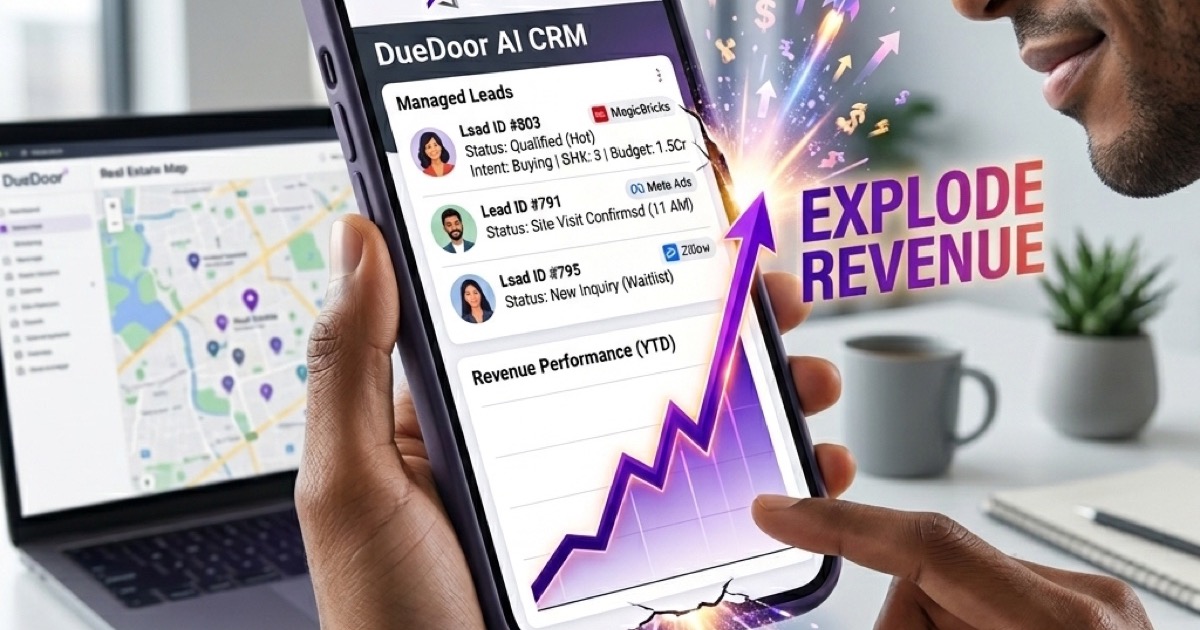
To improve lead response rates, respond within the first 5 minutes of a lead inquiry, use automated multi-channel follow-ups across WhatsApp, email, and phone, and personalize outreach based on lead source and intent signals.
Every sales team knows the feeling: a lead fills out a form, a WhatsApp message comes in, or a demo request lands in the CRM, and somewhere between the notification and the actual follow-up, the prospect goes quiet. This gap, small as it seems in calendar time, is where most revenue quietly disappears. Improving lead response rates is not about working harder; it is about building systems that make fast, relevant outreach the default, not the exception.
For Indian SMBs in particular, where competition is intense and buyers have dozens of alternatives a quick search away, the window to engage a warm lead is shorter than most founders realize. Whether you sell real estate, SaaS, professional services, or physical products, the principles in this guide apply directly to your pipeline, and the gains in conversion are immediate once the right habits and tools are in place.
Why Response Speed Matters More Than Anything Else
Speed is the single biggest lever in lead response. Research consistently shows that 78% of buyers choose the vendor that responds first, not necessarily the cheapest or most feature-rich one. When a prospect expresses interest, their intent is at its peak. Every minute that passes without contact allows competing options, distractions, or second thoughts to erode that intent.
The math is stark: a lead contacted within 5 minutes is roughly 6 times more likely to convert than one contacted after an hour. After 24 hours, most leads have effectively gone cold, and re-engagement campaigns carry a fraction of the conversion power of a timely first touch. For high-ticket categories like real estate, enterprise software, or financial services, the cost of a slow response is not just a lost deal; it is a lost referral chain and months of pipeline value.
Common Reasons Leads Go Cold Before You Reach Them
Understanding why response rates suffer is the first step to fixing them. The most common culprits are predictable:
- Manual routing delays: Leads arrive in a shared inbox or spreadsheet and wait for someone to assign them. By the time the right rep gets the notification, 20 minutes have passed.
- No after-hours coverage: A significant portion of B2C and SMB leads come in outside 9-to-6 business hours. Without automation, these sit untouched until the next morning.
- Single-channel follow-up: Sending only an email and waiting. If the prospect prefers WhatsApp or a call, the email sits unread.
- Generic, non-personalized outreach: A templated message that ignores the lead source, the product they looked at, or the location they are in signals low effort and earns low engagement.
- No follow-up sequence: Many teams make one attempt and stop. The reality is that most deals require 5 to 8 touchpoints before a prospect commits.
If your team struggles with any of these, you are not alone. Most growing SMBs do. The good news is each one is fixable with process changes and the right tooling, as covered in the sections below.
The Speed-to-Lead Framework: Responding in Under 5 Minutes
The speed-to-lead framework is a set of rules that ensure every incoming lead gets a meaningful first contact within 5 minutes, regardless of whether a human is available at that moment. Here is how to build it:
Step 1: Automate the first acknowledgment
The moment a lead submits a form, messages on WhatsApp, or clicks a CTA, trigger an automated response that addresses them by name, references what they expressed interest in, and sets a clear next step. This is not a generic auto-reply; it is a personalized acknowledgment that buys goodwill and keeps the prospect engaged while a human picks up the thread.
Step 2: Instant CRM routing
Every lead should land directly in a CRM with automatic assignment rules. No shared inboxes, no manual sorting. Define routing logic by geography, product line, lead score, or round-robin among available reps. The assigned rep should receive a push notification on mobile the moment assignment happens.
Step 3: Human follow-up within 5 minutes
Set a team SLA: every assigned lead gets a human-initiated call or WhatsApp message within 5 minutes during business hours. Track SLA compliance in your CRM dashboard. For after-hours leads, the automated sequence handles engagement until the rep comes online.
Multi-Channel Follow-Up: WhatsApp, Email, and Calls Together
Single-channel follow-up is one of the most common mistakes in Indian sales teams. A prospect who does not respond to an email might reply instantly to a WhatsApp message. Someone who ignores a call might engage with a well-timed text. Multi-channel outreach dramatically improves response rates because it meets prospects where they are most comfortable.
A proven sequence for an Indian SMB context looks like this:
- Minute 0: Automated WhatsApp message with personalized context and a clear CTA (book a demo, confirm interest, reply with a question).
- Minute 5: Human call attempt from the assigned rep.
- Hour 1: Personalized email with a relevant case study or product detail matching the lead source.
- Day 2: Second WhatsApp follow-up with a value-add (a free audit, a comparison, or an insight relevant to their industry).
- Day 4 and Day 7: Additional touchpoints mixing voice, WhatsApp, and email, each adding new value rather than just asking if they are interested.
For teams serious about WhatsApp-led outreach, structured WhatsApp follow-up sequences are one of the highest-ROI tactics available to Indian sales teams today. WhatsApp open rates in India routinely exceed 85%, making it a far more reliable first-touch channel than email for most SMB segments.
Personalization at Scale Without Burning Out Your Team
Personalization is the difference between a response and a reply. When a prospect receives a message that mentions their company name, the specific service they inquired about, and a relevant detail about their city or industry, they feel seen. That feeling drives replies. But doing this manually for every lead is unsustainable at volume.
The solution is template-plus-variable personalization: build high-quality message templates for each lead source, product category, and persona segment, then let your CRM auto-populate variables like name, company, city, product interest, and lead source. A rep reviewing and sending a pre-populated message takes 30 seconds instead of 5 minutes.
Deeper personalization, referencing the specific page a lead visited, the pricing tier they looked at, or the industry they work in, requires lead enrichment. Tools that automatically append firmographic and behavioral data to a lead record enable reps to have informed first conversations without any manual research. This is where identifying high-value leads early pays off: once you know which leads are most likely to convert, you can allocate deeper personalization effort to those segments and use lighter-touch automation for the rest.
Lead Response Rate Benchmarks by Industry
Before optimizing, it helps to know where you stand relative to industry norms. The table below shows average first-response times and typical conversion lifts for common Indian SMB verticals:
| Industry | Average First Response Time | Conversion Lift (Sub-5-Min Response) |
|---|---|---|
| Real Estate | 4 to 6 hours | Up to 8x |
| EdTech / Coaching | 30 to 90 minutes | 4 to 5x |
| B2B SaaS | 2 to 4 hours | 5 to 6x |
| Financial Services | 1 to 3 hours | 6 to 7x |
| Healthcare / Wellness | 2 to 5 hours | 3 to 4x |
| Retail / D2C | 15 to 45 minutes | 2 to 3x |
Real estate stands out as the industry with the most to gain. Most agencies still rely on manual callbacks from a shared WhatsApp number, meaning the average response time is measured in hours. Teams that automate first-touch responses and route leads to the nearest available agent have seen dramatic conversion improvements. For more on CRM selection in this space, see this comparison of CRM options for Indian real estate.
Using Automation Tools to Sustain High Response Rates
Sustained high response rates require automation, not heroics. Expecting a sales team to maintain sub-5-minute response times manually across hundreds of daily leads is unrealistic and leads to burnout. The right automation stack handles the first several touchpoints, qualifies intent, and surfaces only the ready-to-talk prospects for human follow-up.
"The best sales teams in 2026 do not compete on who can type faster. They compete on who has the smarter system: AI qualifies and warms the lead, the human closes it. The rep's job is judgment, not queue management."
Key automation capabilities to look for in a growth CRM include: instant multi-channel triggers on lead capture, rule-based lead routing, WhatsApp Business API integration for template-based outreach at scale, email drip sequences with behavioral triggers, and a unified inbox that shows every touchpoint in one thread regardless of channel.
DueDoor combines all of these in a single platform built specifically for Indian SMBs. Its AI-powered pipeline automatically sends personalized WhatsApp messages the moment a lead is captured, routes to the right rep, and schedules follow-up sequences across WhatsApp, email, and calls. Teams using WhatsApp marketing for lead generation alongside DueDoor's automation layer report significantly higher contact rates compared to manual outreach workflows.
For teams building or auditing their lead generation stack from scratch, a review of the best lead generation tools for Indian businesses is a useful starting point to understand which integrations will deliver the fastest ROI alongside your CRM.
Measuring and Optimizing Your Response Rate Over Time
What gets measured gets improved. Setting up a small but disciplined analytics loop around lead response will surface the highest-leverage opportunities in your process faster than any intuition can.
The core metrics to track weekly:
- Median first response time: The time from lead capture to first human or automated contact. Aim for under 5 minutes for high-intent leads.
- Contact rate: The percentage of leads where you achieve a two-way conversation (any channel). A contact rate below 40% usually signals a channel or timing mismatch.
- Follow-up completion rate: What percentage of assigned leads complete the full follow-up sequence? Gaps here reveal rep discipline or tooling issues.
- Lead-to-qualified rate by source: Breaking this down by lead source tells you not just who is responding, but which sources are worth investing more budget in.
- Response time vs. conversion correlation: If your CRM tracks both, plot response time against close rate monthly. The relationship is almost always strongly inverse, and seeing the curve for your own data is a powerful motivator for the team.
Once you have baseline metrics, run structured experiments. Test WhatsApp vs. email as the first-touch channel for a specific lead segment. Test two different message templates for the same lead source. Test morning vs. afternoon call windows for your geography. Small, consistent experiments compound into significant performance gains over a quarter.
The final piece is closing the loop between response rate and conversion. Improving contact rate is only valuable if it translates to closed revenue. For tactics on moving a contacted lead through to a paying customer, the guide on how to convert leads into customers covers the qualification, nurture, and closing steps that follow a strong first response.
Ready to cut your response time to under 5 minutes and automate your entire follow-up sequence? DueDoor's AI Growth CRM handles lead capture, instant WhatsApp outreach, multi-channel follow-up, and pipeline tracking in one platform built for Indian sales teams. Start your free trial on DueDoor and see your contact rates climb within the first week.
Frequently Asked Questions
What is a good lead response time for Indian SMBs?
Anything under 5 minutes is considered best-in-class. Most Indian SMBs average 2 to 6 hours, which means responding in under 5 minutes immediately differentiates your team and can multiply conversion rates by 5 to 8 times depending on your industry.
How does WhatsApp improve lead response rates?
WhatsApp open rates in India exceed 85%, compared to 20 to 25% for email. Sending an automated, personalized WhatsApp message the moment a lead is captured ensures your message is seen quickly. Pairing this with WhatsApp Business API templates and a CRM trigger creates a near-instant response system that works around the clock.
How many follow-up attempts should a sales rep make before marking a lead as lost?
Industry data consistently shows that 80% of conversions require between 5 and 8 touchpoints. Most reps stop after 1 or 2. A structured sequence of at least 6 to 7 attempts across multiple channels over 10 to 14 days is a reasonable standard before reclassifying a lead.
Can automation replace human follow-up entirely?
Not for high-value deals. Automation excels at first-touch acknowledgment, qualification questions, and scheduling, but human judgment and empathy are still critical for complex objection handling and high-ticket closes. The best approach is AI handling the top of the funnel and humans closing the bottom.
How do I measure whether my lead response improvements are actually working?
Track three metrics weekly: median first response time, contact rate (percentage of leads that become two-way conversations), and lead-to-close rate segmented by response time bucket. If your sub-5-minute response cohort consistently converts at a higher rate than your 1-hour-plus cohort, you have proof the improvement is driving revenue.
Every lead gets an instant, qualified reply — even at 3 AM
DueDoor's AI reads the inbound WhatsApp, understands pricing/demo/support intent, replies with the right answer, and books the meeting — all in under 4 seconds. No human lifts a finger until the call itself.
- AI understands Hindi, Tamil, Telugu, Marathi, English
- Qualifies budget, team size, timeline automatically
- Books into your actual Google/Outlook calendar
- Escalates to a human only when the AI isn't 95%+ sure
WhatsApp AI
Auto-reply, drip sequences, AI qualification — 24/7.
Leads & Pipeline
Smart lead scoring with auto-routing to your team.
Email Marketing
Personalized AI emails that actually get opened.
Meta Ads AI
One-click campaigns optimized by AI daily.
SEO Engine
Content + ranking on autopilot. Like this page.
LinkedIn (PhewDo)
Outreach + replies handled end-to-end.
References & further reading
- Lead generation — Wikipedia
- HubSpot Marketing Blog
- Marketing — Wikipedia
- Digital marketing — Wikipedia
- Sales — Wikipedia