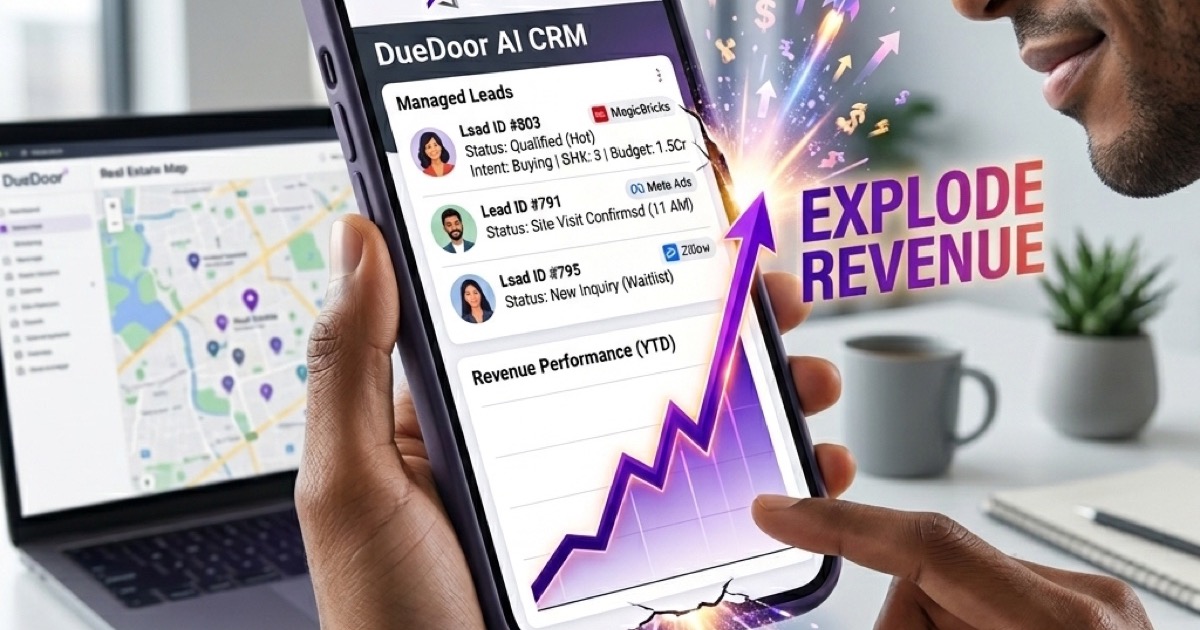
Personalize WhatsApp messages by using the recipient's name, referencing their specific interest or past interaction, and tailoring the offer to their stage in the buying journey. AI-powered CRM tools can automate this at scale across thousands of contacts.
WhatsApp has become the default sales channel for millions of Indian businesses, from bootstrapped D2C brands in Surat to real estate agencies in Hyderabad. Yet most teams are still sending the same generic broadcast message to every contact, then wondering why replies dry up after the first campaign. The difference between a WhatsApp message that gets ignored and one that starts a conversation is almost always personalization.
Personalizing WhatsApp messages does not mean writing individual texts by hand for every lead. Modern AI and CRM tools make it possible to send messages that feel handcrafted, even when you are reaching thousands of prospects simultaneously. This guide breaks down exactly how to do it, step by step, with practical examples suited to Indian SMBs and growing sales teams.
Why Personalization Matters on WhatsApp
WhatsApp enjoys a near-perfect 98% open rate, far above email or SMS. But high open rates mean nothing if the message fails to connect. Buyers today receive dozens of promotional messages daily and they have become skilled at spotting generic blasts within the first three words. A message that starts with the recipient's name, references a product they browsed, or acknowledges a conversation from last week cuts through that noise immediately.
Research consistently shows that personalized outreach generates 3.5 times more replies than generic broadcasts. For sales teams, more replies translate directly into more discovery calls, more demos, and more closed deals. Personalization also signals respect: you took time to understand this person, and that trust is the foundation of every long-term customer relationship.
Know Your Audience Segments Before You Write
Effective personalization starts before you open any messaging tool. You need to understand who you are talking to. Segment your contact list along dimensions that are meaningful for your product:
- Industry or business type: A kirana store owner in Pune has different pain points from an IT services founder in Bengaluru.
- Stage in the buyer journey: New leads need education; warm prospects need proof; near-close contacts need urgency and reassurance.
- Past interactions: Did they open your last message? Did they click a link? Did they ask a specific question?
- Purchase history or product interest: Existing customers responding to an upsell message should never receive the same text as a cold lead.
- Location and language preference: A prospect in Tamil Nadu may respond better to a message that acknowledges local context or is written in simpler English.
Segmentation is the backbone of personalization. Without it, even the best-written message lands in the wrong inbox at the wrong time. Tools that help you manage CRM data for small businesses in India make segmentation automatic, tagging contacts based on activity, source, and stage without manual effort.
Using Dynamic Variables in WhatsApp Templates
WhatsApp Business API templates support dynamic variables, placeholders like {{1}} and {{2}} that get filled in automatically from your contact data before the message is sent. Used well, these variables let you build a single template that still feels personal to every recipient.
| Variable | Example value | Impact on message |
|---|---|---|
| First name | Rohit | Immediate familiarity, higher open engagement |
| Company name | Sunrise Traders | Shows you know their business, not just their phone number |
| Product interest | WhatsApp API plan | Confirms relevance before the pitch lands |
| Last interaction date | last Tuesday | Creates continuity, reduces cold-message friction |
| Custom offer | ₹1,999/month for 3 months | Feels exclusive, drives urgency |
Keep templates conversational and short. Avoid formal corporate language. A message that reads like a text from a knowledgeable friend will always outperform one that sounds like a press release. Write your template draft, read it aloud, and ask yourself if a real salesperson would actually say this in a chat window.
AI-Powered Personalization at Scale
The real unlock for growing sales teams is using AI to generate context-aware message variations automatically. Instead of writing one template and filling in a name, AI models can analyze each contact's profile, browsing behavior, and conversation history, then generate a slightly different version of your message for each segment, all without human editing per contact.
"Our conversion rate on WhatsApp follow-ups jumped from 8% to 26% after we stopped sending the same message to everyone and started letting the AI tailor the opening line based on what each prospect had asked about." - Sales head, SaaS startup, Mumbai
AI-powered personalization works best when your CRM is feeding fresh, accurate data into the messaging layer. Stale or incomplete data produces messages that reference the wrong product or greet someone by the wrong name, which is worse than no personalization at all. This is why AI tools for lead conversion are increasingly built with real-time data sync at their core, ensuring the message engine always has the latest context about each contact before firing a message.
DueDoor's AI Growth CRM connects your WhatsApp Business API account directly to your lead pipeline, pulling in intent signals, stage data, and past conversation summaries so that every outgoing message is contextually relevant, not just name-tagged.
Personalizing by Sales Stage
One of the most impactful personalization levers is matching your message tone and content to where the prospect sits in your funnel. Here is a practical framework:
Top of funnel: New leads
New leads need a warm, low-pressure introduction. Reference how they found you (webinar, ad, referral) and offer something immediately useful, a short guide, a free audit, or a specific data point relevant to their industry. Do not pitch yet.
Middle of funnel: Engaged prospects
These contacts have shown interest. Reference their specific question or the page they visited. Share a case study from their industry (mention a city or sector they will recognize). Include a single clear next step: a demo link, a call invite, or a short video.
Bottom of funnel: Near-close leads
Urgency and social proof are your tools here. Mention how many businesses similar to theirs went live this month, address the most common objection directly, and make the call to action frictionless. A one-tap payment link or a calendar booking button removes the last barrier.
Teams working on sales automation in real estate and other high-ticket sectors find that stage-based personalization is especially powerful because the buyer journey is longer and every touchpoint needs to build trust incrementally.
Dos and Don'ts of WhatsApp Personalization
Even with the best data and tools, small mistakes can undermine your effort. Keep these rules front of mind:
- Do use the contact's preferred name, not their full formal name unless you know they prefer it.
- Do reference a real, specific detail: a product category, a recent conversation, a shared interest.
- Do respect opt-out preferences and message timing. Sending at 7 AM on a Sunday feels intrusive regardless of how personalized the content is.
- Don't over-personalize in a way that feels surveillance-like. Saying "I see you visited our pricing page three times yesterday" can feel invasive.
- Don't rely solely on first name insertion and call it personalization. That is the floor, not the ceiling.
- Don't send the same follow-up cadence to every contact. Let behavior (opens, clicks, replies) dictate the next message.
Strong personalization also supports better AI-driven collaboration across your sales team, because when messages are tied to CRM records and tagged by outcome, every team member has context and no lead gets double-touched or dropped.
Measuring What Works
Personalization is iterative. You need data to know which variables and message structures are driving replies and which are being ignored. Key metrics to track for WhatsApp campaigns:
- Reply rate: The clearest signal of message relevance. Aim for 15% or higher on warm lists.
- Click-through rate (CTR): For messages with links, track how many recipients tapped through.
- Conversion rate by segment: Break down results by industry, stage, and message variant to identify your highest-performing combinations.
- Opt-out rate: Rising opt-outs signal over-messaging or poor relevance. Address it immediately.
- Response time: How quickly did prospects reply? Faster replies often indicate higher intent.
A detailed breakdown of how to read and act on this data is covered in our guide to analyzing WhatsApp marketing data, including how to set up attribution so you can tie each message to revenue.
Run A/B tests on your personalization variables. Try two versions of the same template, one that references the prospect's industry and one that references their location, and measure which drives more replies over a week. Compound these small wins and your reply rate will climb steadily month over month.
Getting Started with DueDoor
Pulling all of this together, effective WhatsApp personalization requires clean contact data, smart segmentation, well-crafted templates with meaningful variables, and an analytics loop that feeds learning back into your next campaign. For most SMB sales teams, doing this manually across hundreds or thousands of contacts is simply not sustainable.
DueDoor's AI Growth CRM is built specifically for this workflow. It connects WhatsApp Business API, LinkedIn outreach, and email into one unified pipeline, auto-segments leads based on behavior and stage, and lets you deploy personalized message sequences with AI-assisted copy, all without writing a single line of code. Indian teams get rupee-based pricing, local payment integration, and support designed for the way business is done here.
Ready to send WhatsApp messages that actually get replied to? Start your free DueDoor trial and launch your first personalized campaign in under 30 minutes.
Frequently Asked Questions
What is the best way to personalize WhatsApp messages for sales?
The most effective approach combines dynamic variables (name, company, product interest) with stage-based content tailored to where the lead sits in your funnel. AI-powered CRM tools like DueDoor can automate this personalization at scale by pulling real-time data from each contact's profile and conversation history.
Can I personalize WhatsApp messages without the Business API?
Basic personalization using the recipient's name is possible with WhatsApp Business app, but true dynamic variable templates, automated sequences, and AI-driven segmentation require the WhatsApp Business API. The API also gives you analytics and higher message volume limits essential for sales teams.
How many personalized variables should I use in a single WhatsApp message?
Two to three variables per message is the sweet spot. Using too many can make the message feel formulaic or robotic. Prioritize the recipient's name, one business-specific detail, and a tailored call to action matched to their sales stage.
Does personalization help with WhatsApp opt-out rates?
Yes. Generic broadcast messages are a leading cause of opt-outs because recipients perceive them as spam. Personalized messages that reference a real interest or prior interaction feel relevant and respectful, which significantly reduces unsubscribe rates over time.
How do I measure whether my WhatsApp personalization is working?
Track reply rate, click-through rate, and conversion rate broken down by segment and message variant. Compare these metrics across A/B tests that isolate individual personalization variables. A rising reply rate with a stable or falling opt-out rate confirms your personalization strategy is working.
Every lead gets an instant, qualified reply — even at 3 AM
DueDoor's AI reads the inbound WhatsApp, understands pricing/demo/support intent, replies with the right answer, and books the meeting — all in under 4 seconds. No human lifts a finger until the call itself.
- AI understands Hindi, Tamil, Telugu, Marathi, English
- Qualifies budget, team size, timeline automatically
- Books into your actual Google/Outlook calendar
- Escalates to a human only when the AI isn't 95%+ sure
WhatsApp AI
Auto-reply, drip sequences, AI qualification — 24/7.
Leads & Pipeline
Smart lead scoring with auto-routing to your team.
Email Marketing
Personalized AI emails that actually get opened.
Meta Ads AI
One-click campaigns optimized by AI daily.
SEO Engine
Content + ranking on autopilot. Like this page.
LinkedIn (PhewDo)
Outreach + replies handled end-to-end.
References & further reading
- Artificial intelligence — Wikipedia
- Harvard Business Review — Sales
- Sales — Wikipedia
- Customer relationship management — Wikipedia
- Marketing — Wikipedia